
AMPLIFY Youth Art Exhibition

Transforming Health Care Through Art
As part of the Annual Conference on Adolescent Health, AHI is fostering youth artists and raising their voices to transform health care.
What Is Amplify?

Too often, youth are missing from conversations around their physical, mental, and social well-being, and how these aspects of their health are shaped by their environment. Yet who better understands what is happening in their world than the youth themselves? Through art, youth can share stories that are frequently hidden — revealing their realities of well-being and the world around them.
Recognizing this opportunity, the Adolescent Health Initiative (AHI) at the University of Michigan invited Michigan artists ages 12-24 to create visual art for the AMPLIFY Youth Art Exhibition at the 2026 Conference on Adolescent Health: Caring for Youth in Times of Change on November 6-7, 2026, at Huntington Place in Detroit, Michigan. Youth artists are provided a stipend and guidance from a youth art consultant to help transform their ideas into finished works of art.
Art Gallery
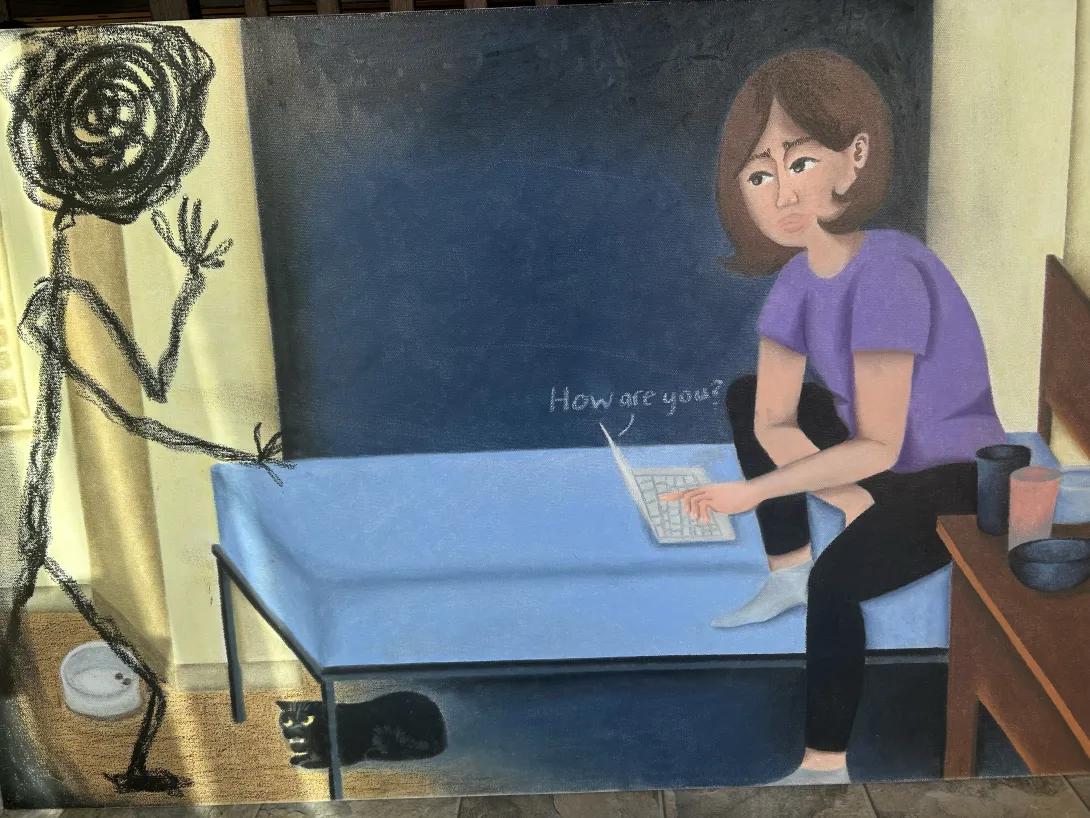
Behind Closed Doors
Ari Mullen (she/her)
Behind Closed Doors explores the hidden psychological effects of intimate partner violence and the disconnect between what a young person is able to communicate and what they may actually be experiencing. As a survivor, I spent years learning to make fear invisible while continuing to participate in everyday life. This piece depicts me sitting on my bed in my college apartment during a video call with my therapist. Within the frame of the call, everything appears ordinary and familiar. Outside of it, the environment becomes neglected and threatening.
The contrast between these two spaces represents the difference between the life I was able to present and the reality I was living. The figure reaching toward me at the end of the bed represents the fear and control that existed outside of what my therapist could see. The darkness and decay surrounding me reflect the psychological toll of living in an environment that had gradually become unsafe, even while the visible parts of my life continued to look normal. The video-call frame acts as a boundary between these two realities.
I created this piece as a reminder to mental health professionals that adolescents may not have the knowledge, language, or perspective to recognize that a relationship is unhealthy or abusive. As someone who has struggled with anxiety and depression throughout my life, I often viewed my mental health as the problem rather than considering how my relationship and environment were contributing to it. I wish my own therapist had looked more closely at my relationships and recognized the red flags I did not yet understand. Asking deeper questions about a young person’s relationships and environment may reveal what they are not yet able to identify or communicate themselves.
Through this work, I want to encourage mental health professionals to look beyond what is immediately visible. Sometimes the most important part of a young person’s story is the part that never makes it into the frame.
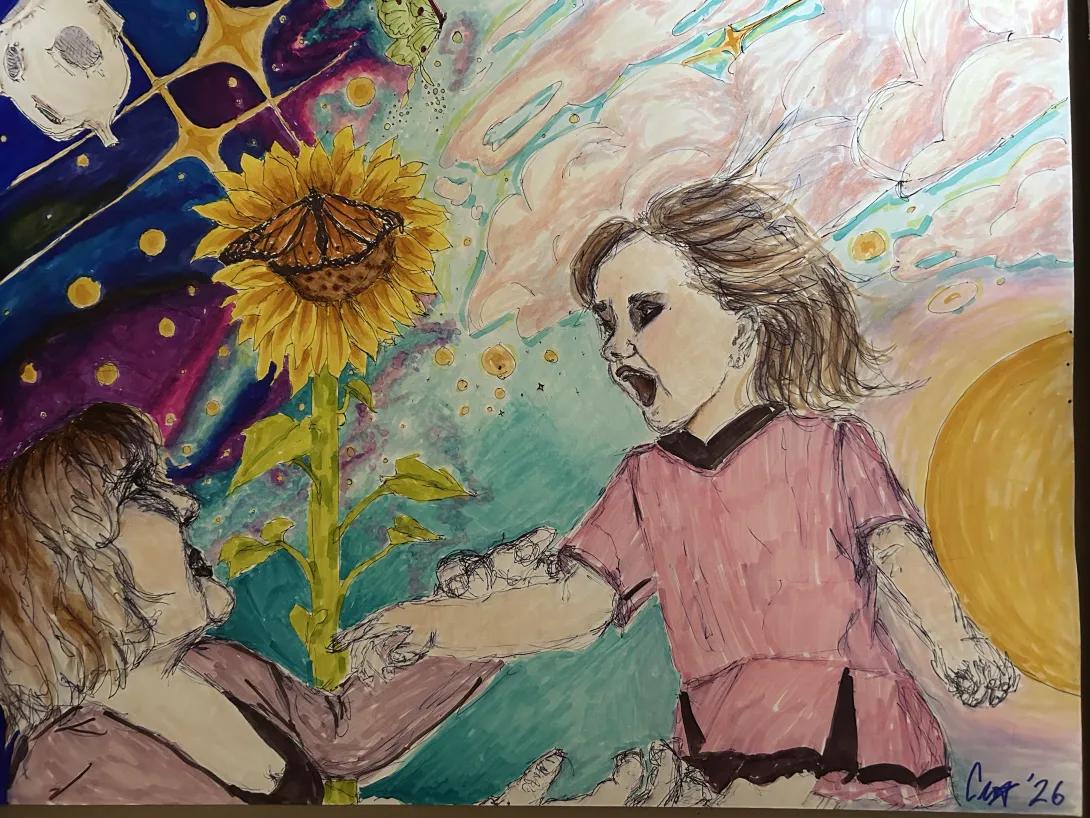
Home, the long way around
Chance Whitney (they/them)
I thought to myself, “How could she face me after all I’ve done?” as her face lit up the world when she locked eyes with mine. This is what coming home feels like. I have a whole Universe of experiences behind me, but she remains happy and consistent like the rising sun on a new day.
I’ve been doing a lot of inner child work in therapy and other treatments. It’s shown me just how important she (Lillian, my inner child) is not only now, but the important roles she played in the past as well. How I treated her, how she talked to herself... so I learned to be kinder. I got to know her as a part of my DID (Dissociative Identity Disorder) system as well, since that’s become a big part of my story. I’ve been learning what makes her feel safe, what makes her happy, how can I add to her joy? Because I know when my inner child feels safe, heard, and protected, it regulates my entire nervous system just a little bit better. More peace means less pain for me.
This piece is the peace. This is the release that I give to myself right now and as I made this. The past is not my enemy, and neither are the present nor future. There was never any enemy because there was never a fight. It was always me versus me. And in the end, there was Lillian. So today I will choose to be a little bit kinder, a tad bit more gentle, and amp up the whimsy just for her life, freedom, and joy. Because in the end, it’s actually just me. Learning, growing up, showing up, this is what makes life worth living.
I’m grateful I survived my last attempt, or else I never would’ve seen the life I live today. My health may still be deteriorating, but most importantly out of everything, I want to live. I want to live as much life as I can in this lifetime. All of this? This is the dream turned to reality. This is my hard work paying off a thousandfold. This is what all depressed kids look up to. I see you. I am you. I love you. It gets better. This piece is also my gift to you to let you know... Keep going. And never give up because there is always hope. We can make it out alive, just as long as we keep breathing. Live this life of ours one day at a time, one moment at a time, and sometimes even one breath at a time. Keep breathing.
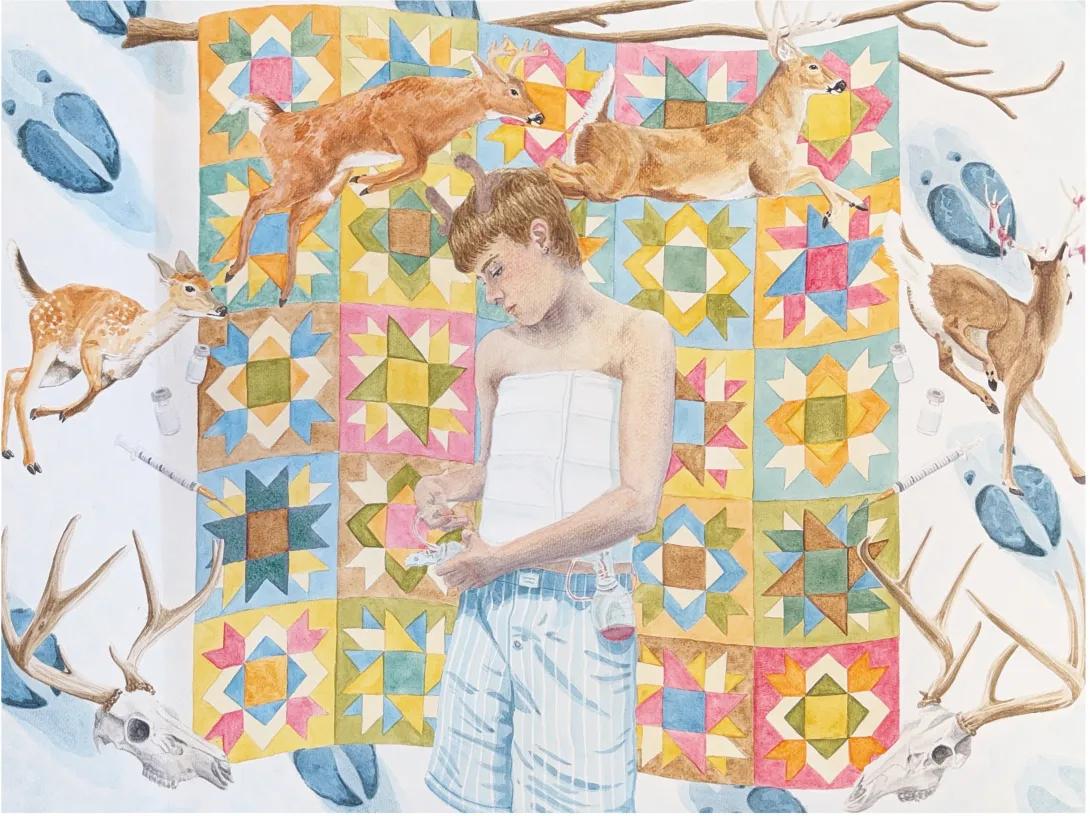
Yearling
Eliot Redwine (he/him)
My piece, Yearling, was inspired by a chest masculinization surgery that I underwent in June of this year. I am a very nature-oriented person and draw a significant portion of my inspiration from my surroundings. Living in a more rural area of West Michigan, I am surrounded by wildlife constantly. I have always felt a connection to the woods and rolling pastures surrounding my house, and will forever take a beat to admire herds of deer and flocks of wild turkey as they amble through local meadows. As I was recovering from surgery, I came to understand deer as a metaphor for becoming. The idea of growing antlers, in particular, is an effective metaphor for my medical transition. As bucks mature, they grow velvet-covered antlers that slough off to reveal bone underneath before falling off during the yearly shed. In this piece, antlers symbolize both masculine development and the cyclical nature of growth and maturation.
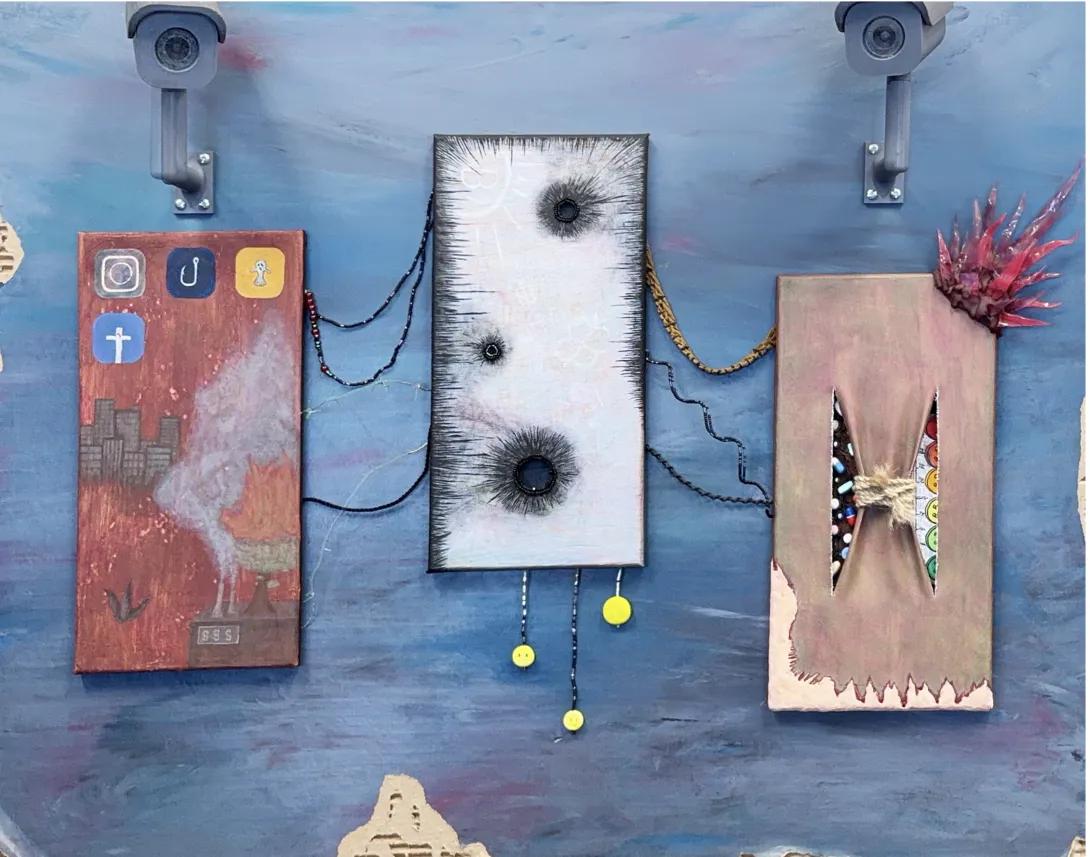
In Essence: Pain
Leo Saunders (they/them)
The art that I create is a raw, unfiltered part of my soul and the media that I use are heavily influenced by the subject matter. I enjoy working with anything that I can get my hands on, from painting and sewing, to leatherworking and paper mache, even pottery and printmaking. My materials are ever-changing and my processes constantly evolving in an effort to challenge not just myself, but the viewers as well.
Throughout these works there is a theme of pain and anguish created through an abstract tornado of colors, textures, patterns, and objects from life, that are presented as one image with the goal of evoking feelings of discomfort and oversaturation. My generation is exposed to an overwhelming onslaught of inputs which I’ve attempted to capture here, by choosing each canvas to have it’s own distinct purpose, with separate materials being chosen based on the subject:
“Body", to the right.
“Soul”(Self), in the middle.
“Enviroment”, to the left.
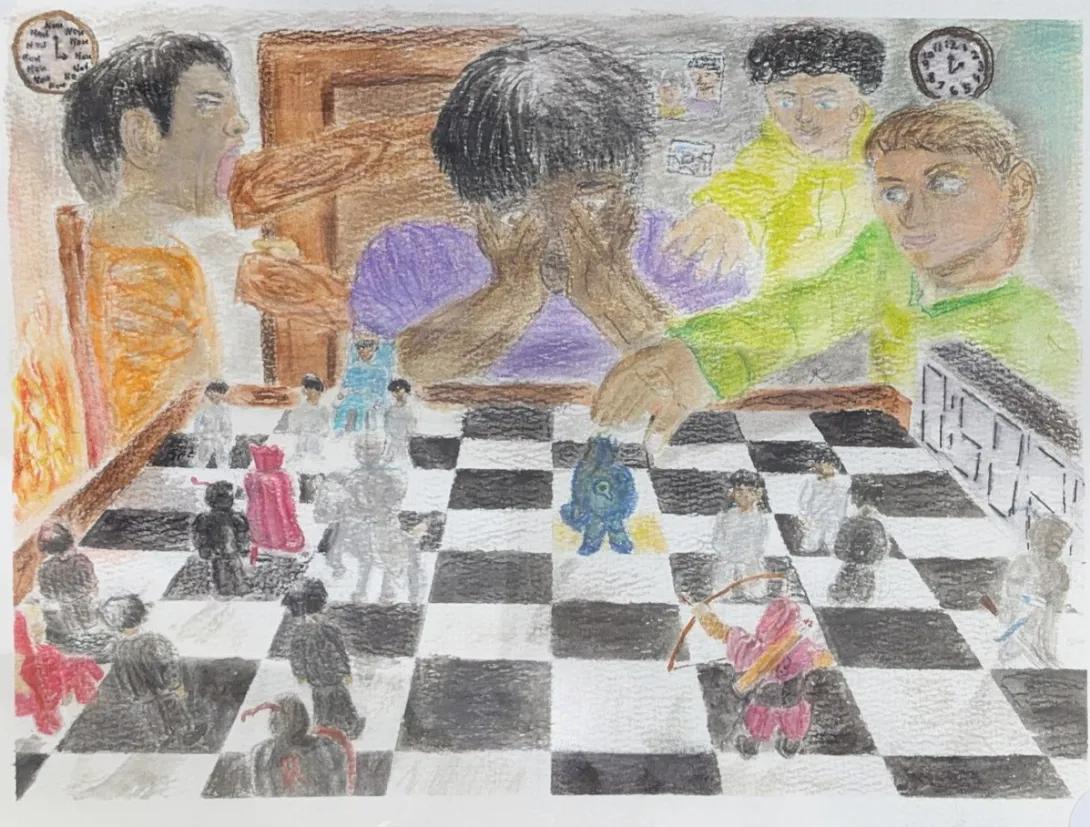
The Losing Game
Md Miah (he/him/his)
My artwork explores stress, mental health, and the feeling of being trapped and alone. I use a chess game as a metaphor for these struggles, with the pieces connected to the person playing the game. The contrast between the two sides of my composition represents the difference between isolation and having people who can support you. Although the position may appear lost, the game is not over yet.
I created this piece using watercolor on watercolor paper, beginning with a sketch before building the painting with watercolor and colored pencil. I went through many drafts before reaching the final artwork. I chose watercolor because I wanted to challenge myself with a medium I was not very familiar with. My love for chess was a major influence on this piece, along with The Devil’s Checkmate, a chess artwork centered around a position that appears lost but contains a winning idea. It made me think about how chess can resemble the battles people face with their mental health. I wanted to bring that same idea into my artwork. Even when a situation looks hopeless, there can still be a winning idea.
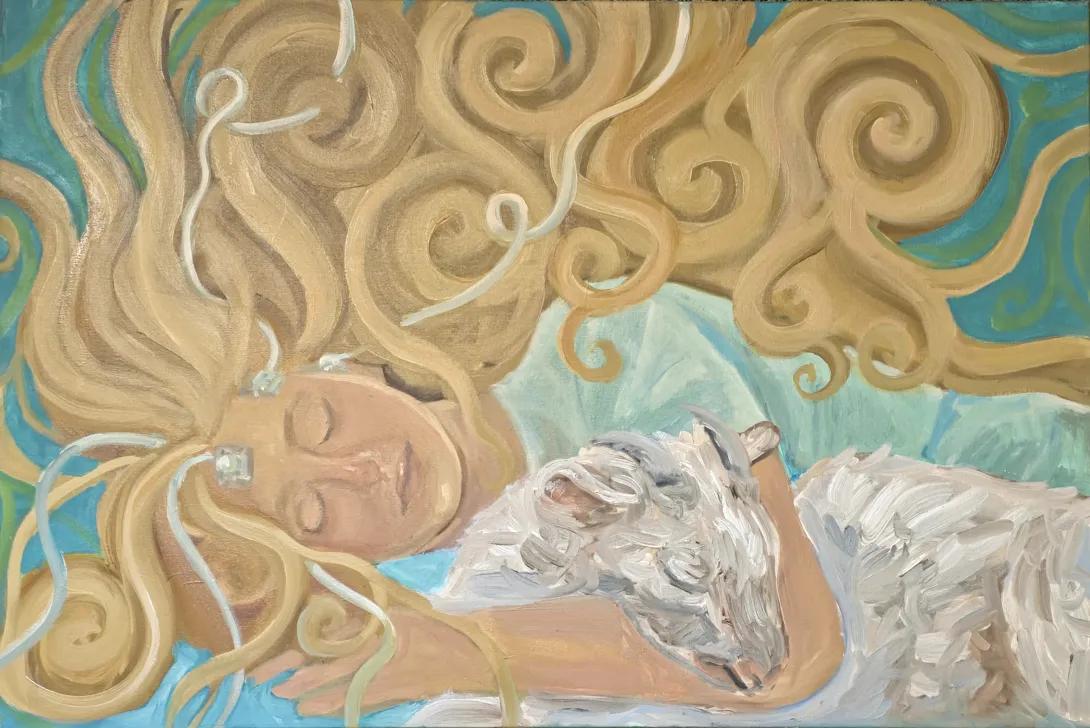
Спящая красавица и козленок, опутанныепроводами ЭЭГ
(Sleeping Beauty and kid wrapped in EEG wires)
Melaniya Zazovskaya (she/her)
This work explores the acceptance of a sickness in your life. This work features themes of acceptance and the beauty of life with a thorn. Since I was the age of 2, I have had constant fainting spells; I’ve done every test imaginable, but most notably EEGs. EEGs record brain activity when someone is awake and asleep through the specific placement of wires.
When we think of fainting, we think of Sleeping Beauty, Snow White, a reclined fainting couch, and the myth of Victorian women fainting from the lack of blood flowing from their corsets. This piece is to extend the narrative of the fairytales and myths growing up to appease my worries of never being cured. Within this self-portrait, the figure lies content in her “beauty sleep” with EEG wires scrambled through her golden locks. The figure cradles a goat, specifically a fainting goat, underneath the crook of her arm in a way to comfort the goat and the viewer that this is only a fraction of life that can be left alone and accepted as the unknown.
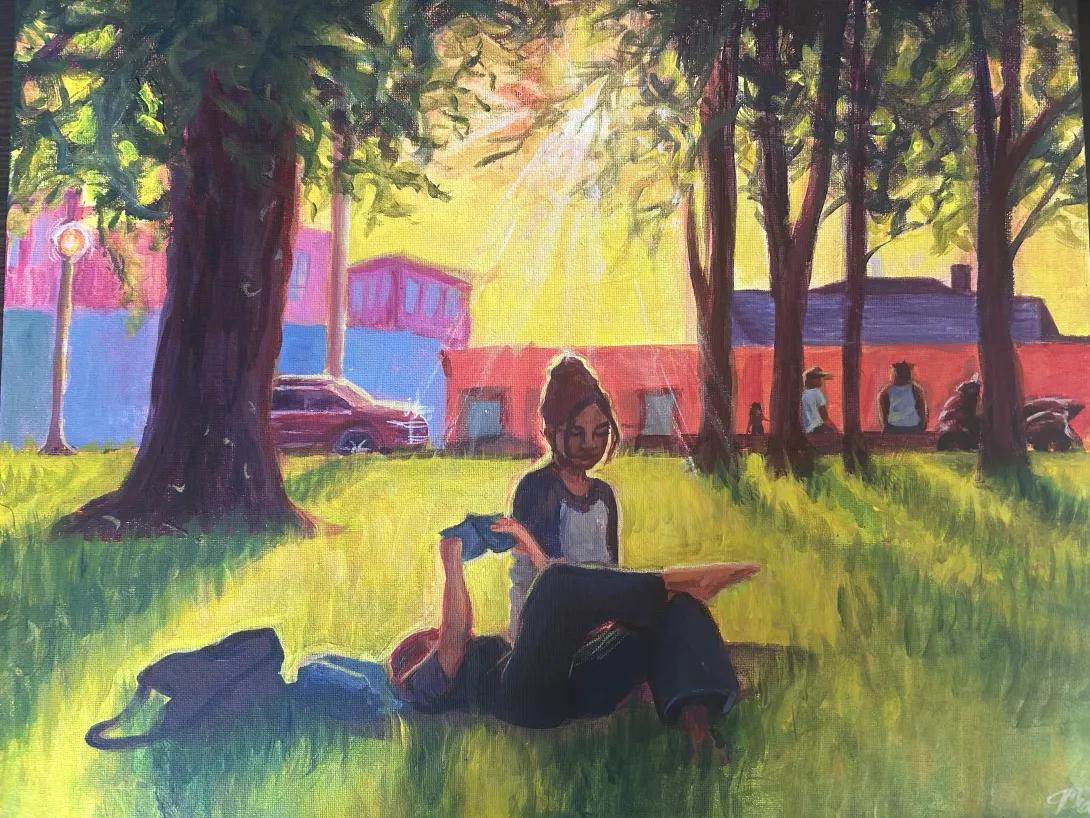
We found a spot on East Jefferson
Mia Echlin (she/her)
My work explores the full range of intensities people feel, especially young women. With lurid color and striking light, I intend to heighten the emotional states of my subjects and invite the viewer into their inner worlds. I work in acrylic on canvas, building each piece from washes of vibrant pigment.
This painting showcases two figures sharing a picnic at Gabriel Richard Park, the city of Detroit rising behind them. The piece comments on the tranquility and ease that access to green space can bring, spurring directly from how my environment shapes my well-being. In moments of intense anxiety, my local parks are spaces to regulate, breathe, and find grounding away from the busyness of life. As a Metro Detroiter, these spaces have always been accessible to me, but that access isn't guaranteed everywhere. Decades of disinvestment have left many Detroit neighborhoods without the same safe, green space, even though the need for it is the same.
I wish health care professionals understood that a young person's health doesn't begin and end in the clinic. It depends on whether they have a safe place to go, people they feel connected to, and a sense that they belong. I hope providers will ask young people where they feel safe and supported, and will see community spaces as part of health care. Every young person deserves a place of relief where they can experience moments like the one in this painting, as they are vital to our mental and physical health.
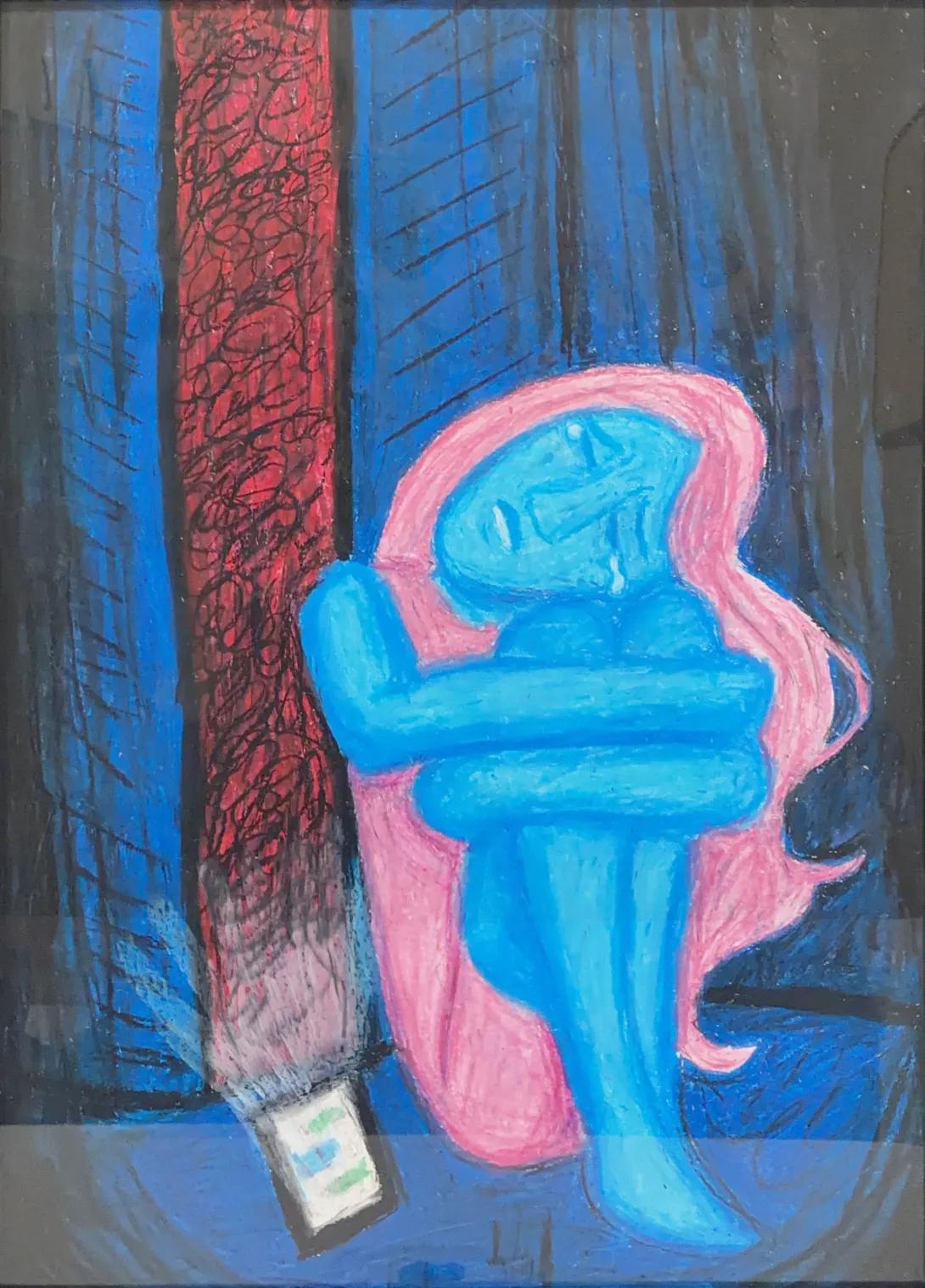
Isolation
Nick Miltgen (he/him)
In my work, I tried to show a slice of what life can be like behind closed doors for many transgender individuals. Being transgender myself, I felt it was important to try to convey how isolating and how much of a toll it can take on your mental health. There is an extensive list on why the mental health of trans youth is so bad. Not only because of the very common body dysmorphia, but also our environment. Family members may be explicitly transphobic when you try to express yourself or may try to deny your queer identity at any turn; you may lose friends. Sometimes it may seem like the entire world is against you with how many laws are trying to make the lives of trans people more difficult; most politicians who aren't actively passing and campaigning for these laws are silent and complicit in their passing. Community is a vital thing for anyone, but many times it is difficult for trans people to find it. Sometimes our only community can be found online. Being transgender in our current day and age is simultaneously a wonderfully unique experience that is also quite isolating; and it doesn't help that resources for transgender youth are unfortunately very limited.
In my artwork the main elements of art in my piece I use is color and space in order to convey what's going on in my artwork. I also used color contrast in order to convey emotion. The art medium I chose for this piece was oil pastels, because not only are they one of my favorite art supplies, but they are also what worked best in order to get the vibrant colors I wanted while also being easily blended.
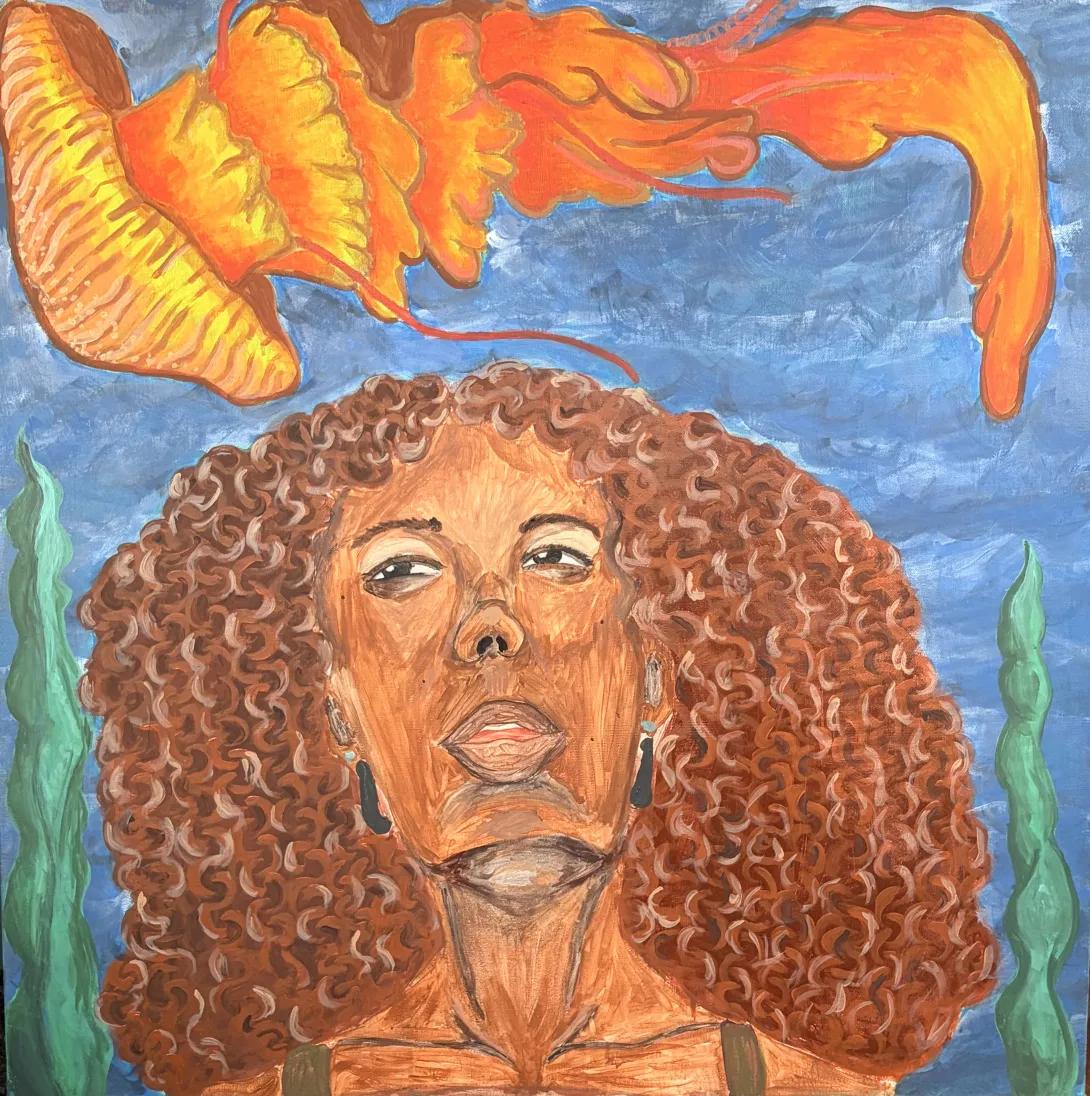
Serenity
Simone Sumpter (she/her)
A once lost soul, who found peace in the tranquil and serene nature of the sea. And found a love in a misunderstood aquatic creature, the jellyfish. The figure in my painting is an imaginary person, but she is made up with all of my troubles, but what I looked like when I overcame them. She looks up at a jellyfish, wishing for more balance, harmony, and a more carefree way of life. She has struggled with mental and emotional distress and is constantly looking for an escape—that escape is her imagination, and letting it run freely when times get rough. Her eyes sparkle with glee and she cannot help but crack a smile, something she hasn’t done for a long time. I have always been the type of person to be a bit more pessimistic, and think of the worst outcome instead of the positive ones; I wanted to make a character who was like me, and tried to seek out the positive things in life.
I mainly used acrylic for this piece because it reminds me of water. It effortlessly glides across the canvas with little to no fight, and every time I add a layer to the piece, I feel hopeful for the end result. Acrylic is something I had a love and hate relationship with. I always thought the need to add more layers was redundant, but that taught me to be patient with the artistic process and reflect on what it is that I am making. A once-blank slate is now subjected to my brainstorms, art block, and laid-back moments.
I wanted my piece to be more lighthearted and a breath of fresh air for my viewers. Combining the versatility of acrylic alongside the calmness and wonder of my piece will make for something to look at and spark curiosity. Mental health is something I try to educate myself more on; it looks different in everyone, and every day I want to find a new way to ease my process in overcoming it, and creating this piece helped me realize that.
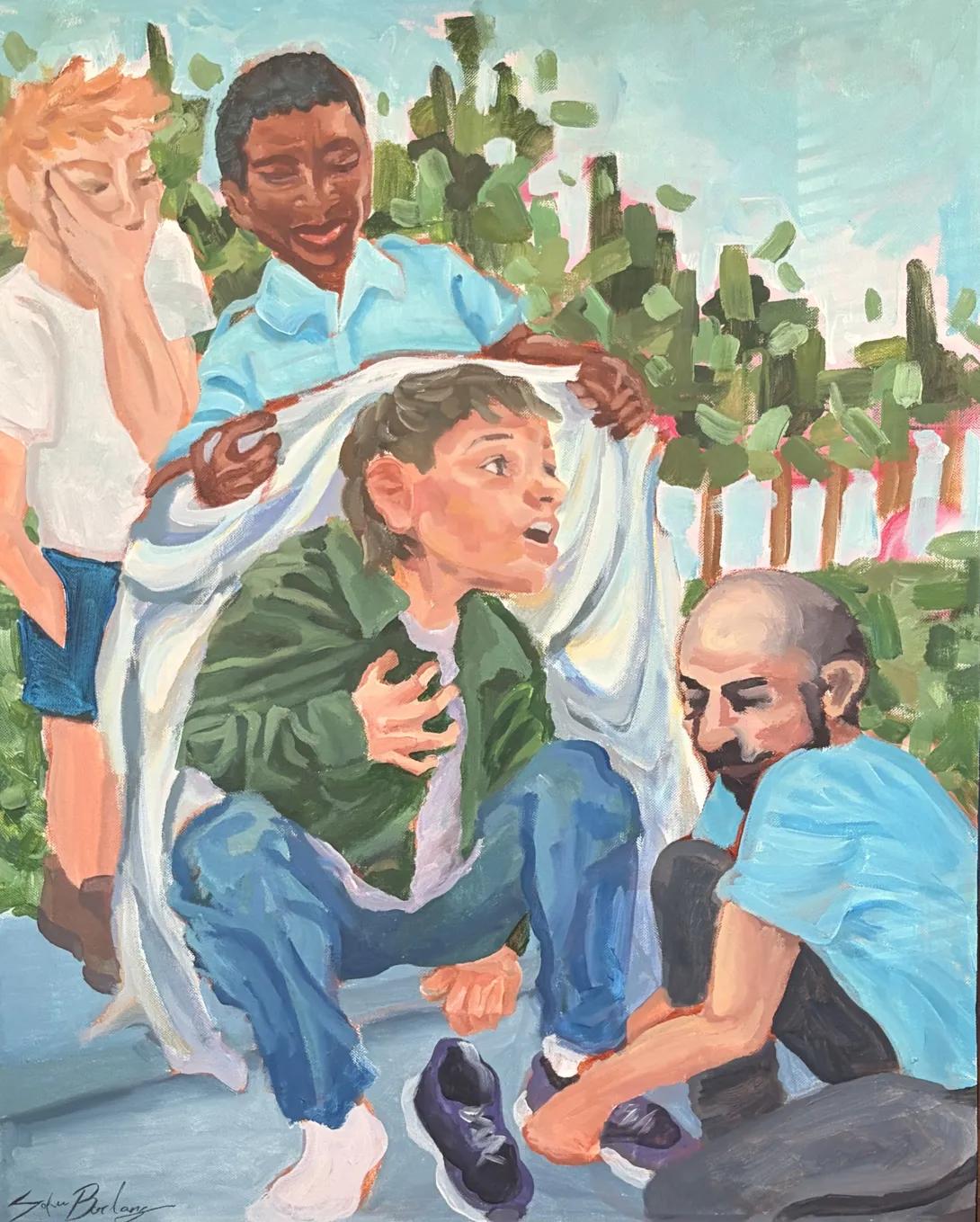
What Should Have Been
Sof Berlanga (she/they)
My understanding of the world is different than many, because many people have not experienced what I have. As someone with previous episodes of psychosis, I am constantly thinking about the world and my place in it. This is because there was a period of time where I couldn't tie myself down to any given reality. Bringing light to what made aspects of the psychosis so difficult is important because it can lead to systematic improvements.
This particular piece explores the thought of being able to rewrite a narrative. I personally had an interaction with an emergency response team that caused more lasting damage than good. I was not treated with empathy or kindness but rather disregard. Instead of dwelling on my grievances, I would rather show exactly how it could have gone better. In this painting we see one paramedic putting a blanket over my shoulders and another tying my shoe. These responses show through actions not just words, that there is care.
The medium of this painting is acrylic. It allowed me the freedom to experiment with different colors and compositions because I could easily paint on top.
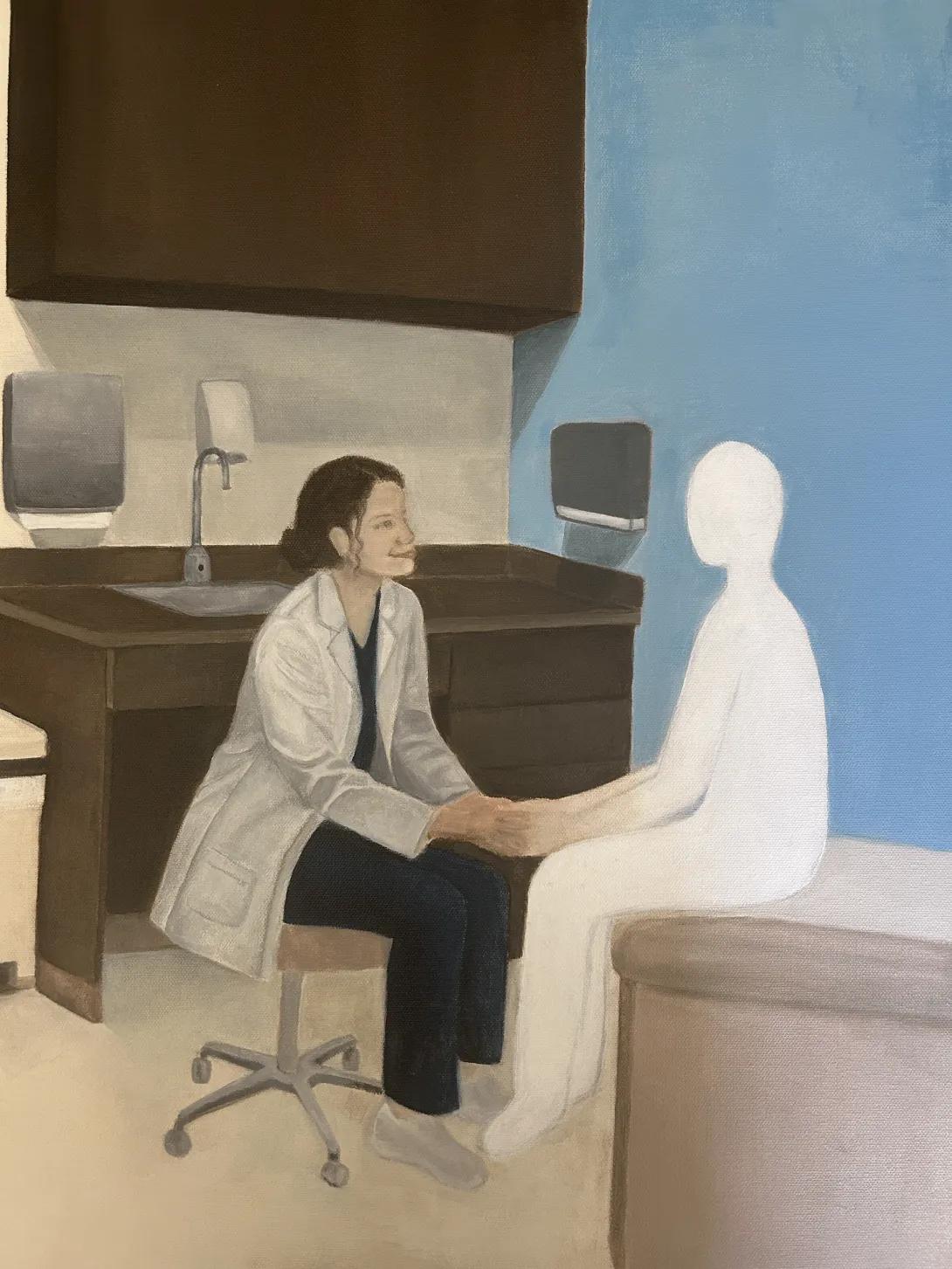
Color Coming Back
Sophia Fahim
Color Coming Back is an acrylic painting on canvas that explores the effect of compassionate health care on the lives of youth today. The subject is a youth patient who represents teenagers and the youth in general. I began the piece by preparing the canvas with water to tighten the surface. I then created an underpainting using watered-down raw umber acrylic paint, using the grid method to sketch and establish the proportions and composition. After building the underpainting, I began applying non-dilluted acrylic paint, focusing primarily on a neutral and blue-toned palette to reflect the clinical setting of the piece.
The painting depicts a health care professional connecting with a youth patient in a doctor’s office. As a member of the youth community, I can attest to the feeling of being placed into a category or assigned a label when it comes to health care. When we are viewed as our symptoms, conditions, or medications first, who we are takes secondary importance. As teenagers, we already carry countless stereotypes and assumptions, usually negative, that can flatten our individuality. Regardless of the intent of health care professionals, who are often doing their best to help, this dynamic can make youth patients feel like an outline: a blank, emptied version of themselves. Mental health is just as important as physical health, and when one is compromised to treat the other more efficiently or mechanically, it may do more harm than good.
My painting is meant to convey the feeling of being seen by a health care professional as more than a label, allowing a patient’s inner self to flourish and receive care rather than only their physical symptoms. The doctor’s compassion, signified through the connection of their hands, initiates the patient’s outline becoming filled with color, beginning exactly where the connection is made. The piece uses metaphor to communicate this visually: the patient’s color represents their personality, identity, and humanity, filling in the blank outline they have been reduced to. The contrast between the neutral, clinical environment and the saturated colors within the patient reinforces the idea that compassionate care can bring individuality and humanity back into focus.
Becoming what feels like a “blank outline” of yourself is damaging because it strips away the complexity, dignity, and emotional reality that make someone whole. My intent with this piece is to advocate for the mental health of youth patients and emphasize its importance in the health care space, reminding viewers that healing begins when we are seen fully.
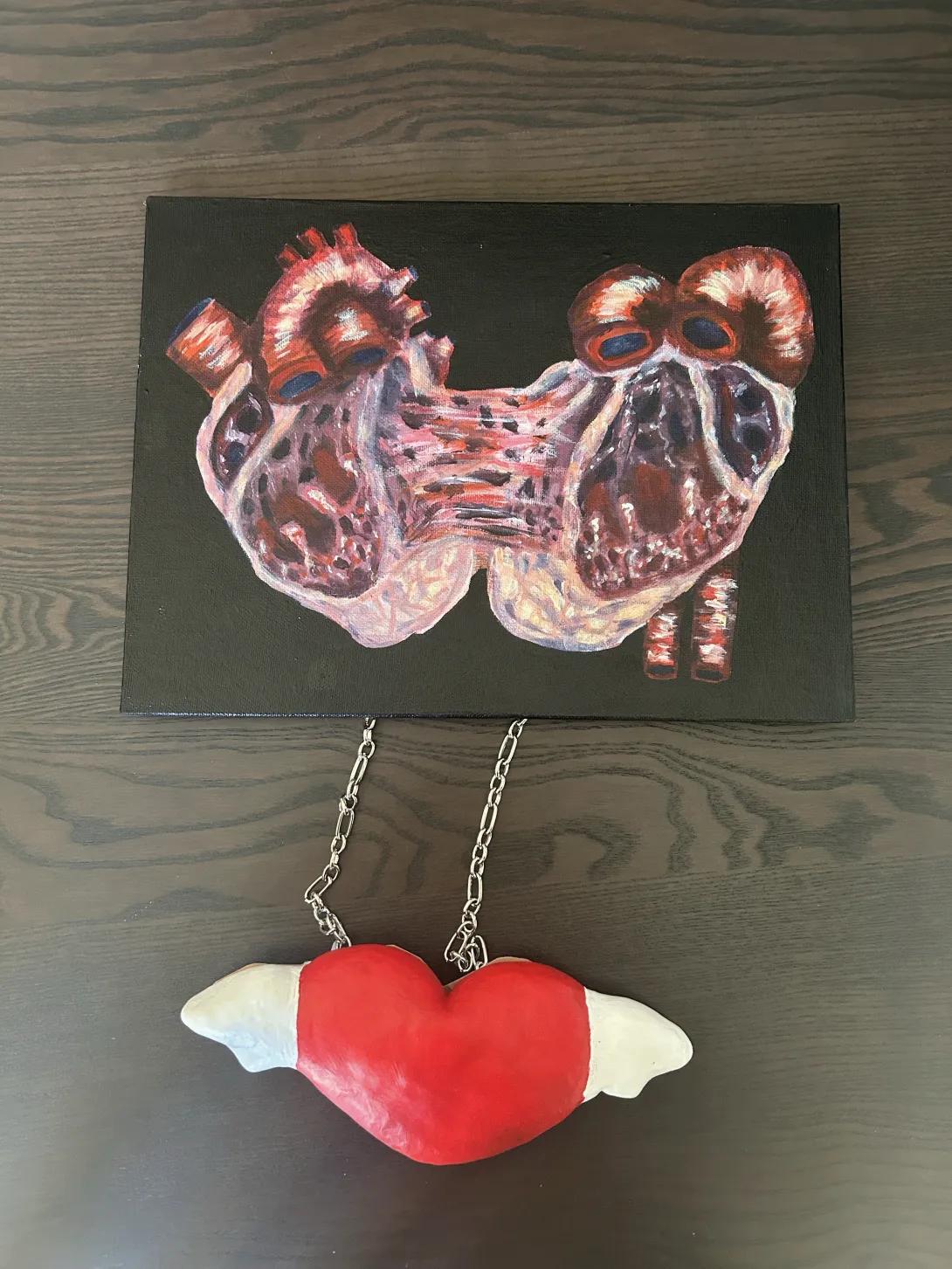
Heart to Heart
Suhan Zhu (she/her)
My piece explores what it feels like to live in a disabled body. Nearly everyone in their lifetime becomes disabled whether it is from an accident, a random genetic mutation, or simply age. This is why I want to explore this theme in my art piece because I feel that this theme will be able to connect with a lot of people. Many people including myself have disabilities that are not visible. We are expected to perform and be just as useful in society as perfectly healthy humans, which is often not possible. For me I have been living with a disability my whole life. I have learned to live with it and function well enough that people often cannot tell I even have one, thus I often build unrealistic expectations of what I am capable of. My piece expresses this through a cartoony foam heart weighing down a painting of a realistic heart. The foam hearts are my unrealistic expectations of what my body can do. It's bloated, its tiny wings can’t lift itself, so it just drags and sinks to the floor. This heart breaks out of the 2d plane. It's real and tangible like how unrealistic expectations of what the body can do also can feel more real than the body’s actual capabilities. The heart, despite its light material sinks, just like how expectations fail no matter how nice and lofty the idea sounds. The realistic heart is supposed to represent what the body can actually do. The real heart is an ugly bloody mess, but it’s real, and no matter what expectations there are, it will try its best continue to sloppily operate. This heart is confined to a painting because it represents how hearing your health talked about by doctors can often feel distant.
Meet the Artists
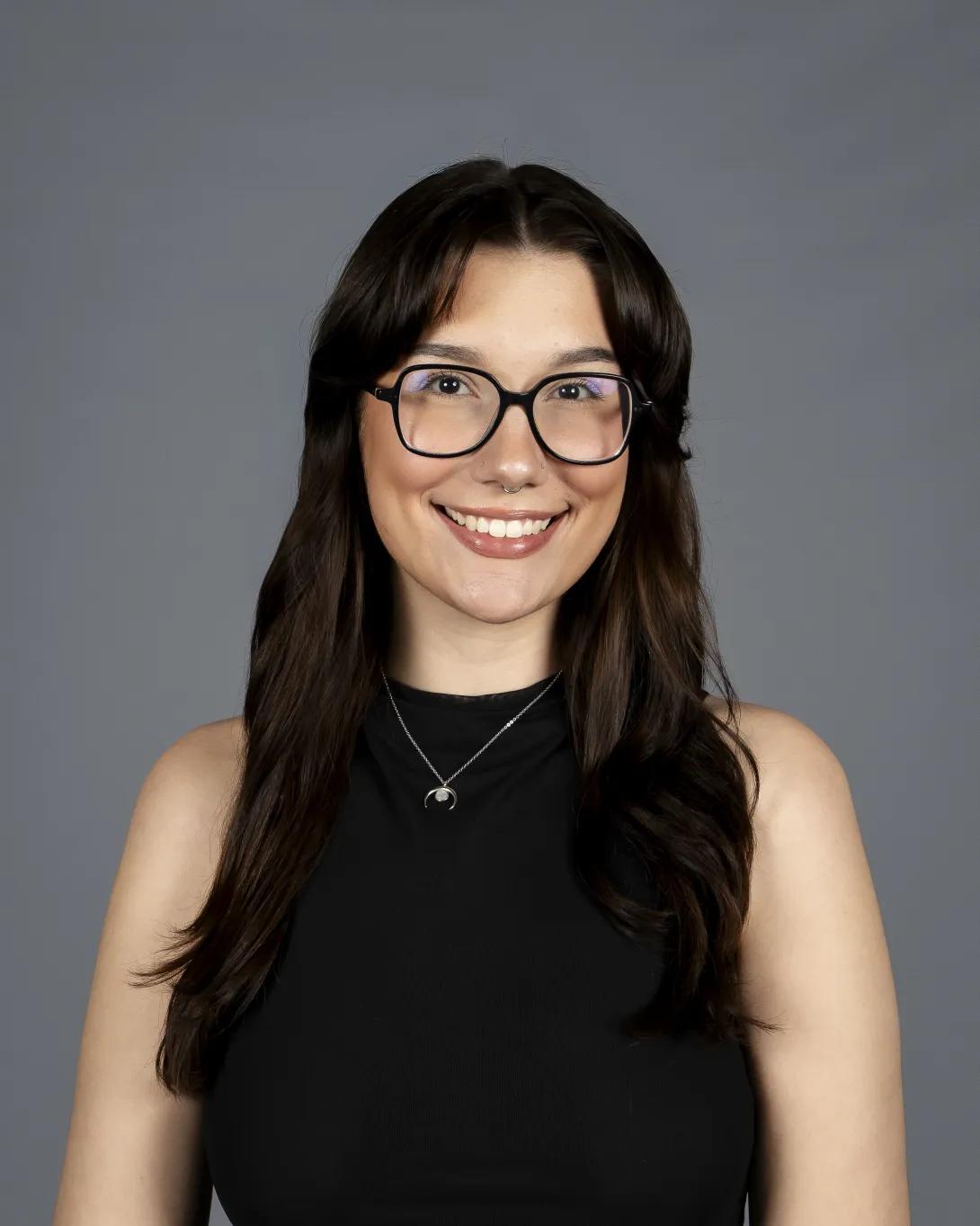
Arianna "Ari" Mullen (she/her) is an illustrator from Michigan, currently based in the Detroit Metropolitan Area. Rooted in a lifelong love of art, Ari’s creative practice is deeply intertwined with her commitment to advocacy for women's health and safety issues. Through both her artwork and her outreach, she seeks to provide a voice for those who feel silenced, transforming personal and collective stories into visual narratives. Her work reflects a sensitivity to storytelling, a passion for justice, and a drive to connect art with empowerment. Ari’s dream is to transition from her 9-5 career into life as a full-time book illustrator, where she can continue building worlds that inspire resilience, imagination, and hope.
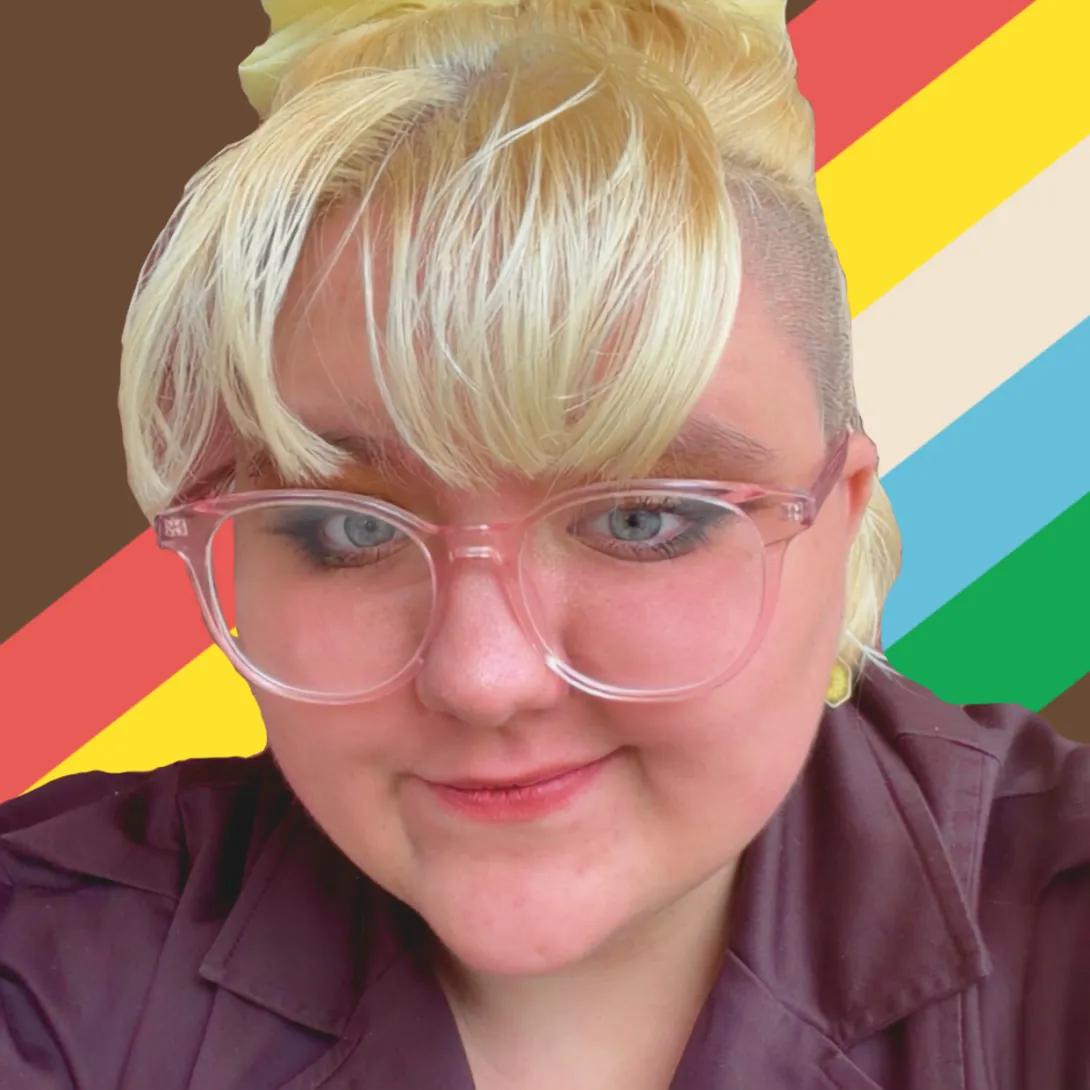
Chance Whitney (they/them) is a 22-year-old who has struggled against the odds their whole life. Now ready to move onto the next chapter after overcoming their greatest challenges thus far, Chance is taking that leap of faith towards helping themselves and the world around them through their empathy and creativity. Chance’s hope is that their message and new perspective is found by those when they need it most.
Eliot Redwine (he/him) is a 19-year old who is a sophomore at the School of the Art Institute of Chicago. He is passionate about environmental sciences, and wants to pursue a career in scientific illustration. He enjoys many art mediums, but his favorites are printmaking and drawing. In his free time, he likes to camp, play bass guitar, and add to his record and CD collection.
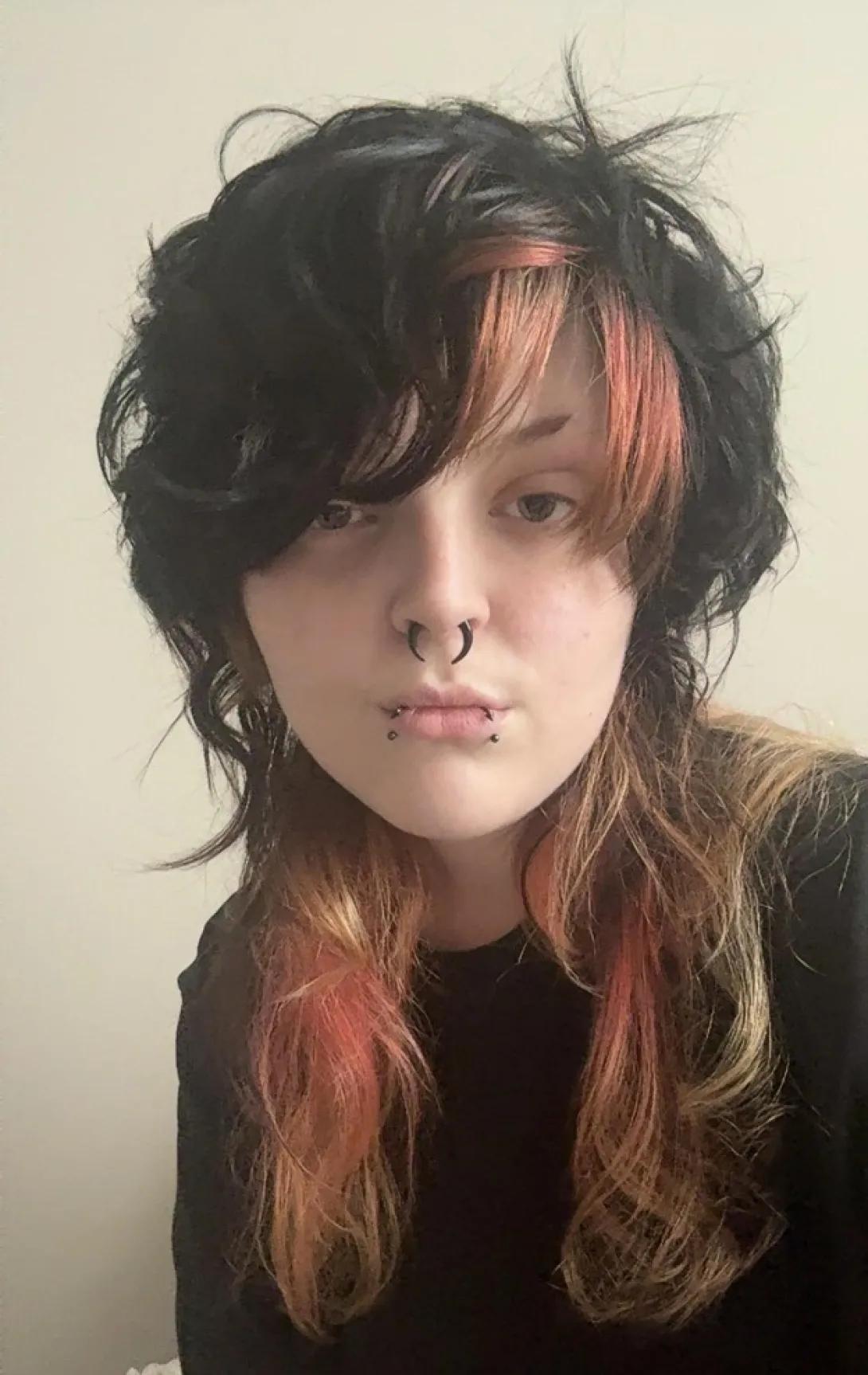
Leo Saunders (they/them) is a self-taught artist located in Canton, Michigan. Their art explores patterns and textures using muti-media techniques with a highlight on acrylic paints. In their free time Leo enjoys connecting with their communities and nature through fairs, festivals, and activism work. Regardless of the activity, they are always striving to find new art forms and methods to include in their works.
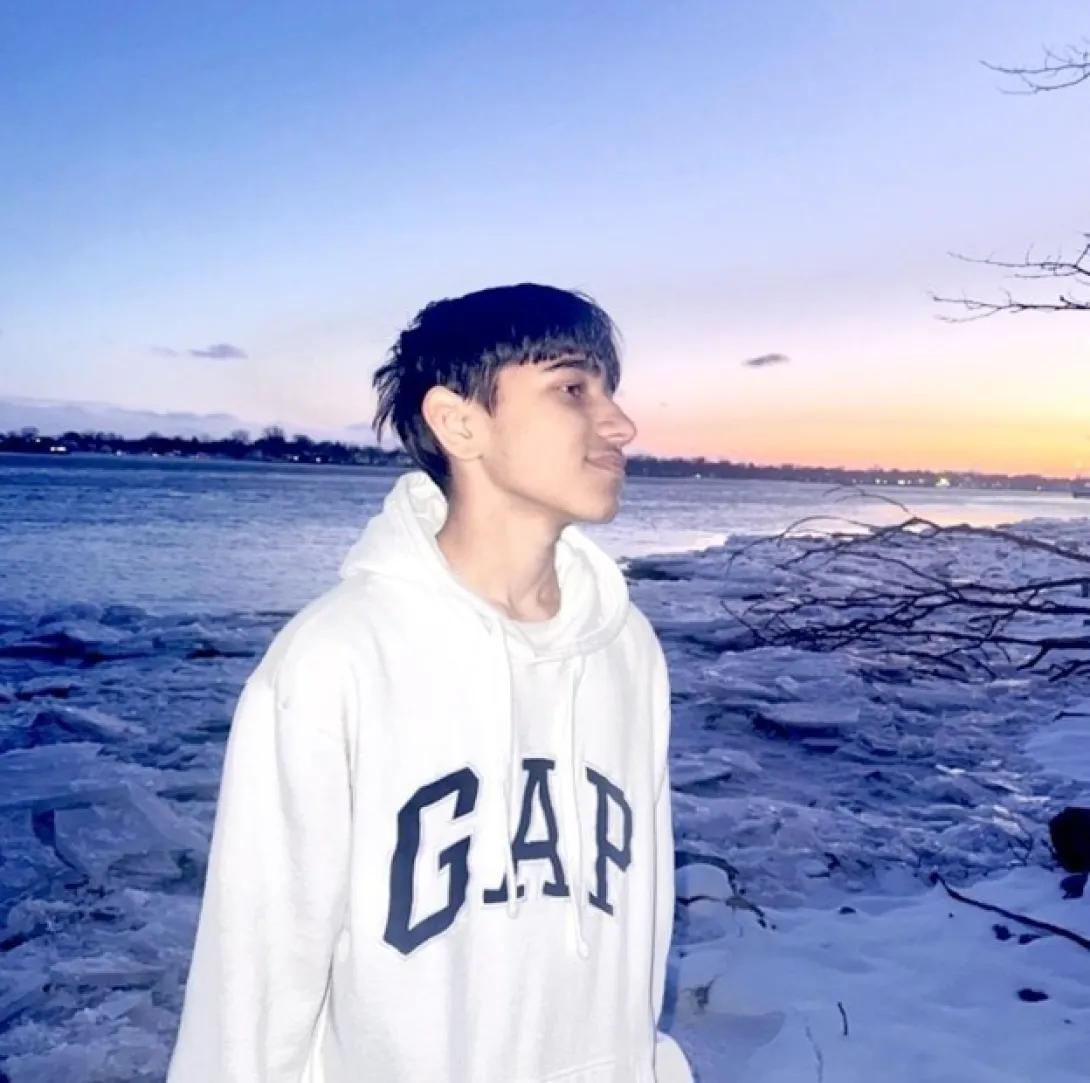
Md Ezaz Miah (he/him) is a 14-year-old student living with their family in Hamtramck, Michigan. They are a Bangladeshi American and an 8th grader at Kosciusko Middle School. They enjoy creating pen and ink drawings with references. When they are not creating art, they enjoy playing soccer and chess. Md also has a love for anime with his favorite being Hunter x Hunter.
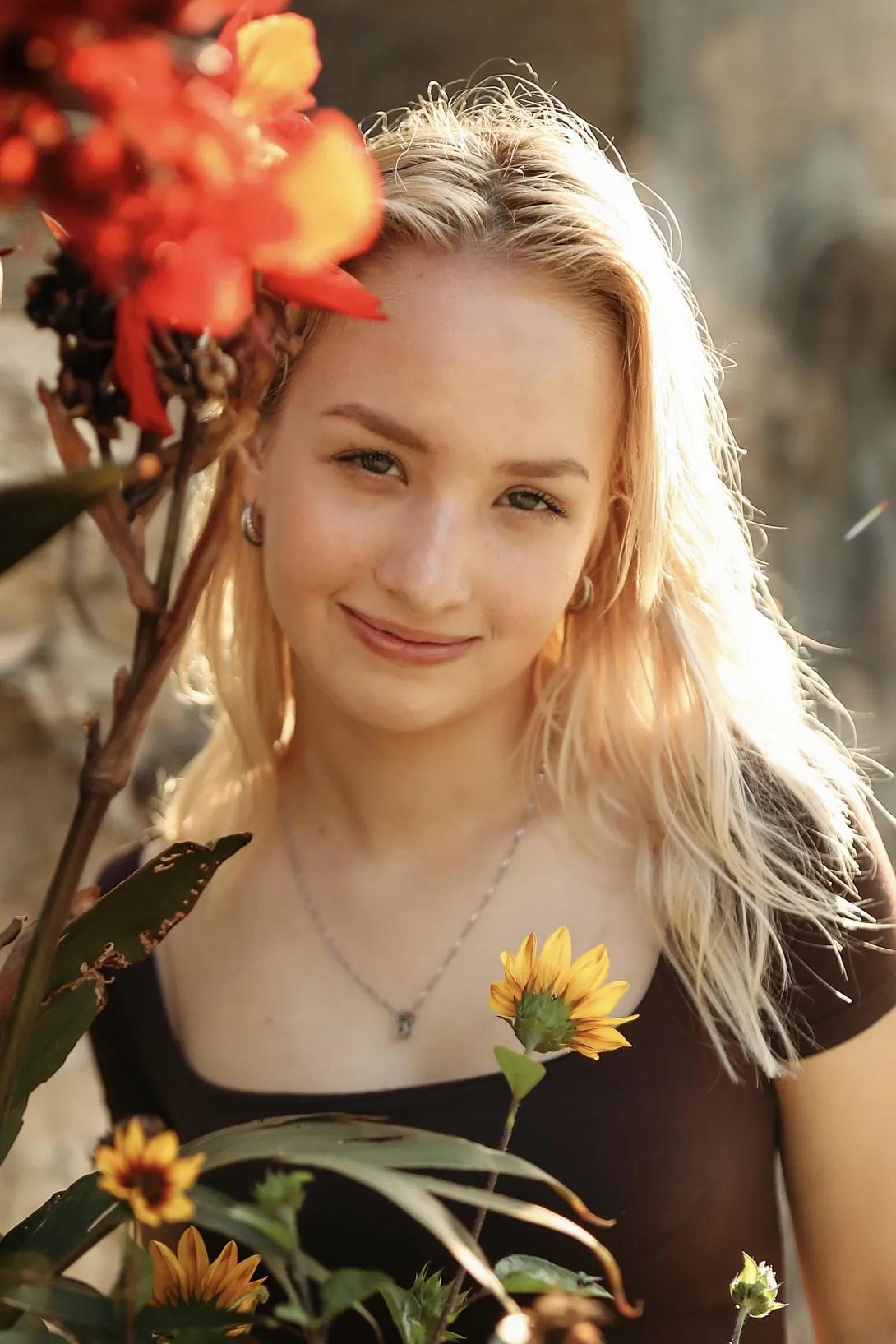
Melaniya Zazovsky (she/her) is a dynamic artist. Born in Russia, Melaniya moved to the United States in 2006, an experience that profoundly shaped her artistic vision and practice. Melaniya's art explores themes of identity, belonging, and cultural integration, reflecting her journey and the blending of her Russian heritage with her American surroundings. She works across various mediums, using her art to bridge cultural divides and foster a deeper understanding of the immigrant experience. Her unique perspective and ability to communicate across cultural boundaries have made her a compelling voice in contemporary art. She currently attends the University of Michigan in pursuit of a BFA and a minor in Art Administration as she continues to explore and challenge perceptions of cultural identity, aiming to inspire dialogue and promote cultural understanding through her art. Melaniya is committed to developing her practice, always seeking new ways to express the intricate tapestry of her experiences and heritage.
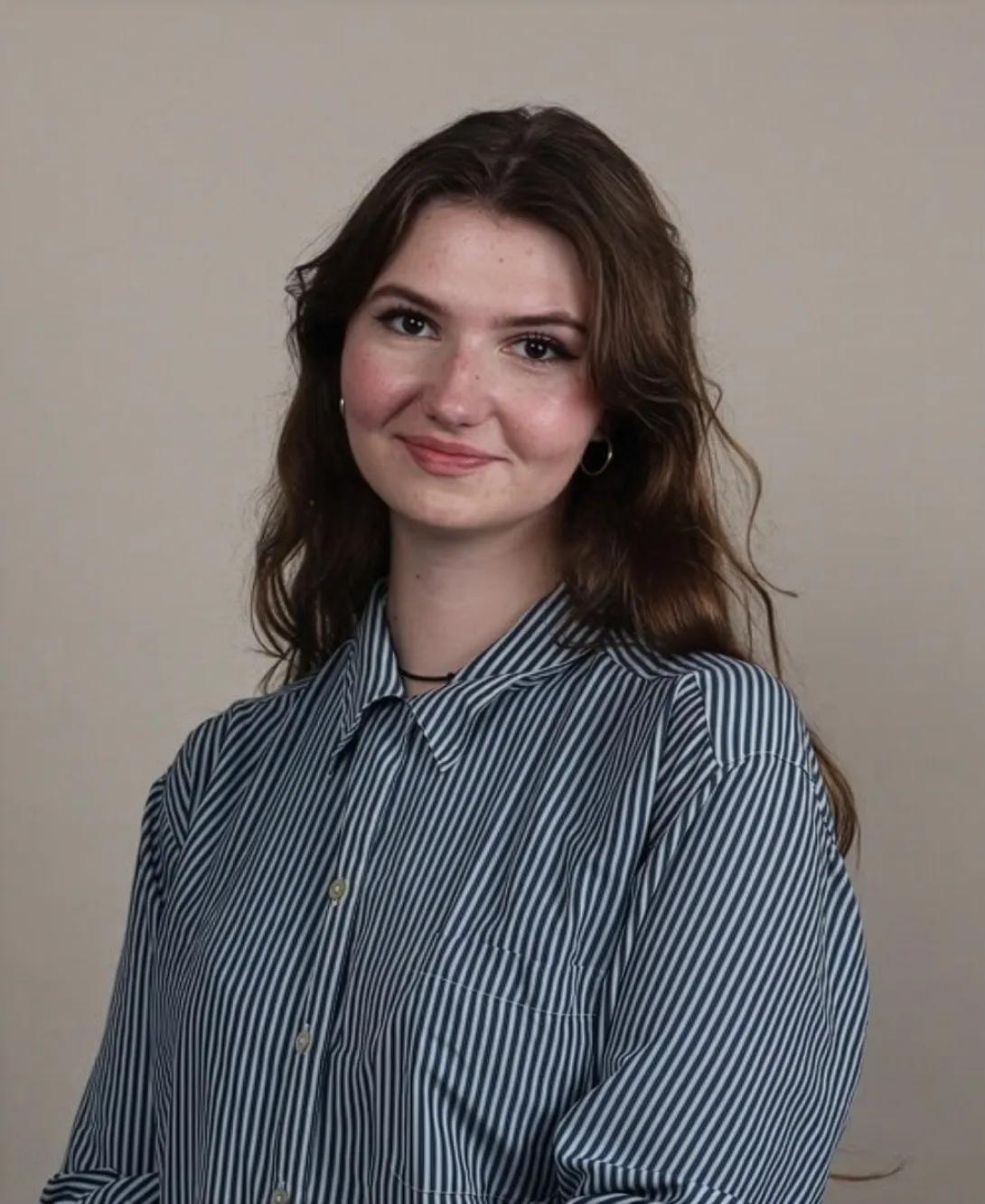
Mia Echlin (she/her) is a Junior at the University of Michigan studying Sociology (Law, Justice, and Social Change), Public Policy, and Urban Studies. She has worked as a featured artist for the UMich Poverty Solutions in their No Strings exhibit, and recently was a select winner of the University of Michigan’s US at 250 sticker competition. Her art primarily consists of acrylic portraits with a focus on female subjects and electric color. In her free time, she loves to sketch, scrapbook, and journal.
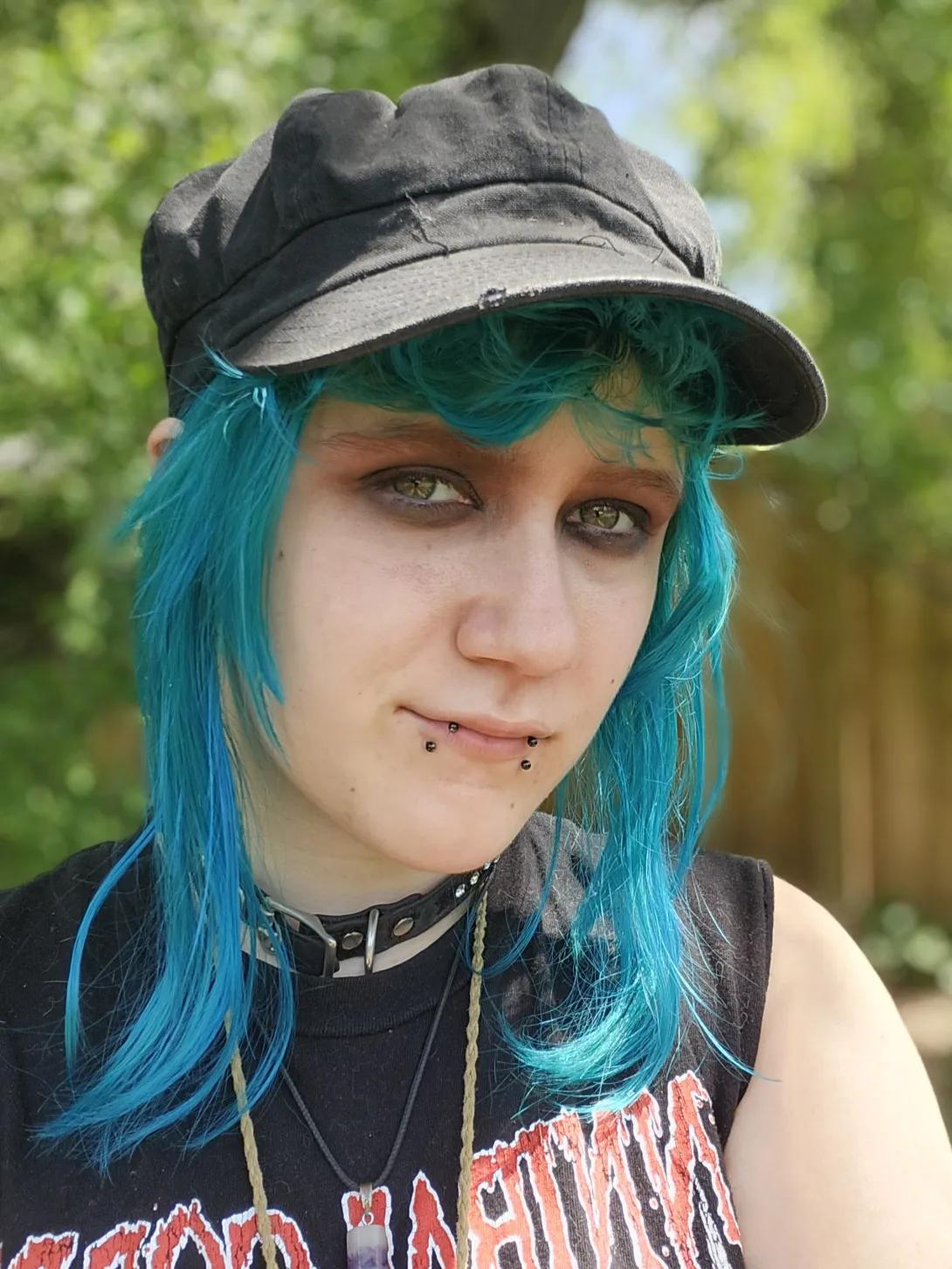
Nick Miltgen (he/him) is a 16 year old artist from Wyoming, Michigan. A junior at Wyoming Public High School and a middle collage student for GRCC, he is queer and loves music, especially punk and metal music, and loves the color orange! Nick likes all art mediums, but especially pencil and oil pastels. He uses art as a way to express his feelings and ideas.
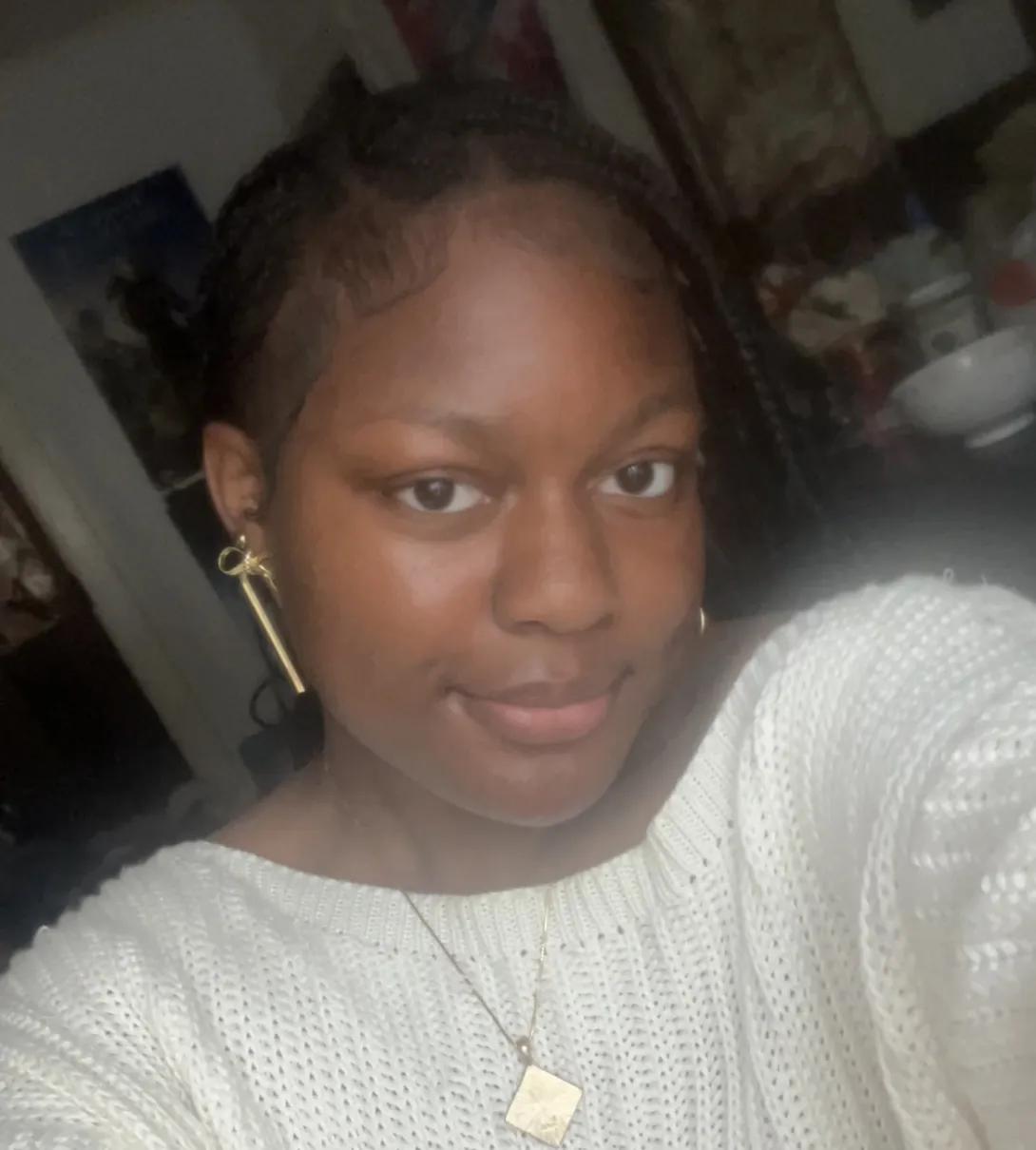
Simone Sumpter (she/her) was born in Fort Wayne, Indiana, but was raised in Detroit for a large part of her life. She's been drawing ever since she learned to write, and ever since then she's had the desire to share her story, whether she's drawing with oil pastels, graphite, or painting canvases with water color! She is so happy to share her story with AMPLIFY!
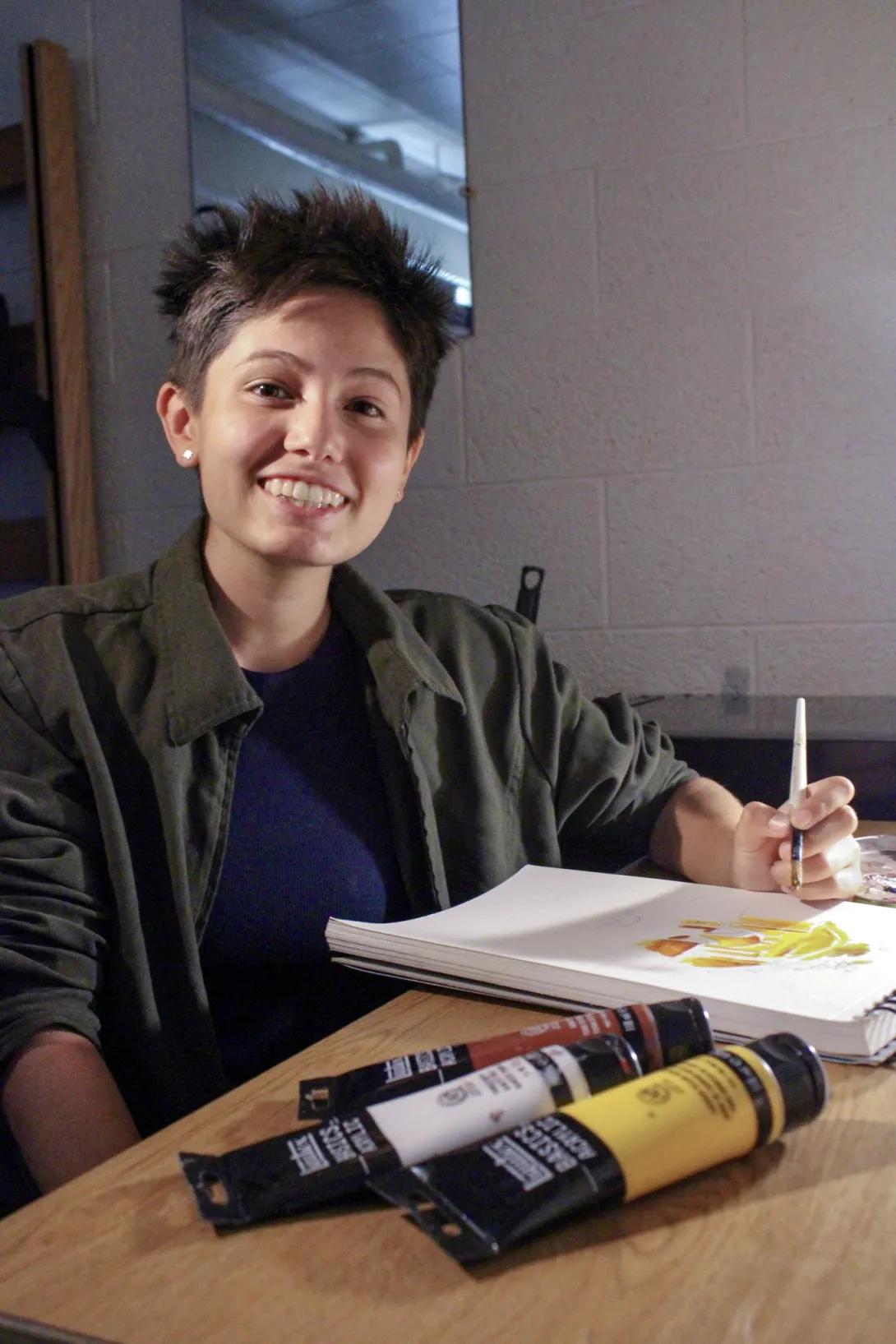
To Sof Berlanga (she/they), art is more than a pastime. It’s a way to bring people into a reality that is different from their own. They first realized the power they held with a paintbrush when they assembled a portfolio for their high school AP art class titled “Representations of Psychosis.” Not only was it a form of therapy to process their experiences, but they finally felt heard being able to show exactly what they went through.
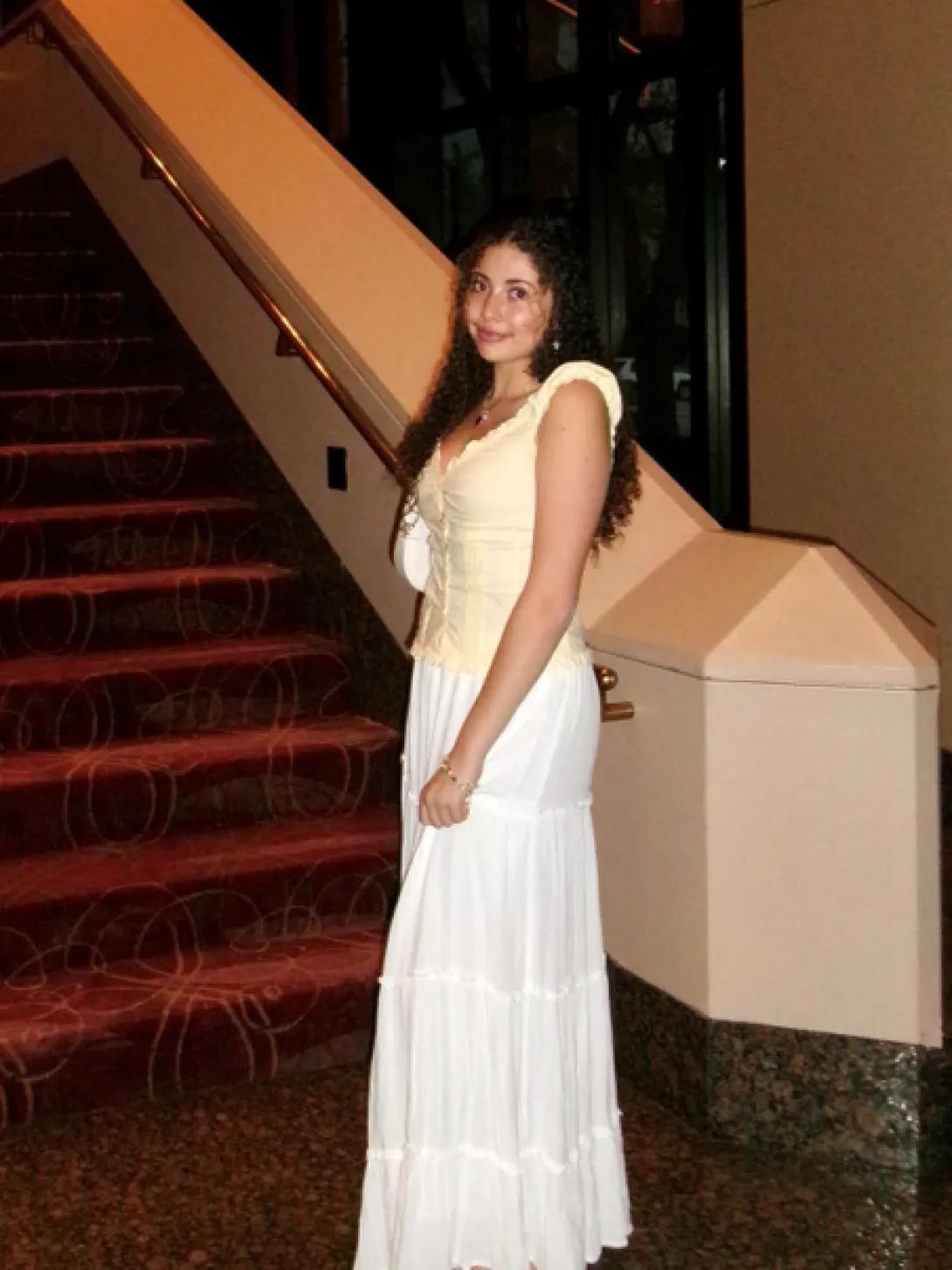
Sophia Fahim (she/her) is a 17‑year‑old student in the International Baccalaureate Diploma Program at Northville High School. A rising senior, she creates artwork that explores the emotional landscape of growing up and the experiences that shape identity, working primarily in acrylic paint, graphite, and charcoal. Outside of her art, Sophia plays soccer and piano, volunteers as a children's tutor, enjoys traveling, and loves spending time with friends and family.
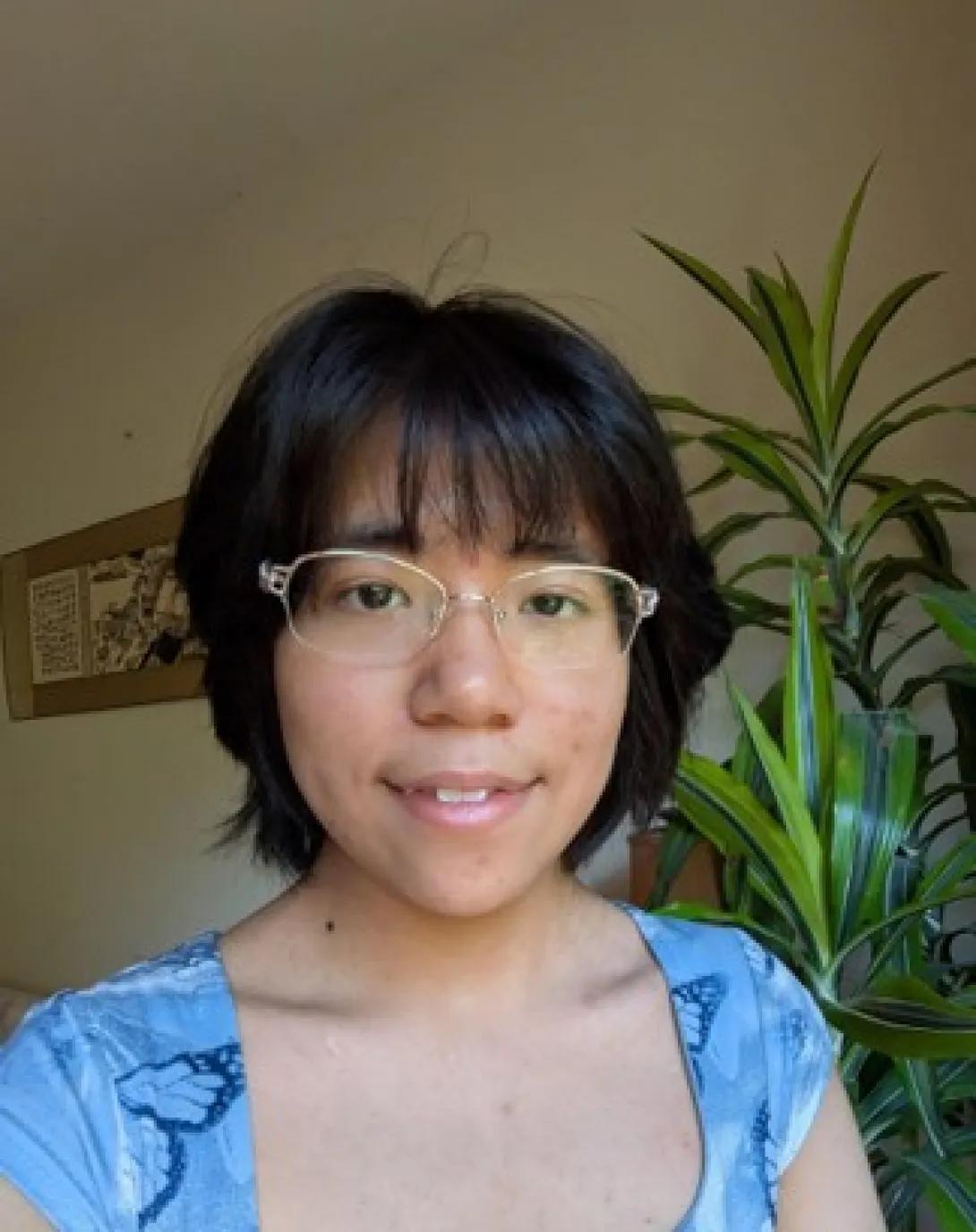
Suhan Zhu (she/her) is a 16-year-old artist from Ann Arbor, Michigan. She lives with her family and has a beautiful old dachshund. Her favorite art medium is acrylics and ceramics. Her art is inspired by human anatomy and machines. When she’s not creating art she loves to watch horror movies and researching deep sea creatures.
AMPLIFY Artwork Prompt
Twelve youth artists were selected to create a piece of artwork based on the following prompt:
Our health is shaped by more than doctors and hospitals. It’s influenced by the world around us: the air we breathe, the places we gather, the schools we attend, and the neighborhoods we call home. Think about your surroundings, relationships, and experiences—big or small—and their effect on your health and well-being. Through your creative and personal expression, share one or more of the following:
At the Conference’s Awards & Reception, AMPLIFY will create a space for dialogue – connecting health care professionals nationwide with the youth they serve, and opening new pathways for understanding, collaboration, and change. The adolescents’ voices, expressed in color, texture, and form, will reveal the ties between environment, health, and equity, inspired by their lived experiences.
Through the artwork, curation notes, and prompts, participants are encouraged to “walk in their shoes,” sparking meaningful conversations between artists and health professionals, and inspiring health care professionals to re-envision the health sphere through the youth lens.
AMPLIFY will have impacts beyond the Conference, too. Through community partnerships, the exhibit will be displayed in multiple venues at the University of Michigan and the surrounding communities. The exhibit will encourage further engagement by capturing viewers’ reactions in the moment through a live word cloud, allowing them to reflect on health, the environment, and identity through youth perspectives.
This project was made possible by a grant from the Arts Initiative at the University of Michigan.


Thank you for applying
The deadline to submit to AMPLIFY is now past. Thank you so much for your interest!
