
Most popular stories of 2025 month-by-month
Check out Health Lab articles that drew in readers most
5:00 AM
Author |
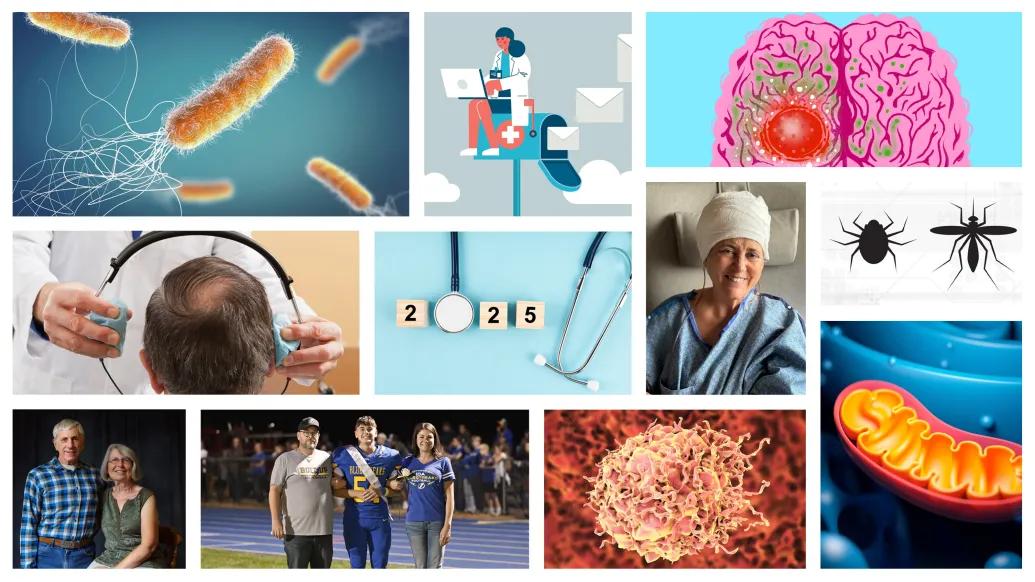
Even though the months flew by, each one in 2025 came packed with important health and medical information that was covered extensively by the media throughout the year.
And what Health Lab by Michigan Medicine covered wasn’t much different: with over 350 articles, each month brought with it newly published research, inspiring patient stories of care and advocacy, much-needed expert advice, and much, much more.
Before you sign off for the holidays, check out the most popular Health Lab stories by month this year and consider sharing them with colleagues, friends and/or loved ones who also might want to stay in-the-know about accurate health and wellness information.
Most read stories of 2025 month-by-month
January 2025: Tooth infection leads doctors to giant brain aneurysm
A woman’s tooth infection led doctors to discover a giant brain aneurysm, which experts at Michigan Medicine treated using a minimally invasive flow diversion embolization.
February 2025: Mitochondria may hold the key to curing diabetes
Mitochondria are essential for generating energy that fuels cells and helps them function. Researchers used mice to show that dysfunctional mitochondria also trigger a response that affects the maturation and function of β-cells, which are responsible for insulin production.
March 2025: Aggressive brain cancer doesn’t stop woman’s positive perspective
After receiving a diagnosis of glioblastoma, a Michigan woman — who passed away in August — reflects on her experience through diagnosis and treatment.
April 2025: Many older adults send their doctors portal messages, but who pays?
Patient portal messages between doctors and older adults have become increasingly common, but those messages can cost patients money. A study found that people with Medicaid coverage are billed as often as those with private insurance.
May 2025: Researchers identify roles of key genes in colon cancer development
Using mouse models and studies of colorectal cancer tissues, investigators showed that the loss of SOX9 gene promotes tumor progression and the pathway it regulates could be a potential target for future treatments.
June 2025: Mosquitos and ticks: 6 tips to swat away two summer spoilers for kids
From which insect repellents to use, to how to properly remove a tick, a Michigan Medicine expert offers advice for all during the warmer months.
July 2025: Top 10 things to know about your health costs right now
What to know about Medicaid, Medicare, medical debt rules and Affordable Care Act Marketplace insurance plans being impacted by the Supreme Court, Congress and President Trump's administration.
August 2025: Musicians do not demonstrate long-believed advantage in processing sound
A University of Michigan and the University of Minnesota study found no evidence for a long-believed association between musical training and enhanced neural processing of sounds at the early stages of auditory processing.
September 2025: Dietary changes could provide a therapeutic avenue for brain cancer
U-M investigators tracked how glucose is used in glioblastoma tumor cells and showed how dietary interventions can slow brain cancer growth in mice.
October 2025: New warnings about superbugs
The Centers for Disease Control and Prevention and the World Health Organization issued dire warnings about the spread of so-called superbugs, infectious bacteria for which there are no effective antibiotics. An expert shared more on the serious situation.
November 2025: Using genetic testing, doctors help patient find answers for her diabetes
For 30 years, Autumn Caris thought she had type 1 diabetes. After being seen at U-M Health, Caris discovered she actually had a rare, and often misdiagnosed, type of diabetes.
December 2025: Gut microbiome may influence how patients with pancreatic cancer respond to treatment
Microbes create unique communities, called microbiomes, in the gut, oral cavity, skin and urogenital regions. A researcher discusses common misconceptions about “healthy” microbes, the role of microbiomes in pancreatic cancer and future research ventures.
Sign up for Health Lab newsletters today. Get medical tips from top experts and learn about new scientific discoveries every week
Sign up for the Health Lab Podcast. Add us wherever you listen to your favorite shows

Health Lab
Explore thousands of health news & research stories by visiting the Health Lab homepage for more.
Media Contact

Public Relations
Department of Communication at Michigan Medicine
Stay Informed
Want top health & research news weekly? Sign up for Health Lab’s newsletters today!
Featured News & Stories

Intermittent fasting can reverse diabetes in mice, study finds

New questionnaire aims to improve understanding of demand avoidance in children, teens

Timing is of the essence for RNA during stress

New anti-cancer strategy shows promise in preclinical studies
More babies with hypoplastic left heart syndrome surviving critical period between surgeries

