Musicians do not demonstrate long-believed advantage in processing sound
Researchers used larger sample sizes than in past studies with contradictory results
8:00 AM
Author |
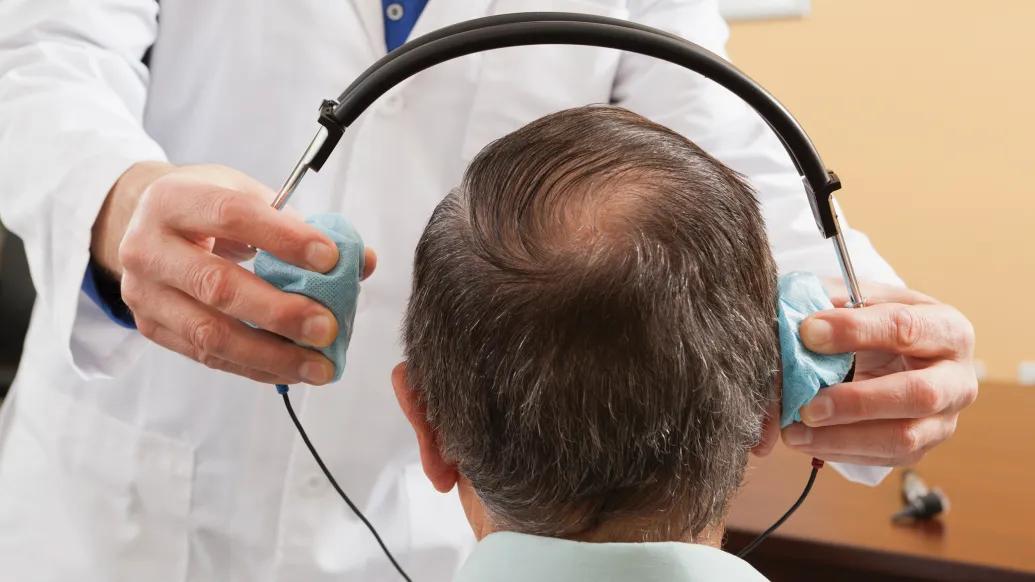
A large-scale study from the University of Michigan and University of Minnesota finds no evidence for a long-believed association between musical training and enhanced neural processing of sounds at the early stages of auditory processing.
Researchers attempted to recreate several results from past studies and found no evidence of several key findings.
In this latest study, musicians demonstrated no greater ability to process speech in background sounds than non-musicians.
Musicians also didn't have superior abilities to process changes in the pitch of speech.
The study did find that early brain processing for speech degrades with age— a finding supported by prior research. This effect of age was unrelated to musical training.
“Using sample sizes that were more than four times larger than the original studies, we found no relationship between musical training and sound processing at very early stages of the auditory system, thought to reflect sound representation deep in the brain,” said Kelly L. Whiteford, assistant professor of otolaryngology at the University of Michigan Medical School and member of the Kresge Hearing Research Institute.
Whiteford performed the initial research as a member at the University of Minnesota, one of six study sites.
Previous studies had reported that musicians exhibit a more faithful representation of sound using a measure called the Frequency Following Response.
The FFR is a measurable reaction from the brain associated with efficiency in processing sound.
In experimentation, a sound is introduced through earphones and the FFR can be observed through direct monitoring of brainwaves using small electrodes placed on the head.
The electrical signals from the brain synchronize with the frequency of the sound, allowing for the measurement of faithfulness between the FFR and sound.
Two prior studies had supported the idea that musical training allowed for more efficient processing of sound—as measured by FFR—and a greater ability to do that processing in the presence of background noise.
Researchers were unable to replicate those results and found no relationship between years of formal musical training and the fidelity of processing. (They had identified differences in definitions of “musician” and “non-musician”—and variation of abilities within each group—as a limitation of prior studies.)
The larger sample size used in this study was also designed to make its findings more applicable to the general population.
While this research casts doubt on the ability of musical training to enhance subcortical brain processing of sound, it does not address existing research showing that musical training is related to enhanced processing of sound in later, cortical stages of brain processing.
“Musicians tend to have better music perception,” Whiteford said.
“We also found that in our study. Any reliable differences in how we perceive sound must be reflected somewhere in the brain. Where is that happening? Not in the FFR.”
That possibility of better sound processing in musicians still leaves open the question of whether this difference is caused by their training or whether people who process better are more likely to become musicians.
Researchers hope that future studies will be designed with a musical training intervention and an active control to answer that question.
"These results highlight the importance of carrying out rigorous large-scale studies to test even the most attractive theories,” said Andrew J. Oxenham, Ph.D., Distinguished McKnight University Professor of the University of Minnesota Department of Psychology and senior author on the paper.
“Even though our results show that musical training isn't associated with changes in pre-cortical brain responses to sound, the findings don't detract from the importance of music in its own right, and the emotional and social benefits that come from creating and experiencing music together."
Additional authors: Lucas S. Baltzell, Matt Chiu, John K. Cooper, Stefanie Faucher, Pui Yii Goh, Anna Hagedorn, Vanessa C. Irsik, Audra Irvine, Sung-Joo Lim, Juraj Mesik, Bruno Mesquita, Breanna Oakes, Neha Rajappa, Elin Roverud, Amy E. Schrlau, Stephen C. Van Hedger, Hari M. Bharadwaj, Ingrid S. Johnsrude, Gerald Kidd Jr., Anne E. Luebke, Ross K. Maddox, Elizabeth W. Marvin, Tyler K. Perrachione, Barbara G. Shinn-Cunningham
Funding/disclosures: NSF-BCS grant 1840818, awarded to A.J.O., H.M.B., G.K. Jr., A.E.L., R.K.M., E.W.M., T.K.P., and B.G.S. and the National Institutes of Health R01 DC005216, awarded to A.J.O. I.S.J and trainees V.I., B.M. and S.C.V.H. were funded by the Canada First Research Excellence Fund Award “BrainsCAN” (2017-2023) to Western University.
Paper cited: “Large-scale multi-site study shows no association between musical training and early auditory neural sound encoding,” Nature Communications. https://doi.org/10.1038/s41467-025-62155-5
Sign up for Health Lab newsletters today. Get medical tips from top experts and learn about new scientific discoveries every week
Sign up for the Health Lab Podcast. Add us wherever you listen to your favorite shows

Health Lab
Explore thousands of health news & research stories by visiting the Health Lab homepage for more.
Media Contact

Public Relations
Department of Communication at Michigan Medicine
In This Story

Kelly Whiteford, PhD
Assistant Professor
Stay Informed
Want top health & research news weekly? Sign up for Health Lab’s newsletters today!
Featured News & Stories

Rural-urban disparities in head and neck cancer

Pollen exposure linked to worse quality of life for chronic sinus infection sufferers
Human ability to focus on specific sounds not found to originate in auditory nerve, brainstem

Addressing body-image distress in head and neck cancer patients
Pain, psychological factors and physical function closely linked in people with systemic sclerosis