Gut microbiome may influence how patients with pancreatic cancer respond to treatment
An expert discusses how microbes can influence disease progression and future research directions
5:00 AM
Author |
Most humans contain the same number of microorganisms as the number of human cells in their body.
These microorganisms, including bacteria, fungi and viruses, are collectively called the microbiome and they create unique communities in the gut, oral cavity, skin and urogenital regions.
While most studies have focused on the role of the gut microbiome and how it can be kept “healthy”, it's still unclear how changes in microbiomes impact the development of diseases.
Donnele Daley, M.D., assistant professor of surgical surgery and member of Rogel Cancer Center, discusses common misconceptions about “healthy” microbes, the role of microbiomes in pancreatic cancer and future research directions.
Why has there been an increased focus on the role of microbiomes in disease progression?
Daley: The role of the microbiome has been grossly understudied in the past and we’re just starting to realize that it can influence inflammation in various organs outside of the intestines during diseases.
Recent studies have shown that the products made by microorganisms can play a role in cardiovascular, bariatric and neurovascular diseases.
My research looks at how microbiomes can influence the initiation and progression of cancer, specifically in the pancreas.
How do bacteria and fungi affect pancreatic cancer?
Daley: Several studies have shown that there is a difference in the composition of the gut microbiome of pancreatic cancer patients compared to healthy individuals.
For example, some studies have shown that the bacterial group known as proteobacteria, which includes E. coli, is commonly found in pancreatic tumors.
Although this bacterial group includes many different types of bacteria, some species can influence how immune cells behave around cancer cells or how these patients respond to chemotherapy.
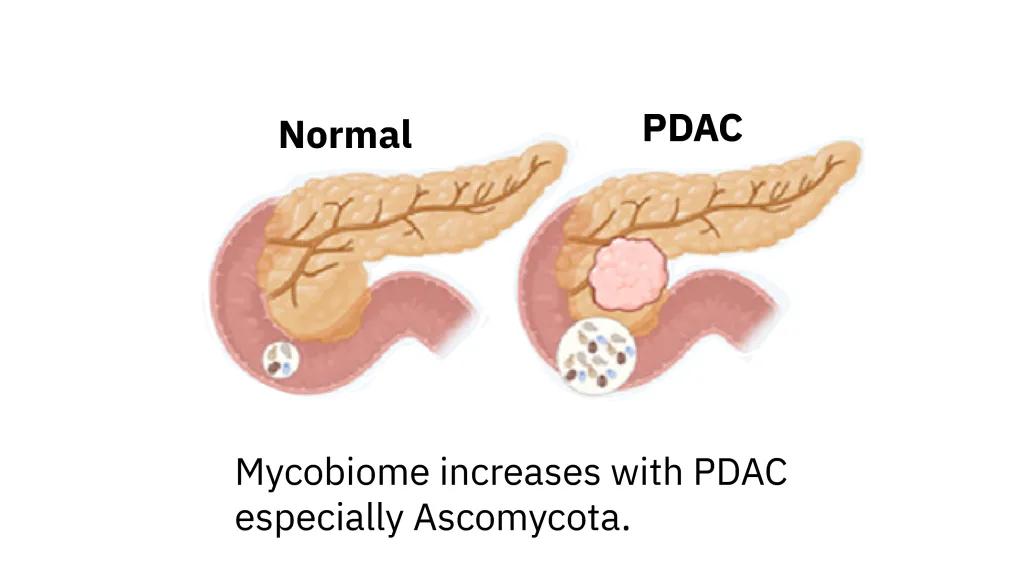
The number of fungi is higher in the pancreas of patients with pancreatic cancer compared to healthy controls and fungal products may also influence immune cell behavior in the tumor microenvironment.
What are the challenges associated with studying microbiomes?
Daley: Microbes are present in very small numbers in organs outside of the gastrointestinal tract, which makes it hard to accurately characterize them and study their effects in pancreatic cancer.
The microbiome also changes entirely based on where you live and what you eat. It's so fluid that you need to study a large population of people to understand how it can influence cancer development.
Another challenge with microbes is that even if they are from the same bacterial or fungal species, they can behave entirely differently depending on the environment in which they are found.
It is, therefore, hard to say what the “good” microbes are.
Many people wonder whether they should eat more yogurt or make dietary changes, but it is still unclear whether it will help with cancer progression.
I encourage everyone to have a balanced, healthy diet because it influences what we consider a balanced microbiome.
What are future research directions for the field of pancreatic cancer?
Daley: We don’t know how the metabolic activity of these microbes influences their interaction with cancer cells or other cells in the tumor microenvironment.
Some studies have shown that gut microbes can metabolize a common chemotherapy agent used in pancreatic cancer treatment.
It's unclear whether these microbes can influence a patient’s overall response to treatment and if they develop resistance to the drug.
Many of our studies are in the early preclinical stages, so we're still learning.
We can't come to conclusions about how a person’s specific gut microbiome is going to affect disease progression or response to chemotherapy.
I would encourage patients to consider clinical trials, especially those collecting samples for microbiome analysis from patients who are undergoing treatment.
These types of studies can help us better understand how the microbiome changes with treatment and cancer development.
Learn more about ongoing clinical trials
Funding/disclosures: Blondy and Rogel Center for Pancreatic Cancer at the University of Michigan Rogel Cancer Center, University of Michigan Postdoctoral Pioneer Program and the American College of Surgeons.
Tech transfer(s)/Conflict(s) of interest: Daley is a coinventor on patents pertaining to immune cell targets for therapy in solid tumors (US Patent No: 2018044422-A1, 07/31/2017; US Patent No: 2018023111-A1, 07/31/2017)
Paper cited: “The Role of the Microbiome in Pancreas Cancer: The Evolving Influence of the Fungal Mycobiome,” Surgical Clinics of North America. DOI: 10.1016/j.suc.2025.06.001
Sign up for Health Lab newsletters today. Get medical tips from top experts and learn about new scientific discoveries every week
Sign up for the Health Lab Podcast. Add us wherever you listen to your favorite shows.

Health Lab
Explore thousands of health news & research stories by visiting the Health Lab homepage for more.
Media Contact

Public Relations
Department of Communication at Michigan Medicine
Related

Gut Bacteria Leads to Obesity? Not So Fast
Gut bugs control the body’s thermostat
Stay Informed
Want top health & research news weekly? Sign up for Health Lab’s newsletters today!
Featured News & Stories
New dual-target drug may help overcome immunotherapy resistance in pancreatic cancer

Online resources and coaching helped people seek genetic testing for cancer
Comprehensive DNA sequencing reveals hidden drivers of cancer

Many older adults make Medicare decisions quickly and most don’t change plans, poll finds
‘Molecular glue’ stabilizes protein that inhibits development of non-small cell lung cancer and uterine cancer