Aggressive brain cancer doesn’t stop woman’s positive perspective
Despite a devastating glioblastoma diagnosis, Chris Barry is thankful for her family, friends and the care she’s receiving
1:32 PM
Author |
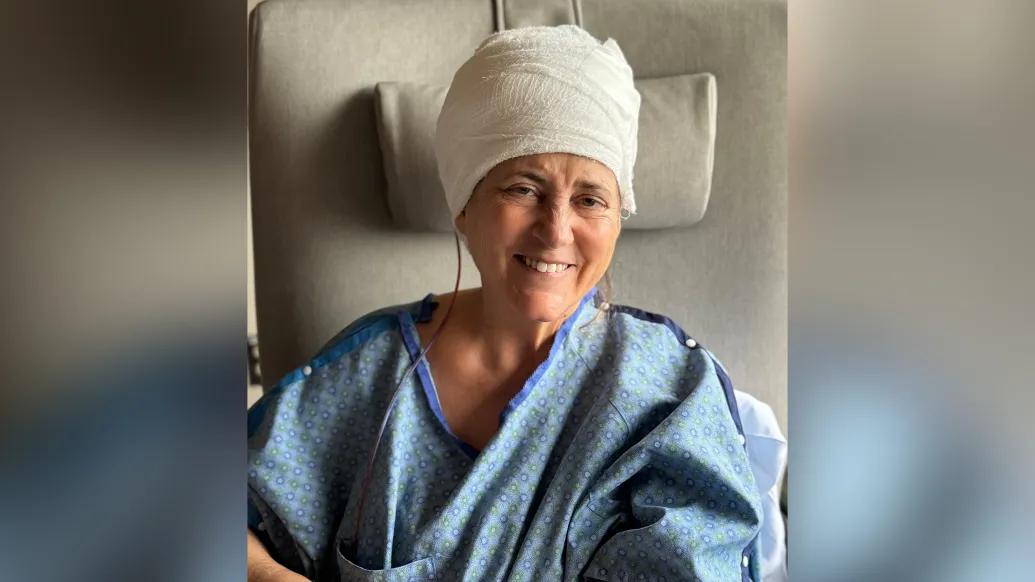
UPDATE: Chris Barry passed away in August 2025. This story, published in March 2025, is an account of her experience during treatment.
Chris Barry has a lot to live for.
At the top of her list are her two young grandchildren, Elena and Nicholas.
She’s determined to watch them grow, despite a diagnosis in late 2023 of glioblastoma, a type of aggressive malignant brain tumor.
Barry is one of approximately 13,000 Americans diagnosed with glioblastoma each year, many of whom travel to University of Michigan Health, where a multidisciplinary team of specialists offers the most advanced treatment methods.
Glioblastoma accounts for nearly half of all cancerous brain tumors, presenting with symptoms such as headaches, double vision, memory problems and balance issues.
Glioblastoma tumors commonly affect individuals between 45 and 70 years old, with 64 being the average age of diagnosis.
A shocking diagnosis
Barry was diagnosed at 65.
She says she felt fortunate to live in Ann Arbor, close to the specialists who she learned could offer her the best possible treatment.
The diagnosis came as a shock to this active woman who had been living a full, healthy life.
But when she began experiencing severe headaches and sometimes felt disoriented and off balance, she became concerned.
At the insistence of a coworker and her sister, Barry went to the University of Michigan Health emergency room, where an MRI detected the tumor.
Nothing could have prepared her for the instant end to her career as a gift officer for the University of Michigan Rackham Graduate School.
“I was able to travel all over the country. I loved the alumni, the donors, the students, the mission of the college. And I was really sad to have such an abrupt retirement. It was shocking.”
Surgery was scheduled almost immediately, Barry recalls.
“They saw the tumor and realized it was very involved, and very big. It was early November 2023 when I first started having symptoms, and my surgery was scheduled for the last day of November.”
Advanced glioblastoma expertise
Neurosurgeon Wajd Al-Holou, M.D., teamed with specialists from the Michigan Medicine Multidisciplinary Brain Tumor Clinic to determine the best path forward for Barry.
The clinic, co-founded and co-directed by Al-Holou, is designed to enable patients to meet with their entire treatment team — a neurosurgeon, neuro-oncologist and radiation-oncologist — in one setting, making it easier for patients to manage their care.
We involve all the tumor faculty within neurosurgery, radiation-oncology and neuro-oncology. It’s a comprehensive clinic that gives patients a full team approach and expertise all at once.”
-Wajd Al-Holou, M.D.
The goal of the clinic, which has grown significantly since its inception in 2021, is to “provide patients with personalized treatment recommendations,” said Al-Holou, noting the team’s extensive expertise in treating both malignant and benign tumors.
“We involve all the tumor faculty within neurosurgery, radiation-oncology and neuro-oncology,” said Al-Holou.
“It’s a comprehensive clinic that gives patients a full team approach and expertise all at once. Basically, each patient gets a personalized brain Tumor Board experience in clinic. We've expanded not only the multidisciplinary options for patients, but also our clinical trials, many of which are developed from our own research and scientific findings in our laboratories at University of Michigan Health.”
Barry immediately put her faith in the U-M Health team.
The surgical plan
“Dr. Al-Holou explained to me what he was going to do,” said Barry.
“He told me he would open a section of my skull and get as much of the tumor out as possible. He explained to me a lot about the brain and that he would need to make a decision about what he was going to concentrate on.”
“The patient’s tumor was located near the part of her brain that controls movement, known as the motor and sensory cortex,” said Al-Holou.
“It was on the right side of her brain, so she was having movement issues and trouble with instability on the left. We use a technique called awake motor mapping, which is an advanced technique that helps us determine the critical parts of the brain that control movement. This allows us to spare and protect these important areas as we remove the tumor.
“Luckily, we were able to achieve a gross total resection, which means you've taken out the most obvious tumor visible on the MRI — but we know with these diseases there are still tumor cells left and those require treatment with chemotherapy and radiation.”
In Barry’s case, part of the brain that controls peripheral vision was affected.
She says she was prepared for this loss, which meant she could no longer drive.
A small price to pay
She looks at this as a small price to pay and is thankful for the expertise she found at U-M Health.
“If you look at my MRI the day before and then the day after my surgery, it's astonishing,” Barry said. “It looked like a black jellyfish in the middle of my brain. And then the next day, it's just a hole.”
Treated with six weeks of radiation and chemotherapy, Barry is now scheduled for regular MRIs.
“They look at the margins and any changes in the tissue,” she said.
“Unfortunately, most of the time, the cancer cells come back,” said Al-Holou.
“When they do come back, another surgery is sometimes an option. This means we have to watch things really closely and be very vigilant.”
Despite a difficult diagnosis, Barry is determined to spend her time doing the things she loves: meditating, walking, being with family and friends and working to stay healthy with regular physical, occupational and cognitive therapies.
She says her positive perspective keeps her going.
With a goal to see her two-year-old grandchildren go to kindergarten, Barry says, “I am blessed. I have everything I need to get through this.
“I’m very, very grateful to University of Michigan Health and to Dr. Al-Holou — not just his skill and his warmth, but the way that he addressed me as a full person immediately when I came into his care.”

Health Lab
Explore thousands of health news & research stories by visiting the Health Lab homepage for more.
Media Contact

Public Relations
Department of Communication at Michigan Medicine
In This Story
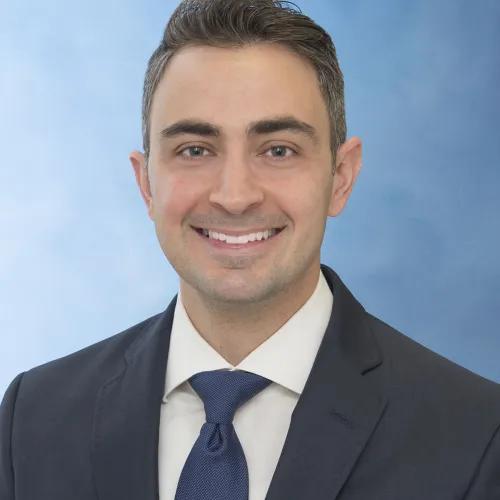
Wajd N Al-Holou, MD
Assistant Professor
Stay Informed
Want top health & research news weekly? Sign up for Health Lab’s newsletters today!
Featured News & Stories
Updated prostate cancer screening guidelines emphasize benefits of early detection

New anti-cancer strategy shows promise in preclinical studies

How have diagnostic and treatment decisions for prostate cancer changed in recent years?
Immune system protein is a cancer killer on its own, new study shows
Online resources and coaching helped people seek genetic testing for cancer