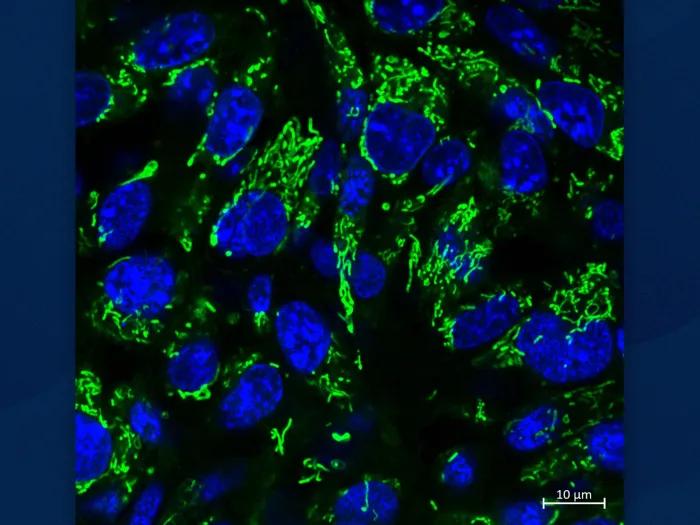
Dietary changes could provide a therapeutic avenue for brain cancer
Brain cancer cells rewire how they use sugar, which can be targeted in mice to slow tumor growth and improve treatment responses
2:01 PM
Author |
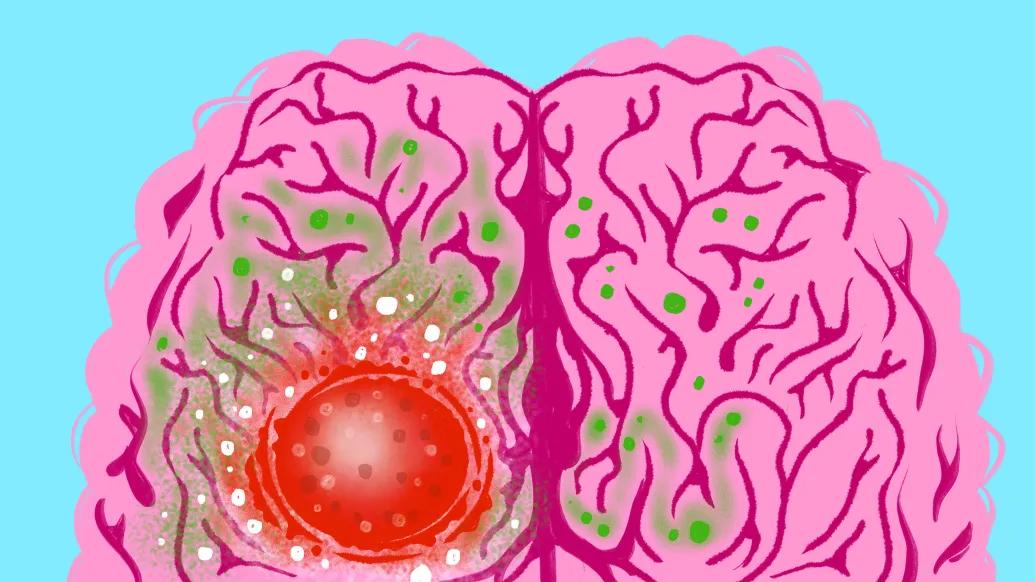
Glioblastomas are the deadliest form of malignant brain tumor, and most patients diagnosed with the disease live only one or two years.
In these tumors, normal cells in the brain become aggressive, growing rapidly and invading the surrounding tissue.
The resulting cancer cells are metabolically different from their neighboring healthy cells.
In a study published in Nature, researchers from the University of Michigan tracked how glucose is used in glioblastoma tumor cells.
The team, a partnership between the Rogel Cancer Center, Department of Neurosurgery and the Department of Biomedical Engineering, discovered that brain tumors differ in how they consume certain nutrients in diets.
“We altered the diet in mouse models and were able significantly slow down and block the growth of these tumors,” said co-senior author Daniel Wahl, M.D., Ph.D., associate professor of radiation oncology.
“Our study may help create new treatment opportunities for patients in the near future."
Conventional treatments consist of surgery followed by radiation therapy and chemotherapy. However, the tumors eventually return and become resistant to treatment.
Previously, researchers have shown that resistance is due to metabolic rewiring within cancer cells.
Cancer cells in the brain use sugars differently compared to healthy cells
Metabolism is the process by which our bodies break down molecules like carbohydrates and proteins so that our cells can either use them or build new molecules.
Although both brain and cancer cells depend on sugar, the team wanted to see if they use sugar differently.
They injected small amounts of labelled sugar into mice and, importantly, into patients with brain tumors to follow how it is used.
“To really understand these brain cancers and improve treatments for patients, we needed to do the hard work of studying the tumors in patients themselves, not just in the lab,” said co-senior author Wajd Al-Holou, M.D., a brain tumor neurosurgeon who co-directs the Michigan Multidisciplinary Brain Tumor Clinic.
Although both normal tissues and tumor cells used a lot of sugar, they used it for different purposes.
“It’s a metabolic fork in the road,” said Andrew Scott, Ph.D., a research scholar in Wahl’s lab.
“The brain channels sugar into energy production and neurotransmitters for thinking and health, but tumors redirect sugar to make materials for more cancer cells."
The team found that healthy tissues used sugars to generate energy and make chemicals that allow the brain to function properly.
Glioblastomas, on the other hand, turned off those processes and instead converted sugar into molecules like nucleotides—the building blocks of DNA and RNA—that helped them grow and invade the surrounding tissues.
Amino-acid restricted diets can improve treatment outcomes in mice
The researchers also noticed other important differences.
The normal brain used sugar to make amino acids, the building blocks of proteins. However, brain cancers seemed to turn this pathway off and instead scavenged these amino acids from the blood.
This finding led the researchers to consider whether lowering the levels of certain amino acids in the blood could affect brain cancer without affecting the normal brain.
They tested whether mice that were fed an amino acid-restricted diet had better treatment outcomes.
“When we got rid of the amino acids serine and glycine in the mice, their response to radiation and chemotherapy was better and the tumors were smaller than the control mice that were fed serine,” said co-senior author Deepak Nagrath, Ph.D. professor of biomedical engineering.
Based on their measurements in mice, the team also built mathematical models that can track how glucose is being used in different pathways, which can help identify other drug targets.
Co-senior author Costas Lyssiotis, Ph.D., professor of molecular and integrative physiology, compared metabolic pathways to roads and drugs to roadblocks.
Dropping a roadblock on a fast highway with a lot of traffic will have a greater effect than blocking a country road with a lower speed limit and only a few cars.
Similarly, in a normal brain, the uptake of the amino acid serine from the blood is like a slow country road.
But brain cancer is like a busy freeway, giving researchers the opportunity to selectively target the cancer.
The team is working on opening clinical trials soon to test whether specialized diets that limit blood serine levels can also help glioblastoma patients.
“This is a multidisciplinary effort from across the university,” Wahl said.
“It is a study that no individual investigator could do on their own and I'm grateful to be part of a team that works together to make important discoveries that can improve treatments for our patients.”
Additional authors: Anjali Mittal, Baharan Meghdadi, Alexandra O’Brien, Justine Bailleul, Sravya Palavalasa, Abhinav Achreja, Weihua Zhou, Jie Xu, Angelica Lin, Kari Wilder-Romans, Ningning Liang, Ayesha U. Kothari, Navyateja Korimerla, Donna M. Edwards, Zhe Wu, Jiane Feng, Sophia Su, Li Zhang, Peter Sajjakulnukit, Anthony C. Andren, Junyoung O. Park, Johanna ten Hoeve, Vijay Tarnal, Kimberly A. Redic, Nathan R. Qi, Joshua L. Fischer, Ethan Yang, Michael S. Regan, Sylwia A. Stopka, Gerard Baquer, Krithika Suresh, Jann N. Sarkaria, Theodore S. Lawrence, Sriram Venneti, Nathalie Y. R. Agar and Erina Vlashi.
Funding/disclosures: Scott was supported by the National Cancer Institute (K99CA300923; F32CA260735). Wahl was supported by NCI (K08CA234416; R37CA258346), National Institute of Neurological Disorders and Stroke (R01NS129123), Damon Runyon Cancer Foundation, Sontag Foundation, Ivy Glioblastoma Foundation, Forbes Institute for Cancer Discovery, Alex’s Lemonade Stand Foundation and Chad Tough Defeat DIPG foundation. Wahl and Lawrence were supported by NCI P50CA269022. Nagrath was supported by NCI (R01CA271369). Wu, Feng and Qi were supported by NIDDK MMPC-Live (1U2CDK135066). Zhou was supported by University of Michigan Medical School’s Pandemic Research Recovery grant (U083054). Al-Holou was supported by NINDS (K08NS12827101), American Cancer Society (CSDG-23-1031584-01-MM), and American Brain Tumor Association. Palavalasa was supported by American Cancer Society (PF-23-1077428-01-MM). Venneti was supported by NINDS (R01NS110572 and R01NS127799) and NCI (R01CA261926). Vlashi and Bailleul were supported by NCI (CA251872 and CA251872-S1). Bailleul was supported by a UCLA JCCC Fellowship Award. Park was supported by the National Institute of General Medical Sciences (R35GM143127). Sarkaria was supported by Mayo Clinic and the William H. Donner Professorship. Agar was supported by the Daniel E. Ponton Fund, National Brain Tumor Society, Mass Life Sciences Center, and NCI(U54CA283114).
Tech transfer(s)/Conflict(s) of interest: Wahl has consulted for Agios Pharmaceuticals, Admare Pharmaceuticals, Bruker and Innocrin Pharmaceuticals. He is an inventor on patents pertaining to the treatment of patients with brain tumors (U.S. Provisional Patent Application 63/416,146, U.S. Provisional Patent Application 62/744,342, U.S. Provisional Patent Applicant 62/724,337). Scott, Nagrath, Lyssiotis, Mittal, Achreja and Meghdadi are co-inventors on U.S. Provisional Patent Application 63/416,146. In the past three years, Lyssiotis has consulted for Odyssey Therapeutics and Third Rock Ventures. Al-Holou has consulted for Servier Pharmaceuticals. Agar reports the following disclosures: key opinion leader to Bruker Daltonics, collaboration with Thermo Finnigan, service agreement with EMD Serono, service agreement with iTeos Therapeutics, and founder and board member of BondZ.
Paper cited: “Rewiring of cortical glucose metabolism fuels human brain cancer growth,” Nature. DOI: 10.1038/s41586-025-09460-7
Sign up for Health Lab newsletters today. Get medical tips from top experts and learn about new scientific discoveries every week.
Sign up for the Health Lab Podcast. Add us wherever you listen to your favorite shows.

Health Lab
Explore thousands of health news & research stories by visiting the Health Lab homepage for more.
Media Contact

Public Relations
Department of Communication at Michigan Medicine
In This Story
Daniel R Wahl, MD, PhD
Professor
Related
Study Suggests New Approach to Improve Radiation Therapy Resistance in Glioblastoma

Pediatric brain tumors rely on different metabolic “route” to fuel treatment resistance
Stay Informed
Want top health & research news weekly? Sign up for Health Lab’s newsletters today!
Featured News & Stories
Comprehensive DNA sequencing reveals hidden drivers of cancer
‘Molecular glue’ stabilizes protein that inhibits development of non-small cell lung cancer and uterine cancer

Exceptional response to immunotherapy gives patient with liver cancer more milestones to celebrate
FDA-approved drug offers hope for patients with polycythemia vera, a rare bone marrow disorder
Pediatric patient treated for rare kidney cancer