The Sixth Vital Sign: Your Wellbeing
Tips for navigating the uncertainties of cancer with your oncology team
Author |

With a cancer diagnosis comes change, which can bring the uncertainty of not knowing what will happen. Uncertainty is difficult, especially when it gets in the way of coping with cancer, its physical symptoms and its treatment.
That is why comprehensive cancer centers across the United States follow guidelines to monitor distress symptoms in patients at all stages of disease, across cancer types and in all treatment settings.
Michelle Riba, M.D., M.S., director of PsychOncology at Rogel, helps lead this effort to connect every cancer patient with resources to manage uncertainty as chair of the National Comprehensive Cancer Network Distress Guidelines Panel.
Riba says being aware of your thoughts, feelings and emotions surrounding your diagnosis and treatment can be a first step toward finding help. Below she shares advice for communicating with your care team and tips to help navigate uncertainty.
Tell your oncology team about your concerns! Common concerns include:
How should I talk to my children?
What am I going to tell my family?
Am I going to be able to work?
What’s going to happen to my significant other?
Will the treatment make me sick?
How will I get to the cancer center for treatment?
How can I pay for this?
Remember that distress comes in many forms. Concerns might be:
Physical (such as pain, sleep, changes in physical ability, memory or sexual health)
Emotional (worry and anxiety, fear, anger, loss of enjoyment)
Social (relationship with a partner, children, friends or coworkers, talking to health care team, wanting children in the future, prejudice or discrimination)
Practical (taking care of yourself or others, safety, work or school, transportation, child care, financial concerns, making treatment decisions)
Spiritual or religious (the meaning or purpose of life, changes in beliefs, conflict between religion and cancer treatment, questions about death, dying or afterlife)
Tips for navigating uncertainty:
1. Stay away from Google, Chat GPT and broad Internet searches. Riba can’t stress enough: you are an individual whose cancer is unique. Printing reams of information from the Internet could be a waste of time if your cancer is not accurately portrayed. Scary statistics might not apply to you. Articles could be outdated. “If you want the best reading for the kind of cancer you have, speak to your surgeon, oncologist or radiation oncologist. Rogel also has an online patient library,” she says.
2. Try not to stigmatize your concerns. Yes, cancer can be hard to talk about. Yes, anxiety and distress can be tied to your mental health, which is a difficult topic for some. Distress can also be connected to other factors. “Distress is telling you something,” Riba says. “It could mean there’s a physical problem or it might not be directly related to your cancer. Perhaps it’s a mental health concern. We want to know about it so we can care for the whole you.”
3. Trust your Rogel care team. Your wellbeing is monitored throughout the cancer journey, including diagnosis, treatment and the transition once active treatment is complete. Expect to see questionnaires—such as the distress thermometer or a depression screening—during your appointments. Each clinic monitors a bit differently depending on the type of cancer you have. Once your team knows your concerns, they will refer you to the appropriate resource. This could include speaking with a social worker, a family life expert, a psychologist or a chaplain. It could be an appointment with a financial counselor, art therapist or dietitian.
“We say that monitoring distress is the sixth vital sign. We ask if you have pain. We also ask about distress. If you have distress, we want to help identify the cause and treat it, just as we would if you were walking around in pain,” Riba says.
Get more information:
In This Story
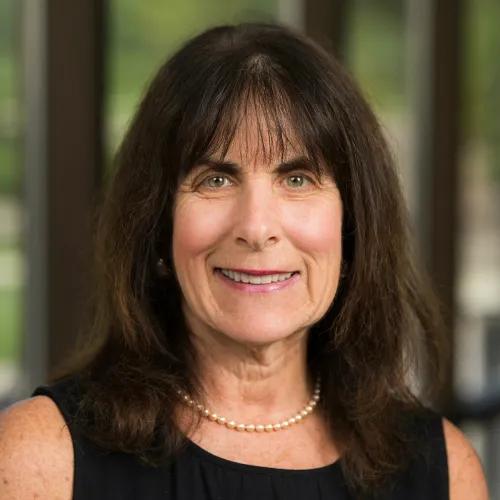
Michelle B Riba
Clinical Professor
Related

Pathway to Peace
Featured News & Stories
Pathway to Peace

Understanding Your Pathology Report

From journalist to parent to advocate

No One is You and That is Your Power

Living In the Unknown