Living In the Unknown
Donna Murphy on how Rogel’s Patient and Family Support Services offers a path to finding new meaning.
Author |

A cancer diagnosis and treatment come with a lot of questions, worries and changes. Finding ways to address the emotions swirling around you is just as critical as facing the physical side effects of treatment.
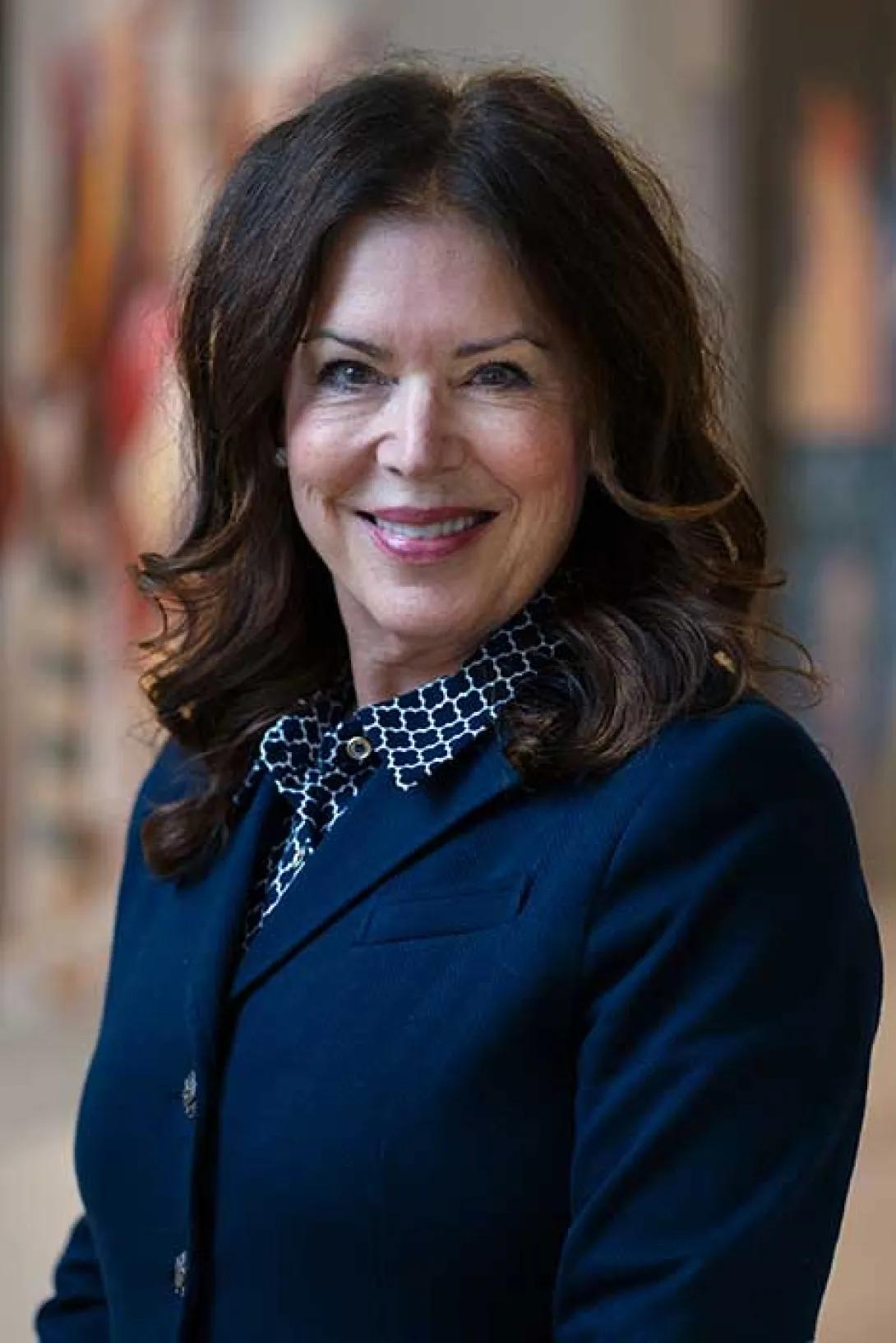
“Cancer isn’t just treated physically. The emotion al toll and impact are just as significant, sometimes even more,” says Donna L. Murphy (pictured here), LMSW, direc tor of Patient and Family Support Services at Rogel.
Murphy’s team of trained therapists offers services to help people with cancer maintain or regain a sense of wellness and new meaning. These services are available at no cost to the patient for anyone receiving care at Rogel.
Here, Murphy shares how finding support can open doors to healing.
What role does the Patient and Family Support Services program serve for patients?
Our goal is to provide support for the emotional impact of a cancer diagnosis. This can be at any point, whether it’s from the beginning, as they transition out of treatment, or throughout treatment.
The biggest challenge with cancer is asking people to live in the unknown. The only way to know if treatment is working is through time — waiting for a scan, waiting for side effects to subside. Waiting for something people desperately want immediate infor mation about is challenging in any scenario.
Our team is able to assess need and spend time with people through those hard times and be with them to process the experience. We help them wonder aloud: How will you make your next decisions? What are the next steps? How do you reclaim your life and find new meaning after a cancer diagnosis?
What are some of the biggest emotional challenges people with cancer face?
Our patients tell us that managing their new life with cancer is different from before cancer. It may be financial changes, physical abilities, skillsets at work, parenting — things you never thought too much about before, because that’s just how you did life.
But now some of those roles are challenged. People often feel displaced, losing confidence in areas that previously defined them.
We try to help people find new meaning and be realistic about that expectation, because it takes time. Illness and side effects can make people feel in competent or inefficient. You can have those feelings and know that doesn’t define you. You can be sad and angry and still be able to hit your mark. You’re saying, “I don’t like this, but I need to do something, because this is not sustaining me.”
We try to look at all that’s going on and ask, “What brings you meaning now?”
Creative therapies like music or art can help peo ple access something in ways words may not. Or you might respond to prayer or faith-based approaches, or to a type of movement, meditation or body work. By exploring these areas, people can work their way to a new understanding of their life now.
Why are these services a critical part of cancer care? How is the need different than for other diseases?
Other forms of chronic illness have protocols and interventions that might be more predictable once a plan is established.
Cancer is different. Each diagnosis and each person is unique, with many unpredictable outcomes. While we have state of the art interventions and treatments for a certain cancer, there’s nothing definitive about how that treatment will work, how long a remission will last or how complex interventions or drugs might affect the person.
A lot of decision-making happens, and people don’t always have clear options. It takes a lot of men tal agility to manage choices — and then to wonder if they did the right thing, which requires waiting. And waiting is not something anyone does well, because we’re used to instant feedback these days.
PFSS, as well as individual and group supports, can help people who are willing to explore how they feel or how they’re reacting.
Who should consider participating? Are support services only for patients with a certain diagnosis, stage or treatment?
These services are for anyone who’s curious about why cancer, why me, what now.
One of the greatest things we find is when people are vulnerable but curious, there’s a huge aptitude for learning. When you understand why something is important to you, why this is going to matter, why you need to work through the hard parts, it’s an exponential time in your life for growth.
It may not happen immediately. It requires a little bravery and willingness to ask questions and try a few new things. But the outcomes can be amazing in terms of learning new skills or seeing yourself in a different light: usually a stronger, more resilient form. You know that this is hard, and yet you’re doing it. There’s a lot of personal reward in overcoming that.
What if someone is not sure what service they want or need?
That’s our work, to show possibilities. We do an assessment to explore needs, interests and goals the person has for themselves. We look for things that excite you, that you do well with or are proud of. It might be something new or a skill you always wanted to learn. What makes you feel good?
Our goal is to use the cancer experience and process it with you in ways that align with your intent and purpose.
A sense of joy, accomplishment or pride is some thing we all need. When you’re ill, you may have to search for the thing that brings you that feeling. But when you find it, there it is for you, every time.
PFSS Services At a Glance
- Young Adult Oncology:
Resources and programs for 15-39-year-olds with a cancer diagnosis - Art Therapy:
Using art as an outlet for self-expression, stress management and coping - Families Facing Cancer:
Supporting patients by helping children and families understand, cope and communicate - Guided Imagery:
Using the power of the imagination to cope and manage symptoms - Music Therapy:
Exploring music as a stress management tool to reduce pain, anxiety or depression - Spiritual Care:
Using spirituality to develop coping skills for anxiety, grief and difficult life circumstances
Patient and Family Support Services are available at no cost to patients. Ask your care team for a referral or call 734-647-8902.
Continue reading THRIVE, spring 2026
Related

Pathway to Peace

The Sixth Vital Sign: Your Wellbeing
Featured News & Stories
Pathway to Peace

Understanding Your Pathology Report

No One is You and That is Your Power

The Mindset of an Athlete
The Sixth Vital Sign: Your Wellbeing