The Mindset of an Athlete
Former U-M soccer coach approaches his treatment for secondary central nervous system lymphoma with coachability, adaptability and hope.
Author |
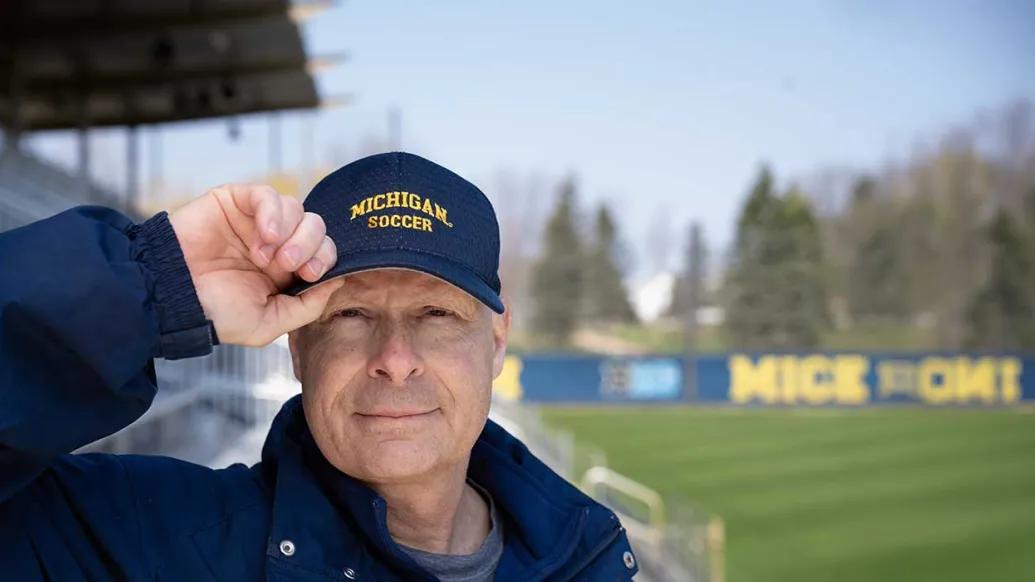
As a longtime coach and athlete, Steve Burns naturally uses sports metaphors to understand his life.
In 2019, when Steve was diagnosed at age 52 with diffuse large B cell lymphoma, he quickly knew that he needed to surround himself with an excellent support team made up of his family, friends and community, along with excellent coaches—his doctors at Rogel Cancer Center.
As a “coachable guy,” he was ready to listen when his doctors made a plan for treating his tumor with surgery, chemotherapy and radiation. He faced the challenges of treatment with a perspective that the hundreds of soccer players he coached over the years might recognize from his on-field and locker-room pep-talks: “I had hope and a positive outlook. Life is full of difficult times. Refuse to give up and stand tall against the odds. Let’s stay together and make it happen.”
In 2024, three weeks before the fifth anniversary of his remission, Steve learned that his cancer had relapsed. It was now secondary central nervous system large B-cell lymphoma, or CNS lymphoma, in his brain.
His mind went to a famous quote: “Everyone has a plan until they get punched in the face.”
But he was ready to adapt and roll with the punches.
He often hears people describe cancer as a fight, and he thinks of treatment as analogous to the rounds of a boxing match. Sometimes the patient wins a round, sometimes the can cer does. You may have to fight multiple rounds to win.
“That’s where I feel like I am right now. I’m getting some wins, but the cancer is also proving its resilience and hanging in there,” Steve says. “I’ve been punched in the face a couple times, but it’s about getting up after you get punched and keep moving forward.”
Origins of a ‘Michigan Man’
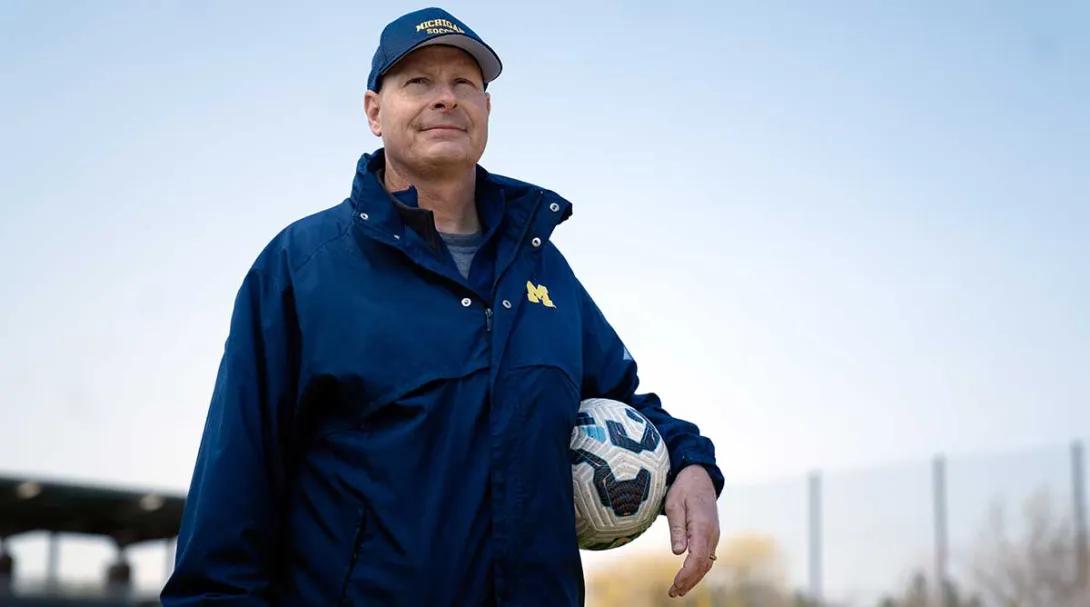
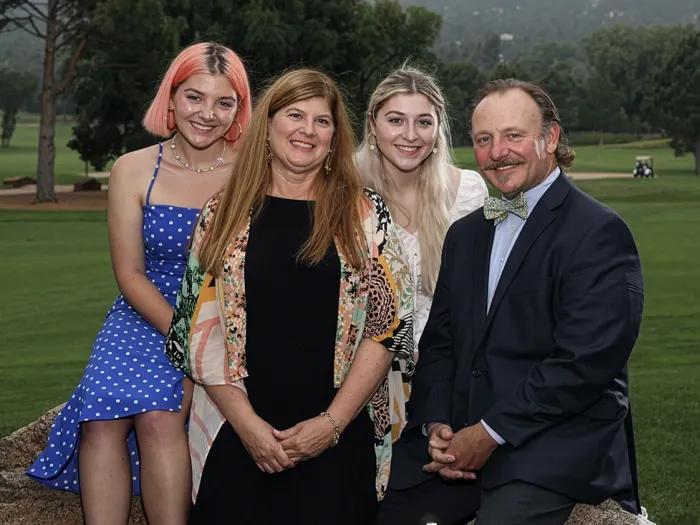
Steve has always told his children, Kate, 26, and JT, 21, that they’re not rich, but they’re rich with friends. In the years since his initial diagnosis, Steve’s large friend group has become more important than ever.
“Those friends that are praying for you or sending you good vibes or positive thoughts, it’s all a cumulative game, and it all adds up,” he says.
He’s been building his support network in Ann Arbor for decades—so much that many people refer to him as a “Michigan Man.”
Steve grew up in East Lansing and admits he didn’t know the difference between the University of Michigan and Michigan State University as a kid. Toward the end of high school, his mom made the distinction clear: if Steve went to Michigan State, he’d have to live at home.
“She gets the assist for pushing me to Michigan,” he says. “But I never looked back.”
He earned a degree in aerospace engineering but says he was more interested in socializing, exploring his new environment and playing club soccer than in fluid dynamics. After graduation in 1989, he chased his soccer and mountain biking passions to Seattle for a time, then returned to Ann Arbor with his then-girl friend, now-wife, Judy, to run an espresso cart in a prime cam pus location.
Sensing the couple’s entrepreneurial instincts, one of their regular customers recruited them away from coffee to work for her upscale travel company. Steve and Judy got married and headed out to lead hot air balloon rides and other adventures in Costa Rica.
Steve was still a “naive, dumb kid, trying to figure out what direction to go,” he says. But he found his passion for the game of soccer during his time in Central America.
“When I saw in Costa Rica the fact that soccer was a business, I said, ‘That’s the business I want to get into,’” he says. “It just so happened that coaching soccer in the U.S. was something you could make a living at.”
Coaching Players and Alumni
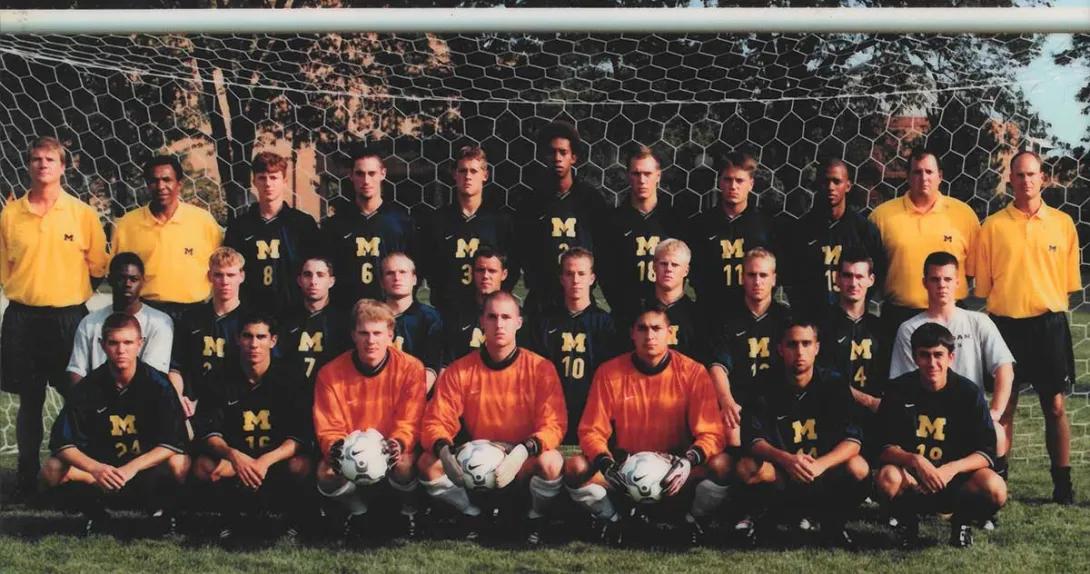
Steve returned to his roots with the University of Michigan club soccer team in 1993, coaching them for seven seasons. The team won National Collegiate Club championships in 1997 and 1998. [Steve is pictured on the right, in the back row, with the 2000 team.]
Meanwhile, Steve earned a master’s degree from the School of Kinesiology at U-M. His advisor, Tom George, encouraged him to become an intern for the university’s athletic department to better prepare himself for a career in athletics.
When the opportunity arose for the Wolverines to add soccer as a men’s varsity sport, Steve was part of a group that proposed and advocated for the idea. His work paid off: He became the first men’s soccer head coach when the team launched in 2000.
Steve built the program from scratch over 12 seasons, leading the team to the NCAA tournament four times, including the NCAA Final Four in 2010.
His coaching time ended in 2012, and he was ready for a new direction.
“I was able to reflect and realize my love of the University of Michigan, my love of Ann Arbor, and my love of the game of soccer exceed my love of the job of soccer,” he says.
He searched for a career that would give him more time with his family and allow them to stay in Ann Arbor, connected to the university he loves. In 2016, he became Director of Global Engagement for the Alumni Association of the University of Michigan (AAUM).
Steve says he feels like he’s come full circle, and the alumni network has helped him through his cancer journey: “The out pouring of support makes me Maize and Blue proud.”
A Second Bout with Cancer
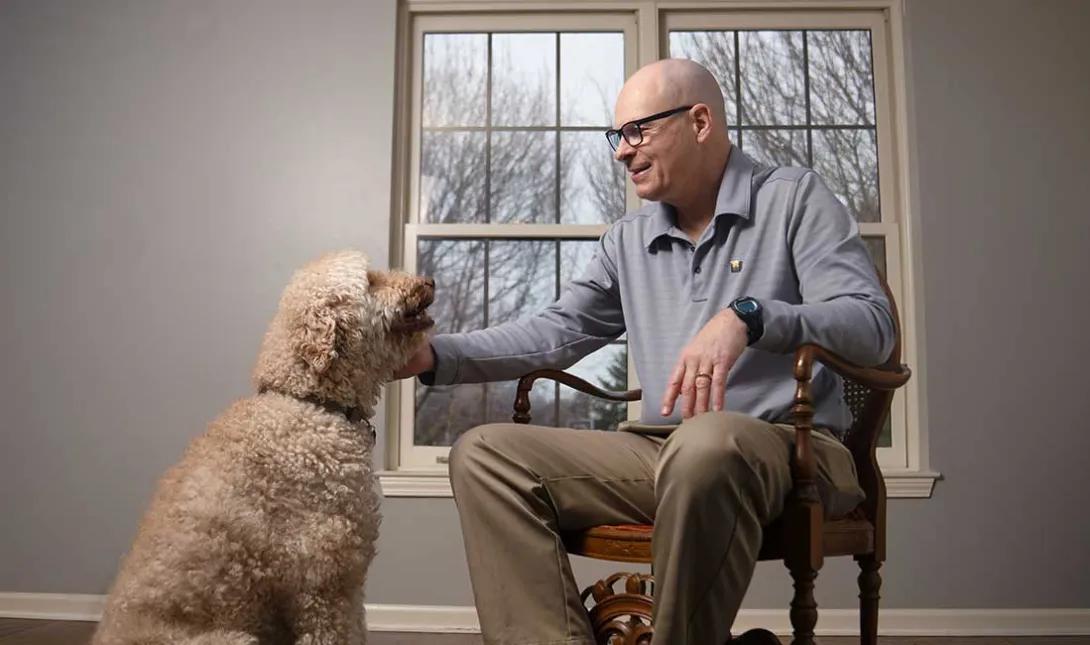
When Steve was first diagnosed with cancer, his most difficult conversation was with his daughter, Kate. She was three years into college at U-M, a member of the Wolverines varsity women’s rowing team, and they shared a close dad-daughter bond.
Talking to Kate helped him realize that he wanted to present his prognosis in a positive way. He felt encouraged by his initial oncologist at Rogel, Tycel Phillips, M.D., who now works at City of Hope in California.
“My head was spinning, but when I first heard my coach say something like, ‘This is a curable cancer, we’ve caught it relatively early, here’s what you need to do,’ I said, ‘I’m all ears. I’ll do this,’” Steve remembers.
Diffuse large B cell lymphoma is an aggressive blood cancer that affects lymphocytes, a type of white blood cell. It’s the most common type of non-Hodgkin lymphoma, and more than 18,000 people a year are diagnosed with it, according to the Lymphoma Research Foundation.
The National Cancer Institute reports it has an overall five year survival rate of 64.8%, but that rate is as high as 80% if the cancer is diagnosed early, as Steve’s was.
Steve’s diagnosis of secondary CNS lymphoma in 2024 re started his bout with cancer.
“I’m in that phase where I listen to my docs and do whatever I can to accomplish what we can, when we can,” Steve says. “Whenever they say it’s time to go, it’s time to go.”
This time around, Steve’s “coaches” at Rogel are Nathan Clarke, M.D., and Monalisa Ghosh, M.D.
It’s relatively rare for B-cell lymphoma to spread to the brain, Clarke says—only about 2% of all patients with lymphomas have this type. When it does spread, it acts differently and requires different treatments than primary cancer. The complexity of treatment almost always requires the expertise of a large, aca demic medical center like Michigan Medicine.
“For the state of Michigan, we’re pretty much the only center that will actively see these patients regularly,” Clarke says.
Steve’s Round 1 treatment had three phases: First, two months of high-dose methotrexate, followed by a combination drug therapy, which his cancer responded well to. The round culminated in a bone marrow transplant in November 2024, which he described as “no joke.”
The tumor responded to the treatments at first, but grew back.
The next round was a June 2025 clinical trial with Ghosh, a hematologist-oncologist whose expertise includes CAR T-cell therapy. This immunotherapy engineers a patient’s own immune cells to attack cancer cells.
Again, Steve’s cancer responded well to treatment at first, then continued to grow.
“I love strategy, but I also recognize you have to adapt, and this disease is very good at adapting as well,” he says.
Now, he’s in Round 3 of his match with CNS lymphoma. Clarke has prescribed two drugs that are not typically used to treat this particular cancer, but could help keep the tumor from growing.
Clarke says Steve has made his way through these treatments well: “He’s still active, and he’s still participating and living his life, which is really commendable.”
While Steve’s activities no longer include playing soccer, which he had to stop after his initial diagnosis in 2019, he still is an avid soccer fan. He organizes alumni outings for the men’s soccer program and supports the current players and team.
“I try and pull for them to continue on this great trajectory that we’re on, where we say, ‘Go Blue’ and it means something awesome,” he says.
Celebrating Medical Miracles
To Steve, the rallying cry of “Go Blue” is about more than U-M athletics.
"It means we’re trying to be excellent in everything, and represent well in everything by doing your best,” he says.
That includes cancer care and research. Steve says he’s enjoyed learning about the incredible teamwork that goes into making U-M Health one of the best hospitals in the country.
“There are miracles happening all over the country, they’re just not evenly distributed,” he says. “We have them in our own backyard because we’ve got this great health care center and all the research and philanthropy and everything that makes that happen.”
He’s advocated for investment in research, including speaking to Rogel’s National Advisory Board. He’s also connected with other cancer patients in the region.
Clarke praised Steve’s openness in sharing his experience.
“He’s very willing to put himself out there and discuss sensitive matters with people,” Clarke says. “I would say he’s willing to speak about just about everything, as long as it will lead to a better understanding of his care and other people’s care.”
Steve says he’s amazed by the progress in cancer treatments in the past several decades, which he and so many others have benefited from.
“Thanks to modern medicine, thanks to all the research going on, and thanks to people like Rich Rogel and all the other benefactors that have put this awesome center together, we are in a better and better place,” he says.
Continue reading THRIVE, spring 2026
In This Story
Monalisa Ghosh
Clinical Associate Professor
Nathan H Clarke, MD
Clinical Assistant Professor
Featured News & Stories

The Sixth Vital Sign: Your Wellbeing
Pathway to Peace

Understanding Your Pathology Report
Medical students develop novel technological solutions for unmet patient needs
From journalist to parent to advocate