
Kelly Malcom
Lead Research Communicator
Malcom is a lead research communicator for Michigan Medicine and research communications strategist for the U-M Medical School, with more than 20 years of experience in strategic communications, marketing, and health and science writing. She covers the basic science departments, pulmonary and critical care medicine, infectious disease, pathology and anesthesiology. Contact: [email protected]

Health Lab
Adults don’t trust health care to use AI responsibly and without harm
Research finds that adults surveyed had low trust in their health care system to use artificial intelligence responsibly and others had low trust in their health care systems to make sure an AI tool would not harm them.
Health Lab
Gene therapy for rare epilepsy shows promise in mice
Dravet syndrome and other developmental epileptic encephalopathies are rare but devastating conditions. Research from Michigan Medicine takes aim at variant in SCN1B, which causes an even more severe form of DEE.

Health Lab
Using data to drive sepsis care
Michigan Medicine expert, Hallie Prescott, M.D., discusses successful statewide efforts to improve sepsis treatment–and setting the bar for change at the national level

Health Lab
Wildfires: How to protect your lung health in poor air quality
With raging wildfires affecting air quality, experts say protecting your lung health is key.
Health Lab
People find medical test results hard to understand, increasing overall worry
In a published research letter in JAMA, researchers tested whether people could understand standard pathology reports and whether a patient-centered report might improve understanding.

Health Lab
How to safely celebrate the holidays and avoid getting sick
This holiday season, follow these five expert-approved steps to celebrate safely and avoid getting sick.
Health Lab
New tools that leverage NIH’s ‘All of Us’ dataset could improve anesthesia and surgical care
In a report in JAMA Surgery, researchers propose two novel tools that leverage the All of Us dataset to look at acute health events such as surgery.

Health Lab
People want to know if AI is used in their health care
A study published in JAMA Network Open finds most people want to be notified if AI is used in their health care.
Health Lab
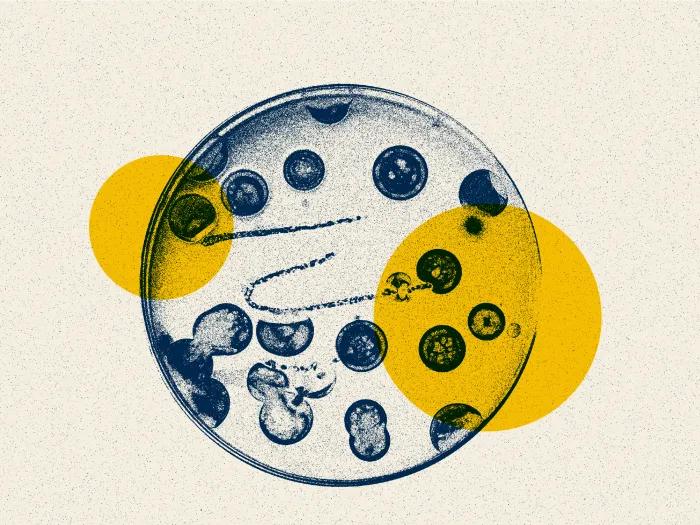
More clues reveal how gut bacteria works
Research from the University of Michigan uncovers a unique way the bacteria Bacteroides, which make up nearly half of the gut microbiome, synthesize the proteins needed to degrade carbohydrates.

Health Lab
Why the bird flu’s jump to pigs is concerning
A Michigan Medicine virologist speaks about the implications of H5N1 influenza, or bird flu, and whether a new pandemic could be on the horizon.

Health Lab
The solution to death from a fentanyl overdose could lie in its chemical structure
University of Michigan researchers may have found that the solution to prevent people from dying from a fentanyl overdose may be found within fentanyl's own chemistry.
Health Lab
The brain in balance
In a recent study, using network neuroscience, investigators found a way to objectively determine the balance of integration and segregation in fMRI-measured brain signals during wakefulness as well as during sleep and anesthesia.

Health Lab
A newly developed algorithm shows how a gene is expressed at microscopic resolution
Seeing is believing: A newly developed algorithm allows researchers to see how a gene is expressed at microscopic resolution.

News Release
$25M gift builds U-M’s leadership in health care AI
Gilbert S. Omenn, M.D., Ph.D., and his wife, Martha A. Darling, have made a generous gift of $25 million to the Department of Computational Medicine and Bioinformatics (DCMB) within the University of Michigan Medical School.
Health Lab
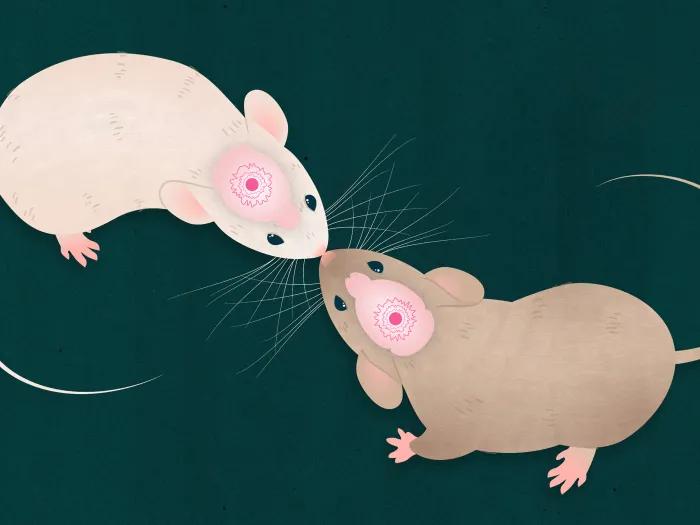
Mapping the social lives of mice
A study hints at how complex introducing yourself to another can be, using a mouse model to uncover the brain processes behind nonsexual social approach and contact.
