
Kelly Malcom
Lead Research Communicator
Malcom is a lead research communicator for Michigan Medicine and research communications strategist for the U-M Medical School, with more than 20 years of experience in strategic communications, marketing, and health and science writing. She covers the basic science departments, pulmonary and critical care medicine, infectious disease, pathology and anesthesiology. Contact: [email protected]


Health Lab
Study examines trends for use of medications for opioid use disorder among surgical patients
Mark Bicket, M.D., Ph.D., and his team examined trends in use of medications for opioid use disorder among surgical patients.

Health Lab
New warnings about superbugs
The Centers for Disease Control and Prevention and the World Health Organization recently issued new, dire warnings about the spread of so-called superbugs, infectious bacteria for which there are no effective antibiotics.

Health Lab
Applying engineering principles to biological studies could identify disease biomarkers more quickly
In a new paper published in PNAS, a research team proposes that the fundamental principles of control theory and observability can be applied to study biological processes that change over time.
Health Lab
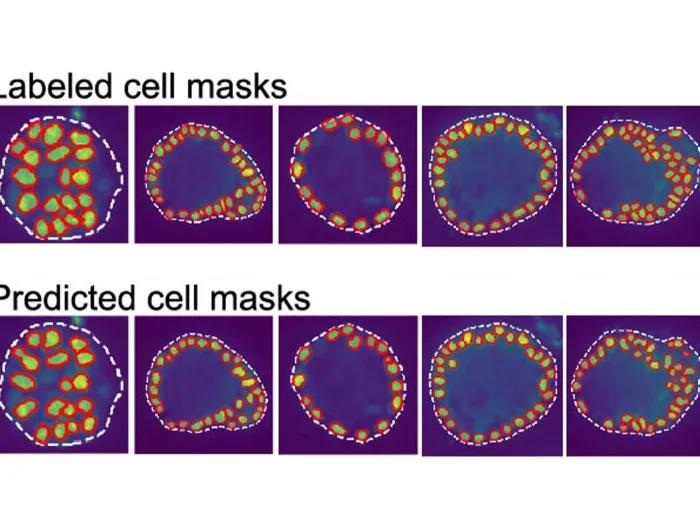
AI reveals hidden features of a developing embryo model
In Michigan Medicine-led research, artificial intelligence reveals hidden features of a developing embryo model.

Health Lab
When mom and dad’s DNA don’t match up, the embryo finds a way
Michigan Medicine publishes research on maternal CENP-C restores centromere symmetry in mammalian zygotes to ensure proper chromosome segregation.

Health Lab
Nanoscale images of a blood clotting protein complex reveal a secret to the clotting chain reaction
New detailed 3D structures of blood clotting proteins, made possible by using cryogenic-electron microscopy, have solved a mystery vexing biological chemists for more than 30 years.

Health Lab
An AI model accurately predicts how cells end up in position inside tissues
Understanding transitions from cell to tissue in space and over time: A new modeling tool from the Welch lab at Michigan Medicine.
Health Lab
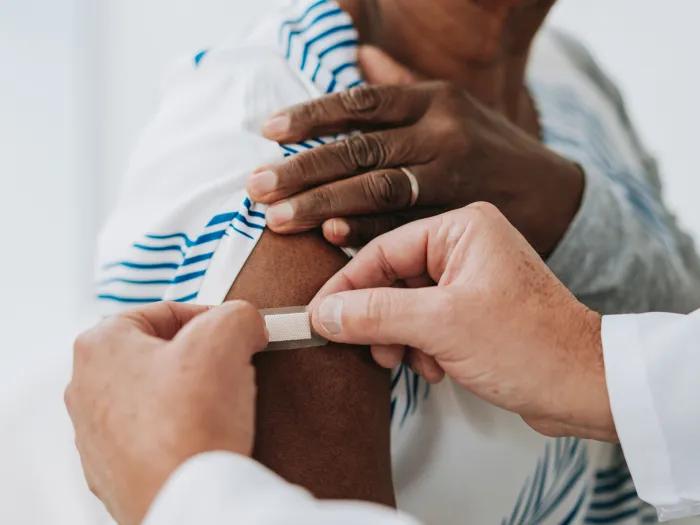
Despite policy confusion, vaccines for flu, COVID still strongly recommended
With misinformation and shifting policies around vaccines circulate, Michigan Medicine experts agree that the flu, RSV, and COVID vaccines protect against the worse health outcomes.

Health Lab
CRISPR study reveals surprising role of Cas9 as a guardian of bacterial defense
New research overturns a common assumption about CRISPR Cas9—that unbound from its usual RNA partners, the “empty” or apo form of Cas9 is functionless.

Health Lab
Study reveals how a popular fentanyl additive affects breathing and heart rate
Study reveals how a popular fentanyl additive, xylazine, affects breathing and heart rate.

Health Lab
People without health insurance are less likely to obtain lifesaving hospital transfers
Does insurance play a role in which critically ill patients live or die? The unfortunate answer may be yes, due in part to a difference in the rate of inter-hospital transfer, according to new research from the University of Michigan.

Health Lab
Sepsis can kill even previously healthy people if recognized too late, finds study
A University of Michigan led study finds that patients hospitalized with sepsis who were previously healthy ultimately died because of late intervention.

Health Lab
Evolutionary insights into the development of the human intestine
An international research team finds that the human gut is a site of rapid change, with recent and important deviations from other mammals.

Health Lab
Study identifies function behind mysterious variants for gene linked to colon cancer
Michigan Medicine researchers identify the function behind mysterious variants for a gene linked to colon cancer.
Health Lab
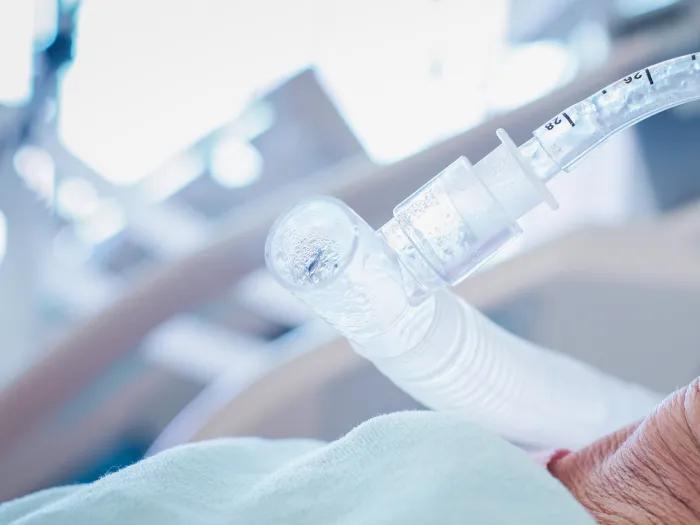
Removal of ventilator breathing tube is delayed for some patients, posing health risks
A study by Michigan Medicine determined how many patients who pass spontaneous breathing trials were extubated within six hours and what factors were associated with staying connected to a ventilator.
