
Health Lab
Clinical smart watch finds success at identifying atrial fibrillation
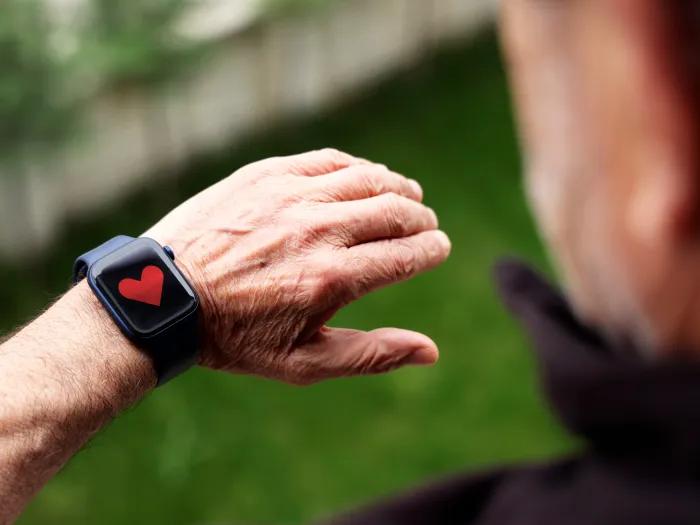
A Michigan Medicine research team developed a prescription wristwatch that continuously monitors the wearer’s heart rhythm and uses a unique algorithm to detect atrial fibrillation. The clinical-grade device, called the Verily Study Watch, proved very accurate at identifying atrial fibrillation in participants.

Health Lab
Immune protein suPAR links viral infection as possible cause of kidney disease
Through a series of experiments in non-human primates, mice and humans, a multi-institutional team led by researchers from Michigan Medicine and Rush University found that the immune protein soluble urokinase plasminogen activator receptor, or suPAR, is an important link between viral infections and proteinuria; the elevation of protein in the urine is known to cause glomerulopathy, a common form of kidney disease.

Health Lab
Irregular heartbeat after valve surgery increases risk of stroke, death
Postoperative atrial fibrillation, commonly known as Afib, has traditionally been viewed as benign and limited. But a study led by researchers at the University of Michigan Health Frankel Cardiovascular Center finds that postoperative atrial fibrillation increases the risk of strokes and permanent Afib — and is linked to worse long term survival — after heart valve surgery.
Health Lab
Findings shed light on how a pediatric heart surgery complication impacts heart transplant survival
Patients who experience this condition following the Fontan continue to have a high risk of death from the time they’re waitlisted for a new heart through receiving the transplant, according to a 20-center study led by Michigan Medicine. And one specific complication called cyanosis – or experiencing less than normal oxygen blood levels – was associated with worsened survival.

Health Lab
Women stroke survivors believe they will receive worse care in the emergency room
National study examined health care perceptions of approximately 3,500 women, including those with and without a history of stroke
Health Lab
Treating heart valve disease: What are your options?
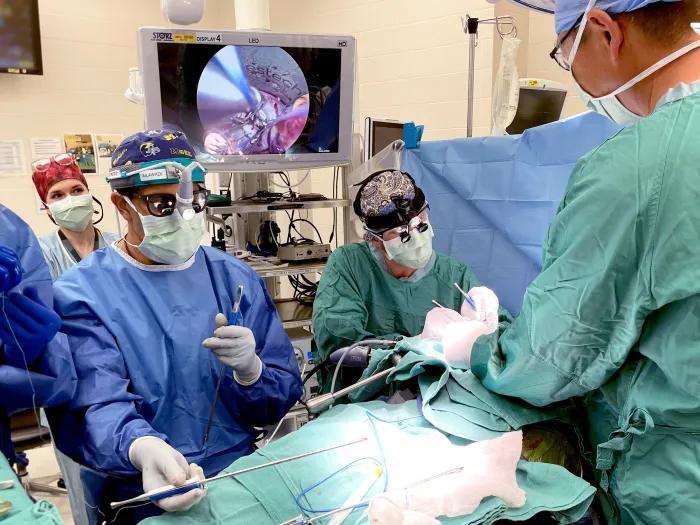
Michigan Medicine’s head of cardiac surgery, Gorav Ailawadi, M.D, M.B.A., answers questions about different treatment options for heart valve disease.

Health Lab
Research finds potential target for cardiovascular disease in diabetes
University of Michigan researchers found that the overproduction of neutrophil extracellular traps is an important contributing factor to vascular dysfunction in diabetes.
Health Lab
Older adults from distressed communities attend less cardiac rehab after heart procedures
Older adults who live in disadvantaged communities are less likely to attend cardiac rehabilitation after common heart procedures, a Michigan Medicine-led study finds.

Health Lab
TAVR: Less than one-third of patients enter cardiac rehab after heart procedure
The vast majority of people who have a minimally invasive heart valve replacement procedure do not participate in recommended cardiac rehabilitation, a Michigan Medicine-led study finds.
Health Lab
Leading experts release new guidelines to improve congenital heart surgery care for children
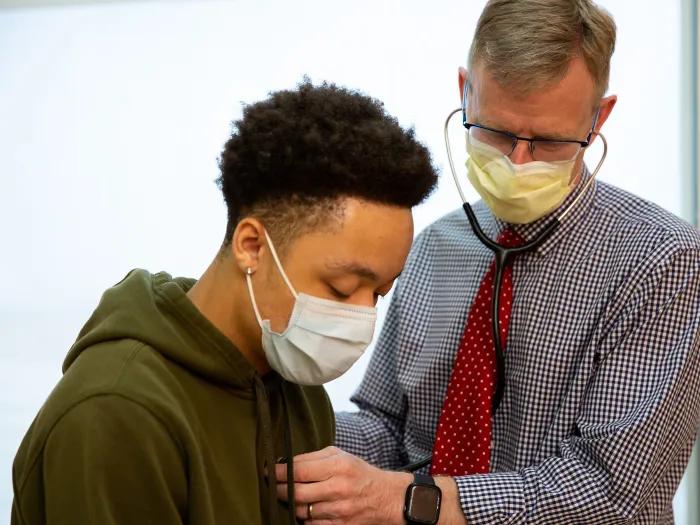
For the first time in more than 20 years, dozens of pediatric cardiologists, surgeons and other health professionals have come together to develop new guidelines intended to improve heart surgery care for this population of children and teens.

Health Lab
Tailored text messages not enough to improve mobility after heart issues
A Michigan Medicine report shows that adding a mobile health application to such devices yields mixed results. Tailored text messages to encourage high-risk people to move more may improve some short-term outcomes but doesn’t always improve physical activity levels for everyone.

Health Lab
A unique collaboration helps one patient better manage aortic disease
MI-AORTA is a donor-funded initiative that facilitates collaboration within the Frankel Cardiovascular Center, U-M Health and referring provider networks, creating value for the patients, families, and communities they serve and allows them to continue to pioneer advanced therapies for aortic diseases.

Health Lab
Beating the odds against chronic total occlusion
Learn about the latest advances in treatment for chronic total occlusion, a life-threatening condition that deprives the heart of oxygen. A team of cardiovascular surgeons perform advanced, minimally invasive surgery to help David Schneider get his life back on track.
Health Lab
Pulmonary embolism deaths, disparities high despite advancements in care
Despite these innovations, a Michigan Medicine study finds that the death rate for pulmonary embolism remains high and unchanged in recent years – more often killing men, Black patients and those from rural areas. The results are published in the Annals of the American Thoracic Society.

Health Lab
Nearly three-quarters of stroke patients requiring higher level of care wait over two hours for transfer
More than 70% of people experiencing a stroke who require a transfer wait longer than two hours to be transferred from the initial emergency department to hospitals with higher levels of care to receive time-sensitive care, a study finds.
