When Depression Shows Up in the Workplace
A psychiatrist offers strategies for employees and managers to discuss depression.
12:53 PM
Author |
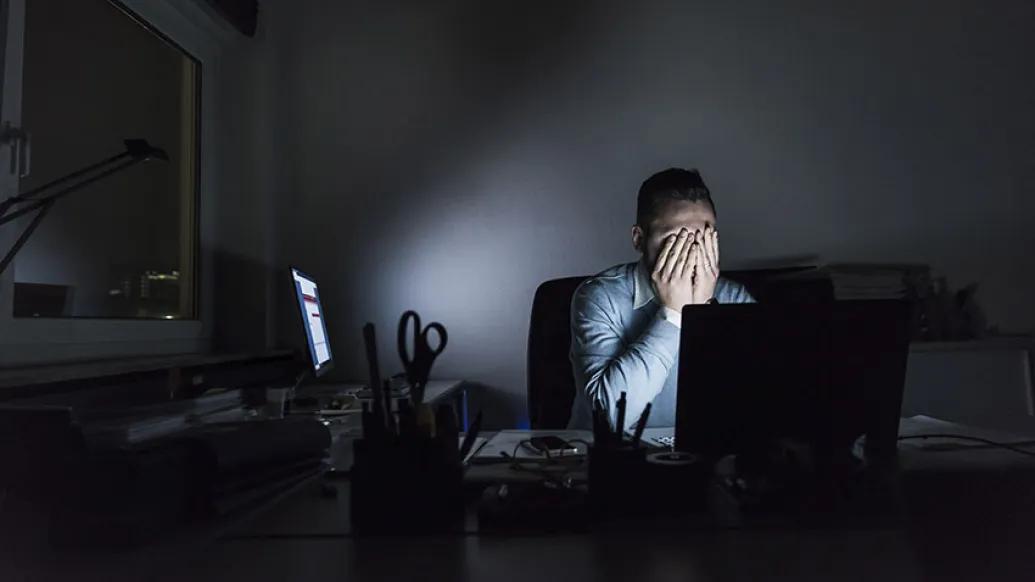
One in five Americans experience symptoms of depression during their lifetime. And yet, a distinct stigma still exists around the topic, especially in the workplace, according to the book Mental Health in the Workplace, co-authored by psychiatrist Michelle Riba, M.D., M.S., associate director of Michigan Medicine's Comprehensive Depression Center.
Employees may be hesitant to speak up about mental health issues for fear of being unfairly judged or worries that it may lead to a reduction in job status, loss of future opportunities or termination.
However, as awareness continues to spread, the conversation is changing, and it's an important one, says Riba.
"Many adults spend their waking life at work, so it's important to determine if we have the safest and healthiest work space for people," Riba explains. "Employees and employers need to create this environment together – it's not top-down or bottom-up." And it needs to be addressed jointly, she says, and thought about in advance before any emergencies occur.
But beyond the negative personal impacts that stress, anxiety or depression can cause, it can actually take a toll on the business itself. According to Riba's book, depressed, anxious, stressed, sleep-deprived, or substance using workers can be unproductive and accident-prone.
"People who aren't feeling present may not be able to perform their job. They may be distracted and not concentrating," Riba explains. "If it's a service organization, they may not be able to work effectively with customers or they may be out more, which can interfere with productivity; it's a domino effect."
However, there are ways you as a colleague or supervisor can help in these delicate situations. Below, Riba discusses signs of depression to be aware of, how to respond appropriately and what resources to have in place when it comes to employee mental health.
Signs of workplace depression
Depression in the workplace can be invisible and go undetected. However, there are noticeable signs that could initiate a conversation.
Perhaps you've noticed a colleague who's been keeping to themselves lately, or an employee who's been coming late to meetings or missing them entirely, or someone who's been absent more than they're in the office? If so, it may be time to delve a little deeper. But keep in mind that signs of depression vary based on the individual and situation.
"It's important for people to ask and have regular, non-threatening ways for employers and employees to talk to one another and give feedback to each other about both the positives and negatives about work," Riba says.
One Michigan Medicine employee, who asked to remain anonymous, recently wrote about her personal experience with depression at work in the midst of dealing with a divorce and several other personal situations:
My usual, upbeat personality became withdrawn and sullen. My office door went from open and welcoming to closed and uninviting. I would keep my head down to avoid eye contact with those I passed so they couldn't see my red, puffy eyes. I wasn't "me" anymore, and I knew it. I was unsure how to remedy my feelings and my work started to reflect my feelings.
Broaching the subject
Although you might notice a change, it may feel difficult or awkward to inquire about, and how you do it should be based on your relationship to the employee, Riba advises.
For a coworker, it depends on how close you are with the individual, but offering to go out for lunch or meet outside work for tea or coffee to talk privately may be a good starting point, she says. Also, volunteering to help the individual on a project may increase trust and relieve stress.
"Try to be a listener and sounding board. Offer them collegial help to get them the right attention and their needs met," Riba suggests, which may mean looking into specific insurance information for them or talking them through a particular personal issue. "It depends on the situation, but asking 'what's going on' or 'what can I do to help you' can feel supportive to them."
Managers should create opportunities for confidential, nonjudgmental conversations, like weekly or biweekly one-on-ones, where they can openly ask the individual what's going on and how they can help, while assuring them it's a safe place to chat. While some people may not open up to their supervisors for fear of judgement and job security, a simple "thank you for your work on this" is an easy way to express appreciation for that individual's work. Kindness from a manager could shift the trajectory of someone's day.
Remember that each scenario is different, though. If you feel that a colleague or an employee that you supervise is unsafe, and you don't feel comfortable addressing the person directly, Riba recommends speaking privately with another supervisor or with a human resources officer.
Maintaining an open-ended conversation
Employees should feel supported 100% of the time by their colleagues and bosses, especially during personal hardships, Riba says. Encouraging an open-ended conversation allows employees to feel comfortable in freely approaching the subject, or a new one, whenever needed.
But once addressed, how do you appropriately, and respectfully, check back in?
Riba explains that these should be ongoing conversations, especially if you haven't seen any changes or improvements in the coworker or employee's attitude or behavior. But depending on what the problem is, a check-in may not be required.
"If someone needs to be seen for physical or mental health, help figure out the best way to refer them; make sure they have time to go and get the time off they need to get that help," she says.
Offering a book, or sharing an article or video are also indirect helpful ways to maintain a conversation and build trust.
Providing effective mental health resources at work
Now's the time to review what mental health resources are available at your company, regardless of whether you're employed at a large corporation or a local coffee shop.
"Every organization needs to look at itself – Are there regular educational seminars or information being made available online or in pamphlets, guest speaker events or other ways employees can get information on physical and mental health issues?" Riba asks. "A company could already have a bunch of brochures on a table, but if they're in a room no one goes into, then what's the point?"
In smaller businesses, sometimes the benefits officer is a colleague and confidentiality might not be trusted.
"Employers and employees may not think about this aspect during the hiring process, but what happens when a difficult life issue occurs, like an unexpected disability? Even for smaller organizations, there can be significant ramifications on the business," Riba says.
How can upper management help with this component? Consider creating a survey to find out if employees understand what resources are available and how to access them, Riba suggests. Out of your comfort zone? Outside firms can be hired to come in to assess the environment and ensure what's being provided is getting to employees in the right way.
"There should be opportunities for workers to seek help, and not from just the immediate supervisor, but from employee assistance or other ways the organization has set up," Riba explains. "It should be clearly acknowledged how one does this, making signs and materials easily accessible so that people know where to go and what to ask in a confidential manner."
Sometimes one person can help shift an entire culture. If you see that your company or organization is lacking in support of those dealing with mental health issues, be the person to help change the stigma and impact your work's environment. The first step in helping could be asking, "Are you OK?"

Health Lab
Explore thousands of health news & research stories by visiting the Health Lab homepage for more.
Media Contact

Public Relations
Department of Communication at Michigan Medicine
Stay Informed
Want top health & research news weekly? Sign up for Health Lab’s newsletters today!
Featured News & Stories

What’s the latest on 7-OH and kratom availability and addiction care?

Depression in OBGYN residents needs more attention, study suggests

Better prenatal care data could help prevent maternal complications, experts say
Pain, psychological factors and physical function closely linked in people with systemic sclerosis

Many hospitals still don’t do enough to prevent UTIs from catheters