Wet vs. Dry AMD: What’s the Difference?
A Michigan Medicine eye specialist explains the signs and symptoms of each type of age-related macular degeneration — and how your doctor can help.
1:00 PM
Author |
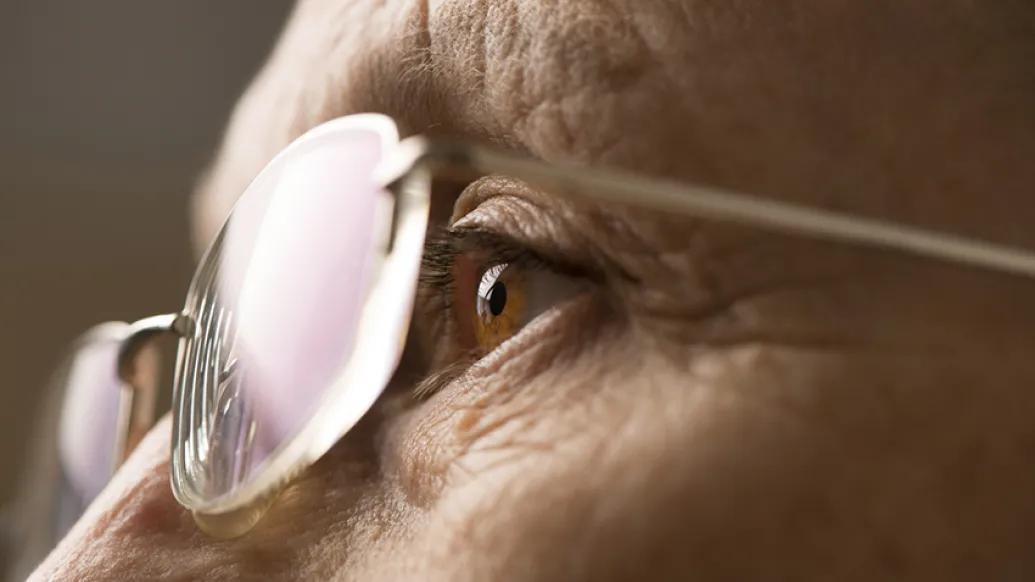
A disease that causes blurred central vision, age-related macular degeneration (AMD) results from damage to the macula — a small area at the back of the eye that helps you to see fine details up close.
LISTEN UP: Add the new Michigan Medicine News Break to your Alexa-enabled device, or subscribe to our daily audio updates on iTunes, Google Play and Stitcher.
As a result, everyday tasks such as driving and reading can be difficult, if not impossible. No cure is currently available.
"That's why this diagnosis is so devastating to people," says Michigan Medicine retina specialist Julie Rosenthal, M.D.
AMD is most common in people over 60 and can be exacerbated by certain genetic factors and lifestyle habits such as smoking. And while AMD doesn't lead to complete blindness, its symptoms do worsen over time.
How macular degeneration is diagnosed
Early symptoms of macular degeneration can be subtle: The straight horizontal lines of window blinds might appear curved or wavy, for instance. A familiar face may no longer be instantly recognizable. Or adapting to low light becomes more difficult.
But most people won't know they have AMD until they receive a comprehensive eye exam.
MORE FROM MICHIGAN: Sign up for our weekly newsletter
"It's occurring in a microscopic area in the back of the eye," Rosenthal says. "Nobody can see it by just looking at you."
A doctor may perform dilation, which uses eye drops to enlarge the pupil to help look for drusen — waste deposits that can build up in the back of the eye and interfere with retinal function.
Or they might recommend optical coherence tomography, in which a scanner uses light waves to form an image of a retina on a computer screen.
The tests can help determine what type a patient has: wet or dry AMD.
Still, "they're really both parts of the same disease," Rosenthal says. "It's more of a spectrum than a strict division."
She spoke more about both types:
Signs and symptoms of dry macular degeneration
This is the most common form of AMD, affecting about 85 to 90 percent of cases, according to the National Institutes of Health.
Dry macular degeneration occurs when cells of the macula begin to thin and break down. It is characterized by drusen buildup and typically worsens over time.
SEE ALSO: Why Does the Doctor Need a Photo of My Eye?
"Generally, dry AMD is less severe, but you can still lose a lot of vision if it reaches the more advanced stages," Rosenthal says.
Researchers are still working on an effective treatment for dry AMD. Your doctor may recommend a vitamin regimen known as AREDS, a blend of supplements designed to reduce severe AMD risk.
It's also important to practice lifestyle habits thought to help curb progression of dry AMD: a diet rich in leafy greens, regular exercise, smoking cessation and maintaining a proper weight and blood pressure.
It's occurring in a microscopic area in the back of the eye. Nobody can see it by just looking at you.Julie Rosenthal, M.D.
Wet macular degeneration: risks and treatment
Wet AMD happens when abnormal blood vessels grow in the back of the eye.
Over time, those fragile vessels can break and leak blood and fluid into the macula, quickly resulting in severe damage to a patient's vision.
SEE ALSO: 3 Ways Genetic Counselors Provide Clarity on Eye Disease
Rosenthal compares the process to "a crack in the sidewalk letting weeds grow through."
The presence of dry AMD doesn't mean a person will develop wet AMD. But dry AMD can progress into the wet form — and it can advance at different rates in each eye.
For treatment, patients with wet AMD may receive anti-vascular endothelial growth factor medication in their eyes.
Delivered into the eye via syringe, the medications (administered monthly or at a pace determined by your doctor) reduce abnormal blood vessel growth and swelling in the retina that can contribute to vision loss.
Although effective, "it's a treatment and not a full cure, and that's why it needs to be repeated," Rosenthal says. "Patients should also be closely monitored."

Health Lab
Explore thousands of health news & research stories by visiting the Health Lab homepage for more.
Media Contact

Public Relations
Department of Communication at Michigan Medicine
Stay Informed
Want top health & research news weekly? Sign up for Health Lab’s newsletters today!
Featured News & Stories

7 Healthy Habits to Help Prevent Macular Degeneration

Many hospitals still don’t do enough to prevent UTIs from catheters

Nerf gun accident causes retinal detachment in pediatric patient

Kellogg care inspires gift to vision research

Mediterranean diet can slow progression of age-related macular degeneration