Weighing TAVR vs. SAVR for aortic stenosis treatment
A cardiac surgeon explains treatment for aortic stenosis patients while stressing the importance of shared decision-making
3:00 PM
Author |
This story was published on March 28, 2018 and was updated on August 31, 2026.
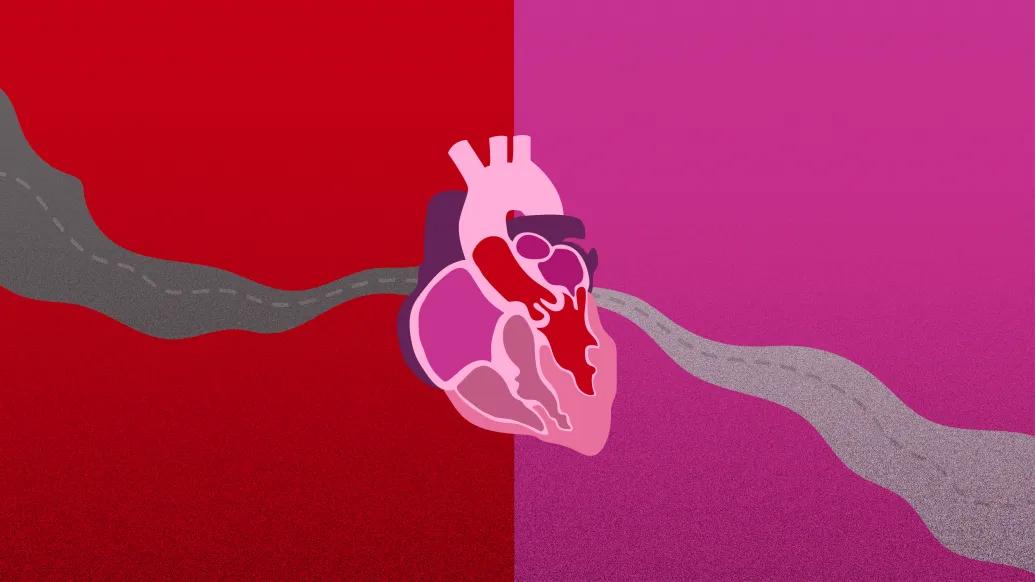
More than a million people in the United States have aortic stenosis, a condition in which the aortic valve doesn't open fully due to thickening of the valve leaflets.
As a result, blood isn't adequately pumped and pressure increases in the left ventricle, the heart’s main pumping chamber.
The heart compensates by thickening its walls to maintain adequate pumping pressure.
Without proper treatment, heart function can deteriorate.
An early symptom of aortic stenosis is fatigue and shortness of breath associated with activity.
Advanced symptoms include fainting, chest pain and heart failure.
While some patients with aortic stenosis are treated with medication, about 300,000 people in the U.S. each year are diagnosed with severe aortic stenosis.
Medical therapy for severe aortic stenosis is not adequate, and most of these people should have an aortic valve replacement which prolongs life and improves quality of life significantly.
The difference between TAVR and SAVR
For patients with severe aortic stenosis, treatment options may include surgical aortic valve replacement, or SAVR, or transcatheter aortic valve replacement, or TAVR.
SAVR is more invasive.
During an open-heart procedure, an incision is made in the chest to access the heart.
The diseased aortic valve is then removed and replaced with a new valve which requires being temporarily placed on a heart-lung machine.
For years, SAVR was the standard treatment for patients with severe aortic stenosis.
TAVR is an alternative, catheter-based procedure that is minimally invasive with less recovery time.
Both types of valves are tissue valves, but the SAVR valve is a fixed stent with a projected median durability of 15 years, while the TAVR valve, which expands and contracts, has an uncertain life span. Currently, it is projected as a median of 10 years of durability.
The current guidelines for therapy recommend TAVR for patients greater than 80 years of age, SAVR for patients less than 65 years of age with a normal expected lifespan and either TAVR or SAVR for patients between 65 and 80 years of age, depending on their overall medical condition and expected longevity.
When it comes to picking the best option, University of Michigan Health cardiac surgeon G. Michael Deeb, M.D., says patients should be actively involved.
"This is what we call shared decision-making," Deeb said. “When it comes to choosing which form of therapy, we base it on lifetime management. Since we can’t cure patients, our role is to place them back on their normal survival curve.”
The goal is to allow each patient the opportunity to live out their own survival curve with the minimal number of procedures, accumulative risk and amount of trauma.
SEE ALSO: 5 Years Later, 'Life is Good' for One of Michigan's First TAVR Patients
Reviewing the risks and benefits of TAVR and SAVR
While TAVR seems like the obvious choice to avoid the stress and trauma of an open procedure, it may not be the first choice for all patients.
“It has a quicker recovery than SAVR but a higher risk of needing a pacemaker after the procedure,” said U-M Health interventional cardiologist Stanley Chetcuti, M.D. “Conversely, there is less risk of developing atrial fibrillation after a TAVR.”
Determining factors when choosing between the two forms of treatment takes into consideration the patient’s age, anatomy, associated cardiac and aortic pathologies as well as their overall medical condition.
There are things you can do with surgery that you cannot do with TAVR.
“If you have other disease states in the heart, such as atrial fibrillation or an appendage you need to occlude, you can approach multiple issues with a SAVR procedure,” Chetcuti said.“From a percutaneous standpoint, atrial appendage closure and A-fib ablation would have to be done in a different procedure.
“There are socioeconomic issues, too. If somebody cannot afford to take a month off work, TAVR has a shorter recovery time, and you can potentially be back to work in a week.”
To determine the risk for SAVR, the multidisciplinary team at the U-M Health Frankel Cardiovascular Center looks to The Society of Thoracic Surgeons database, which provides an individual patient mortality and morbidity risk score.
“We take all of these factors into consideration to calculate the risk-benefit ratio for each pathway to present the patient and family with objective data to make an evidence-based, informed decision based on the individual patient’s projected lifetime management,” Deeb said.
SEE ALSO: Is TAVR Right for You? More Aortic Stenosis Patients Now Eligible
This is where shared decision-making comes into play, says Deeb, noting that decisions are based on individual patients.
“If all risks and benefits are weighed and the patient is a candidate for TAVR, most patients will opt for the less invasive transcatheter procedure because the recovery time is shorter and the patient is back in society faster,” he said.
Looking to the future
Newer technologies for TAVR therapy have expanded their use by having leaflet splitting devices which allow TAV-in-TAV procedures as well as TAV-in-SAV procedures.
These forms of therapy have allowed more people to enter the TAVR pathway to reach their lifetime management goal.
In addition, a TAVR valve for aortic insufficiency (leaky valve) has been approved by the FDA in the higher risk patient population and is currently in a randomized clinical trial for moderate and lower risk patients.
“If the technology and the durability of the TAVR devices continue to improve at its current rate, most patients with aortic valve disease will be treated with TAVR,” Deeb said.
“TAVR patients do incredibly well. They are walking around immediately after the procedure, discharged quickly from the hospital and recover from the procedure in two weeks.”

Health Lab
Explore thousands of health news & research stories by visiting the Health Lab homepage for more.
Media Contact

Public Relations
Department of Communication at Michigan Medicine
In This Story

G M Deeb
Professor
Stanley J Chetcuti, MD, FACC, FSCAI
Clinical Professor
Stay Informed
Want top health & research news weekly? Sign up for Health Lab’s newsletters today!
Featured News & Stories

Digital alerts support timely treatment decisions of critically ill cardiac patients

Is the United States Lagging Behind Europe in Memory Improvement?

Reducing infections after heart surgery could save Medicare $441 million per year
Young father survives aortic dissection after delayed diagnosis

C.S. Mott Children’s Hospital first in country to implant expandable heart valve during FDA review phase