Myositis: Understanding the Rare Autoimmune Disease
Muscle weakness is a common complaint as the body ages, but how do you know when it’s something more serious like inflammatory myositis?
5:00 AM
Author |
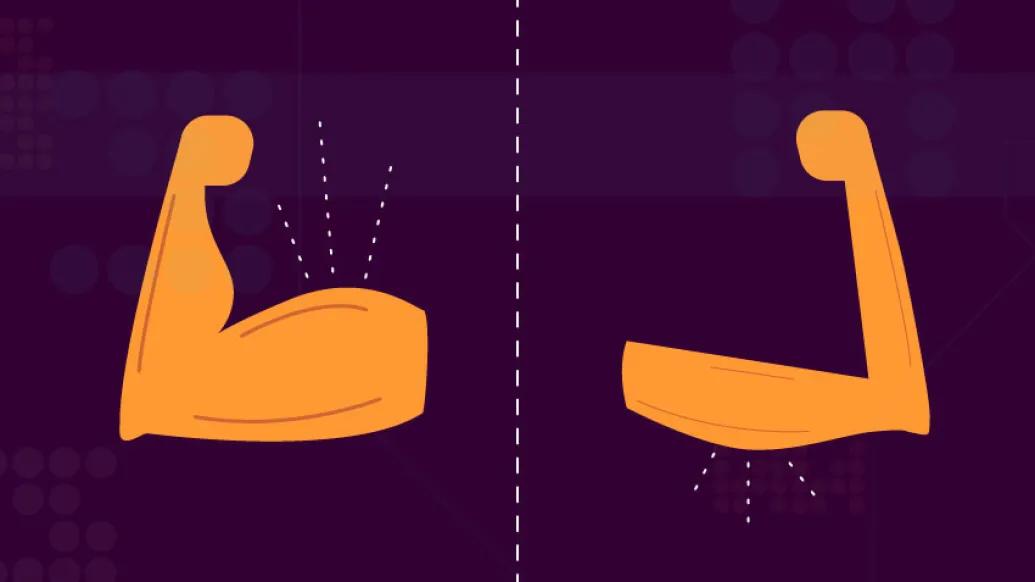
It's easy to brush off the early signs of myositis, a muscle weakening autoimmune disease. That trip or fall while walking could be attributed to clumsiness. Difficulty climbing up stairs, rising from a chair or lifting something overhead could be from an abandoned regular exercise program or muscle breakdown from age. That cough, difficulty breathing, trouble swallowing or rash could just be a temporary anomaly.
Many people dismiss the early signs of myositis, including healthcare workers, because it's similar to other conditions and the rare disease is relatively unknown. About 75,000 U.S. residents live with myositis, which has no known cure.
Rheumatologist Elena Schiopu, M.D., one of the leading experts on the condition, is working to uncloak its anonymity. She founded the Michigan Medicine Myositis Program, the first of its kind in the Midwest, and is hosting the Myositis Summit on May 2 during myositis awareness month at the University of Michigan, to bring together patients, physicians and myositis experts to educate each other on the illness.
Dr. Schiopu serves on the scientific board for the International Myositis Assessment and Clinical Studies Group (IMACS), an honor given to two myositis experts per year.
"Patients wanted a gathering like this because they need to know the latest research and what we are doing for them long term, so we hope to make this a bi-annual event," Schiopu says.
The summit is also a way to introduce the community to the newly formed Myositis Program, which creates a multidisciplinary team of rheumatologists, neurologists, pulmonologists, pathologists, radiologists, nurses, physical therapists, registered dieticians and social workers who collaborate to provide patients with the most comprehensive care available.
Here, Schiopu breaks down what the condition is, what the symptoms are, how to treat it and where the research on myositis stands.
What is myositis?
Myositis is an autoimmune disease involving chronic inflammation that leads to the weakening of muscles over time, particularly those in the neck, shoulders, hips and back. It may be painful, too.
The muscle inflammation is from the immune system losing tolerance of the muscle. The immune system starts not recognizing the muscle as its own, so it starts attacking it with the immune cells and other inflammatory mediators and then the muscles get inflamed. We don't know the cause, unfortunately, even though a few hypotheses have been identified as triggering the immune system, such as environmental factors, infectious organisms, certain drugs, and even cancer.
There are five different forms of it, each with their own symptoms and natural history, which include:
- Inclusion body myositis
- Dermatomyositis
- Polymyositis (including anti-synthetase antibody syndrome and myositis associated with other connective tissue disorders)
- Necrotizing myopathy
- Juvenile Myositis
What are the symptoms?
Symptoms vary for each patient and are highly dependent on what other health challenges a patient may have. The most common are:
- Tripping or falling
- Difficulty climbing stairs, getting up from a seat or reaching for objects overhead
- Skin rashes
- Scaly skin patches
- Hardened lumps under the skin
- Breathing problems and intolerance of effort
- Dry cough
- Hoarse voice
- Difficulty swallowing
- Fatigue
Many patients report it's taken years to get a proper diagnosis because the disease mimics other autoimmune diseases like Lupus, Sjogren's and scleroderma or it overlaps with them.
How is myositis diagnosed?
After a medical history and a physical exam, which includes assessment of muscle strength and rashes, doctors may order some tests to confirm the diagnosis; certain liver enzymes by the muscle could be elevated and often times there's an assumption that the liver is in trouble. The blood test will check for the presence of certain muscle enzymes (CK, aldolase, LDH) which are specific to the muscle, but also certain antibodies which are now increasingly associated with certain forms of myositis and are highly considered in the diagnosis. Diagnostic tests may also include muscle magnetic resonance imaging (MRI), electromyogram and nerve conduction velocity studies, which gauge how quickly impulses travel through a neural pathway. Finally, muscle and skin biopsies are considered the most definitive test for diagnosis. Both show abnormalities linked to myositis.
There's been a lot of progress in how we diagnosis conditions, but it usually starts out with the patients feeling weak.
How is myositis treated?
Since there's no known cure and no FDA-approved therapies, myositis is managed with off-label medications that have been successful in causing remission or controlling symptoms by tackling the inflammation. They include corticosteroids such as prednisone, immunosuppressants (medicines that tamp down activity in the immune system) and immunoglobulin (human plasma derivative that contains antibodies).
I believe exercise is critical for successful treatment. In my role on the scientific board for IMACS, we're working on establishing guidelines for patient exercise and physical therapy to help reduce muscle inflammation and fatigue, while increasing stamina and muscle mass.
LISTEN UP: Add the Michigan Medicine News Break to your Alexa-enabled device, or subscribe to our daily updates on iTunes, Google Play and Stitcher.
Paying attention to nutrition has helped many patients it seems. Eating foods on an anti-inflammatory plan like the Mediterranean diet, may also tame flare-ups.
What's happening on the research front?
We're on the forefront of solving the mysteries of myositis. We're collecting data on pain to better understand its patterns. It was previously thought that pain was mostly nonexistent in myositis, as weakness was the prominent clinical presentation. As a clinician, I've found pain prevents patients from exercising, which is one of the most effective treatments available. We're also looking at ways to motivate patients to exercise daily, making exercise part of their daily routine.
Our teams are also working to understand the biological basis for myositis. We're examining different antibodies which may signal certain types of myositis developing. By taking it to a cellular level, we hope to understand the immune system's response to treatment.
Since so many symptoms involve the skin, like rashes, swelling or bumps, we're assessing the role the environment – air, water, food – may have on the disease.
We're additionally involved in all multicenter clinical trials or diagnostic criteria efforts, valuing collaboration with other academic institutions, colleagues in private practices and the pharmacological industry.
This disease has long had the reputation that it's untreatable, but now there's a lot of interest in picking up the sword and fighting for a solution again.

Health Lab
Explore thousands of health news & research stories by visiting the Health Lab homepage for more.
Media Contact

Public Relations
Department of Communication at Michigan Medicine
Stay Informed
Want top health & research news weekly? Sign up for Health Lab’s newsletters today!
Featured News & Stories

5 things to know about ALS
Advancements and trends in lung transplantation

Weight loss and surgery restore patient’s throat after near-death brush with likely COVID
Research may help better predict outcomes in kids with congenital cytomegalovirus

A method to prevent falls before they happen