How deep brain stimulation helped a 10-year-old from having multiple seizures a day
DBS treatment has more commonly been used in adults with epilepsy but is now helping children like Rylan improve their quality of life.
5:00 AM
Author |
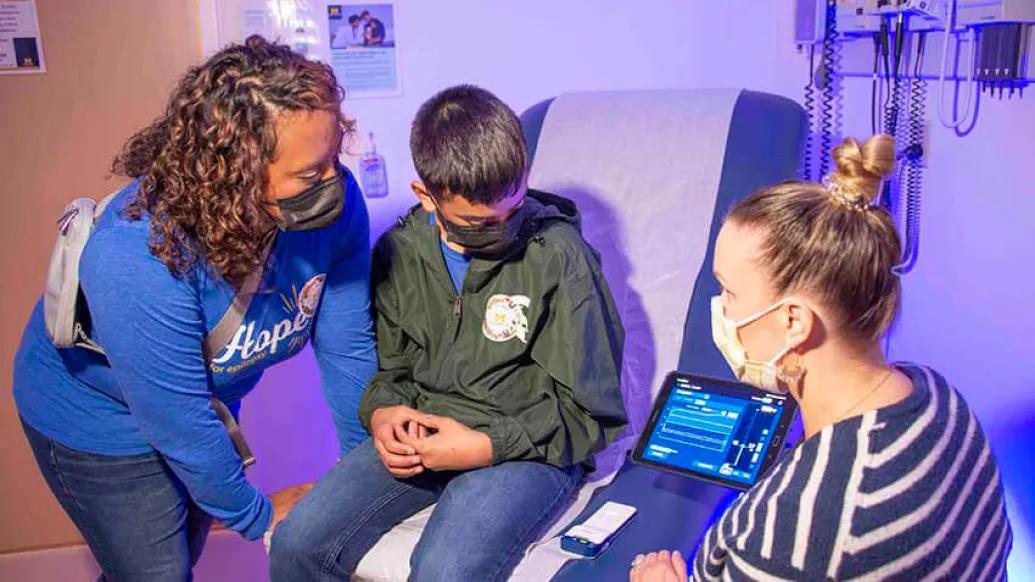
Before his deep brain stimulation procedure in March, 10-year-old Rylan Moll was experiencing multiple seizures a day, causing disruptions in school, playtime and having a regular childhood.
Now, the new DBS device in his brain uses wires to helps deliver constant stimulation to keep his focal epilepsy manageable and has reduced his seizure frequency to just a few every month.
MORE FROM MICHIGAN: Sign up for our weekly newsletter
Rylan is among less than a dozen pediatric patients and currently one of the youngest at Mott to undergo the procedure, which has more commonly been used in adults.
"He wants to be active, and he wants to be as normal as possible, and we want to make sure he can be the best version of himself," Alicea Moll said.
Sudden symptoms
On New Year's Eve of 2018, then 7-year-old Rylan was playing with his cousins at his grandfather's house when he suddenly zoned out for a couple of minutes and stopped responding to those around him.
When Rylan's parents, Alicea and Shane Moll, arrived to pick up Rylan, his grandfather informed them what had happened.
After hearing of the incident, the Molls quickly decided that something didn't feel right and took Rylan straight to the emergency room.
Neurodiagnostic tests showed no signs of a seizure, unusual brain activity or anything suggestive of epilepsy. So, the family was sent back home to monitor the situation on their own. But, within a few hours, Rylan experienced yet another seizure-like episode.
"He was having what I would think of as a seizure," Alicea Moll said. "His mouth was clenched up, his eyes were fluttering back, he was stiff, and he couldn't move."
Rylan was quickly rushed back to the emergency room where he proceeded to experience multiple seizures that night. Eventually, the emergency room staff suggested that the family be taken by ambulance to University of Michigan Health C.S. Mott Children's Hospital.
At Mott, Rylan was hooked up to an electroencephalogram (EEG) machine. Pediatric epileptologists Sucheta M. Joshi, M.B.B.S. and Kerri L. Neville, M.D. confirmed that seizure activity was taking place in Rylan's brain.
Searching for answers
Rylan started experiencing as many as four seizures a day. The cause of his epilepsy is unknown and not traceable to anything genetic or to a specific trigger. While this type of epilepsy is common for epileptologists to see, Rylan's case was particularly challenging since they couldn't locate where the seizures were coming from.
"His scans have been challenging to find a clear-cut abnormality," said Rylan's epileptologist and co-director of the Mott pediatric epilepsy surgery program, Erin Fedak Romanowski, D.O.
"There were some subtle, nonspecific abnormalities on his scans that may be a reason for why he has seizures, but the short answer is we don't completely understand why Rylan has epilepsy," she said.
For a couple of years, Rylan's team of neurologists tried multiple different medications to try to keep his epilepsy under control. The medications would typically work for about a month and then lose all effectiveness. The starting location and trigger for the seizures was always changing.
The seizures were also impacting Rylan's day to day life at school.
"Some of his seizures would knock him out completely and he could not finish the day," Alicea Moll recalled. "We would take him out of school when he had a seizure, and he was missing a lot of instruction."
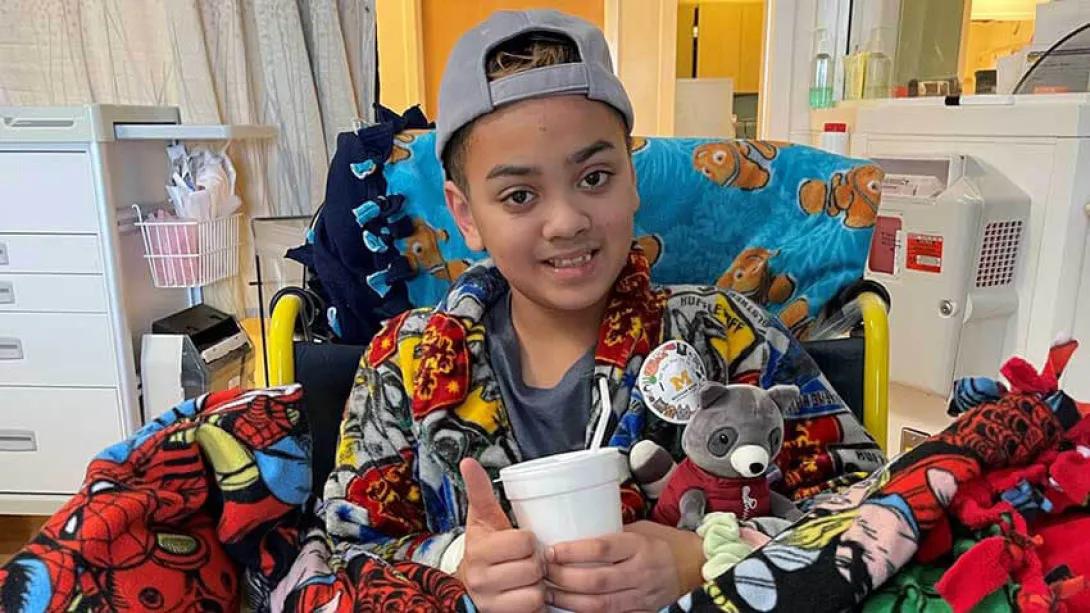
As Rylan's epilepsy appeared to be resistant to medications, it was time to consider surgery. The most common type of epilepsy surgery is to remove the part of the brain that is causing the seizures.
The second, palliative option is to consider neuromodulation, which includes responsive neuro stimulation (RNS) and deep brain stimulation (DBS). Both epilepsy surgery and RNS require a precise starting location in the brain for the seizures. Since Rylan's seizures could not be pinpointed to one specific spot, both options were ultimately off the table. This brought Rylan's team to their best option: deep brain stimulation surgery.
A perfect candidate for deep brain stimulation
DBS procedures are common to see in adults but have not been done very often in children.
Despite the procedure being newer for the pediatric population, Rylan's history made him the perfect candidate. His family agreed that this procedure was the right choice and scheduled it for March 2022.
Like Podcasts? Add the Michigan Medicine News Break on Spotify, Apple Podcasts or anywhere you listen to podcasts.
The goal of the DBS device is to continuously give stimulation on a cycle to the thalamus and reduce seizure activity.
"The area of the brain that we chose to stimulate is the anterior nucleus of the thalamus," said Rylan's neurosurgeon, Emily Lehmann Levin, M.D., who is the co-director of the U-M Health Department of Neurosurgery's multi-disciplinary Deep Brain Stimulation Program, one of the only centers that routinely treats children. "This target in the thalamus is about the size of a grain of rice and is located in the center of the brain."
During Rylan's procedure, Levin used real-time intraoperative MRI to guide her through the brain.
"Hitting the thalamus accurately is important because if you don't get the electrode into the right spot it won't work," she said.
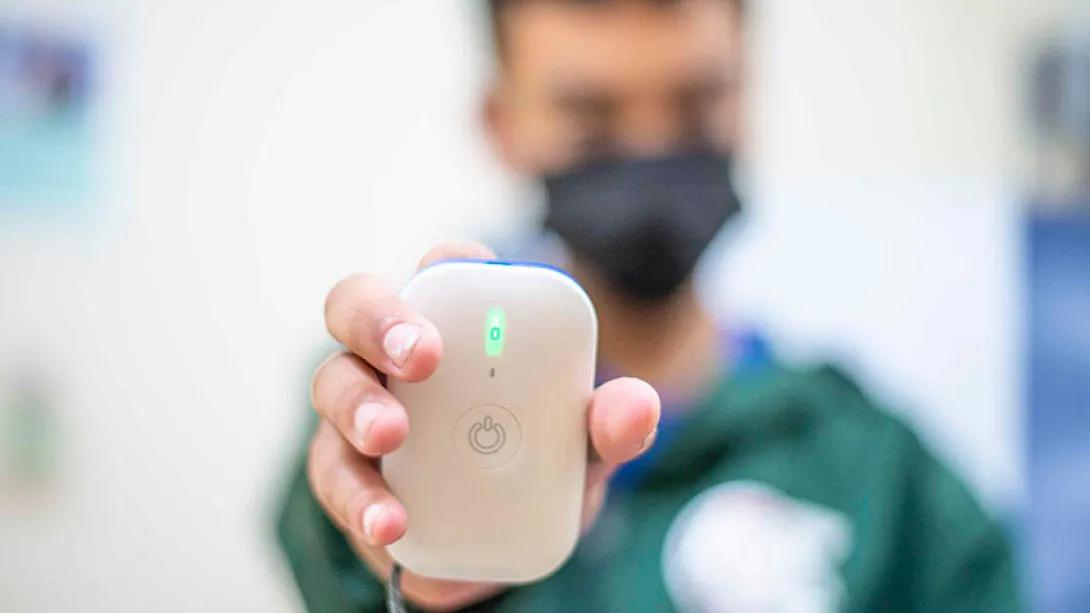
Wires were then passed underneath the skin to the DBS device that is placed in Rylan's abdomen. Levin placed the device just beneath his rib cage so it is protected, and he can still play sports. In older patients, this device is typically placed in the chest.
His seizures have been reduced to about two every four to six weeks thanks to the DBS device. When he feels a seizure starting, he presses a button on a remote that has been nicknamed the "bar of soap." The "bar of soap" communicates with the implant in Rylan (nicknamed the "Ironman Reactor") and creates a bridge for the device to communicate with a phone using Bluetooth.
Rylan will need to have another procedure in about two to seven years to replace the battery of the device. As he grows taller, the device will also be moved up to his chest.
Flash forward to today
Life after surgery has been much simpler for Rylan.
"We put our trust in his care team at Mott. They have not steered us wrong the whole time we have been here," Alicea Moll said, "If I had to go back, I would not change my decision to go with the DBS surgery."
Today, Rylan is an active 10-year-old. He enjoys playing tennis, Fortnite, building LEGO creations, watching his older sister play soccer, and rooting for the Michigan State Spartans.
"If you didn't know Rylan, you wouldn't know that he had a major surgery done back in March," his mom said.
Schooling has become more manageable with fewer seizures and Rylan has a good group of friends who are always willing to look out for him when he starts feeling odd.
Alicea Moll and her husband feel it's important that Rylan's story be shared to help other parents who might be going through a similar situation.
"Four years ago, we were parents who didn't know anything about epilepsy. Most of the time when you think of seizures and epilepsy, you think of convulsive seizures, but with Rylan's focal epilepsy, we didn't know much about it," she said.
"It's important to understand because some of the symptoms look like kids just being kids, such as spacing out and not listening to you. Now that our family has been affected by epilepsy, we want to share our story in hopes that it can help other families. It's not something you ever have to go through alone."
Interested in supporting the C.S. Mott Pediatric epilepsy program? Learn more.
Live your healthiest life: Get tips from top experts weekly. Subscribe to the Michigan Health blog newsletter
Headlines from the frontlines: The power of scientific discovery harnessed and delivered to your inbox every week. Subscribe to the Michigan Health Lab blog newsletter
Like Podcasts? Add the Michigan Medicine News Break on iTunes or anywhere you listen to podcasts.

Health Lab
Explore thousands of health news & research stories by visiting the Health Lab homepage for more.
Media Contact

Public Relations
Department of Communication at Michigan Medicine
Stay Informed
Want top health & research news weekly? Sign up for Health Lab’s newsletters today!
Featured News & Stories
U-M-led consortium to receive up to $52 million in NIH funding to study why viral respiratory infections affect children differently
4 in 5 parents say having a baby is too expensive
Many hospitals still don’t do enough to prevent UTIs from catheters

E-Bikes are everywhere, but most parents say they don’t know enough about them
Engineered nanoparticles sensitize gliomas to radiotherapy