Exercise guidelines for cerebral palsy patients
Cerebral palsy often leaves those affected in a state of inactivity. But experts say exercising with the condition can have long-term benefits
1:00 PM
Author |

Regular exercise can be difficult for everyone. But it is especially so for people with cerebral palsy.
That's why Mark Peterson, Ph.D., assistant professor of physical medicine and rehabilitation at the University of Michigan, Edward Hurvitz, M.D., professor and chair of physical medicine and rehabilitation at U-M, and fellow colleagues on the American Academy of Cerebral Palsy and Developmental Medicine Committee for Lifespan thought it was important to establish some easy exercise guidelines and tips for those with cerebral palsy.
"It's important to keep in mind that each person with cerebral palsy has a different ability level," Peterson says. "That's why we can't say one specific exercise prescription works better than another. However, we wanted to provide some recommendations that can be tailored to each person's lifestyle and ability, and help them live a healthier, active life."
Exercising with cerebral palsy is an important part of maintaining function and improving health, Peterson adds.
"We find that people with cerebral palsy who exercise regularly experience benefits in their overall mobility and quality of life, as well as a reduced risk of chronic conditions, such as diabetes and cardiovascular disease," he says. A group of neurological disorders, cerebral palsy affects a person's movement, balance and coordination.
In a new fact sheet, Peterson and his colleagues recommend three specific areas of physical activity for adults with cerebral palsy, and some fitness tips and exercises to keep in mind for each. See details below:
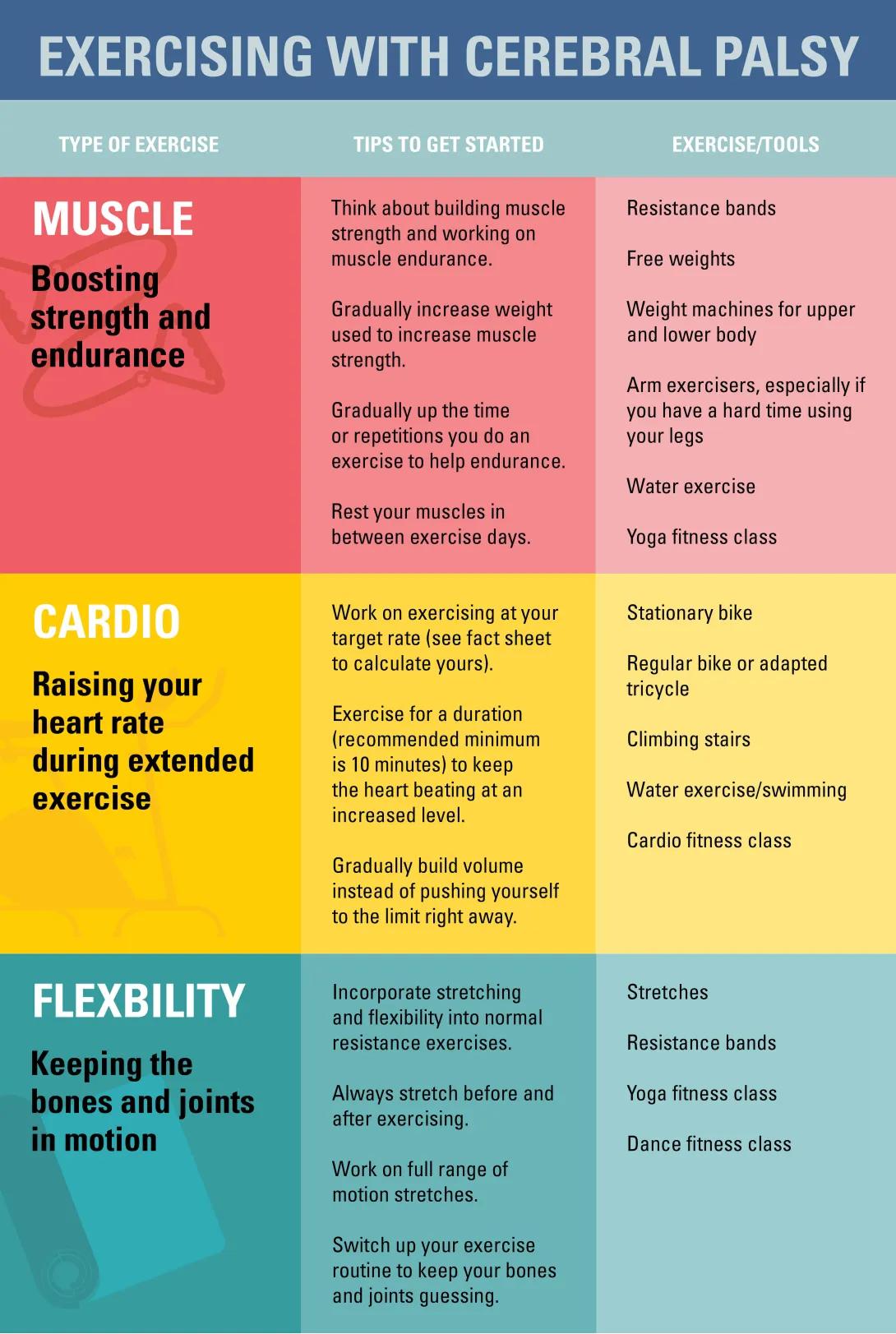
Set a reasonable goal, especially when first starting regular exercise, to help you stay motivated, Peterson says.
He and his international colleagues also recently published the first exercise recommendations paper for individuals with cerebral palsy to provide more details for people seeking guidelines.
"For those with cerebral palsy, taking the first step towards a regular exercise routine can be a daunting task," he says. "Always check in with your physician and let them help you develop the best plan for you."

Health Lab
Explore thousands of health news & research stories by visiting the Health Lab homepage for more.
Media Contact

Public Relations
Department of Communication at Michigan Medicine
Stay Informed
Want top health & research news weekly? Sign up for Health Lab’s newsletters today!
Featured News & Stories

A pediatric epilepsy fundraiser that changes lives

Michigan Alzheimer's Disease Research Center receives $22M to advance efforts statewide

Engineered nanoparticles sensitize gliomas to radiotherapy

5 things to know about ALS

First person-centered measure of dementia caregiving styles improves partner, patient outcomes