A Doctor’s Mission: Get More People Screened for Colon Cancer
A Michigan Medicine gastroenterologist has studied why patients skip the lifesaving test. He explains the necessity — and efforts designed to help.
7:00 AM
Author |
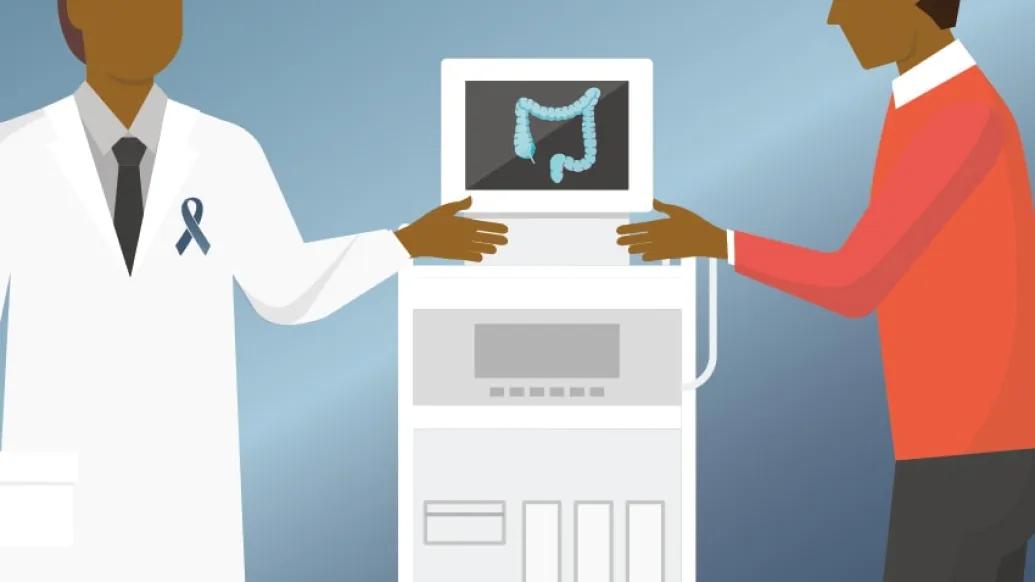
Colorectal cancer is the second-leading cause of cancer death, claiming more than 50,000 American lives every year.
But it's also one of the most preventable forms of cancer.
MORE FROM MICHIGAN: Sign up for our weekly newsletter
Found in either the colon or the rectum, the cancer is especially deadly for African-Americans, whose mortality rate is more than 50 percent higher than non-Hispanic whites, according to the National Cancer Institute.
That's due in part to a disparity in screening levels, researchers say. Screenings, which look for a problem before symptoms arise, help doctors to catch growths or polyps before they become cancerous.
Many more people could benefit from the lifesaving measure: The Centers for Disease Control and Prevention estimates that if everyone ages 50 and older participated in recommended colorectal cancer screening, at least 60 percent of colorectal cancer deaths could be avoided.
Helping more patients get screened
In honor of March being Colorectal Cancer Awareness Month, one Michigan Medicine doctor is working to eliminate the screening disparities among minorities.
SEE ALSO: 5 Warning Signs of Colorectal Cancer
Gastroenterologist Keith Naylor, M.D., a clinical lecturer at the University of Michigan Medical School, is researching the barriers to screening and seeking ways to improve access for everyone, regardless of income or ethnicity.
"More so than any other cancer, we can prevent colorectal cancer," Naylor says, noting that some people never learn the importance of screening because they lack a primary care physician to initiate the conversation.
The disparity might also be tied to having public rather than private health insurance. Geography, too, can be a barrier when patients live long distances from providers or lack transportation.
More so than any other cancer, we can prevent colorectal cancer.Keith Naylor, M.D.
Colorectal cancer screening methods
Beyond physical or economic hurdles, emotions can hinder action: "There is also a component of a patient not wanting to be screened," says Naylor.
Which is why he works to educate patients about the four different screening methods and how each one works.
Here are the methods:
-
Colonoscopy: A camera attached to a flexible tube about the width of a finger is used to look inside the colon and rectum for anything out of the ordinary. The doctor may take samples if necessary. Patients are sedated during the procedure and may receive pain medication to keep them relaxed. It is the preferred method of screening.
-
Fecal occult blood test: A noninvasive test that checks stool for hidden blood, often a sign of cancer or polyps.
-
Flexible sigmoidoscopy: It also uses a thin, flexible tube with a camera — but it only evaluates the lower third of the colon, making it a partial exam. Preparation for this exam is easier and most recipients are not sedated.
-
Stool DNA testing (Cologuard): The newest test available, it checks stool for red blood cells and DNA mutations that may indicate the presence of abnormal, possibly precancerous growths.
Other types of outreach
Naylor's research has shown the benefits of using patient navigators in underserved markets. A navigator helps a patient get through a complicated process in the health care system.
SEE ALSO: Two Ways to Have a More Comfortable Colonoscopy
In the case of colorectal screening, a navigator would take the referral from the patient's physician, set up an appointment with a gastroenterologist, arrange transportation and take all necessary steps to help the patient prepare for the appointment.
"If they've never had any exposure to this test, have language barriers or have never seen a specialist, a navigator makes all the difference and it means that patient will more likely get that screening," Naylor says.
Getting into communities to spread the message has positively impacted screening numbers, Naylor says, citing the efforts of Project Brotherhood in Chicago, which provides colorectal screening education in local barbershops.
What he'd really like is another Katie Couric to step forward. The well-known journalist had a colonoscopy on television in 2000 while awake. That effort raised awareness and led to a 20 percent rise in scheduled colonoscopies. (Couric recently accompanied Jimmy Kimmel for his first such exam, which aired earlier this week on the late-night host's namesake program.)
"By having a trustworthy celebrity have one live on the air, it showed it was an easy procedure and it helped familiarize people with what it's all about," Naylor says. "It's really all about improving awareness."
To schedule a colonoscopy with Michigan Medicine, call 877-758-2626. No referral is needed, unless you belong to an HMO.

Health Lab
Explore thousands of health news & research stories by visiting the Health Lab homepage for more.
Media Contact

Public Relations
Department of Communication at Michigan Medicine
Stay Informed
Want top health & research news weekly? Sign up for Health Lab’s newsletters today!
Featured News & Stories

Two Ways to Have a More Comfortable Colonoscopy
Online resources and coaching helped people seek genetic testing for cancer
Liver cancer can be preventable. Do you know the treatable risk factors?
Prostate cancer and hereditary risk: A doctor explains the connection

New oral nanomedicine boosts effectiveness of cancer immunotherapies