Doctors Are Seeing More Alcoholic Liver Disease in Young Adults
Alcohol use disorders have also increased over the last decade, with an 80 percent spike among women.
7:00 AM
Author |

As the craft beer, spirits and "mommy juice" wine cultures surge, doctors across the country are seeing a growing problem: sick livers.
More people are drinking too much alcohol, causing a rise in alcoholic liver disease (ALD). The diseases of the liver are fatty liver, alcoholic hepatitis, chronic hepatitis, cirrhosis and liver cancer.
LISTEN UP: Add the new Michigan Medicine News Break to your Alexa-enabled device, or subscribe to our daily audio updates on iTunes, Google Play and Stitcher.
Some of the early symptoms of ALD include chronic fatigue, poor appetite, itchy skin and abdominal pain and swelling.
Exacerbating liver damage
In most cases, moderate drinking — one drink a day for women, two drinks a day for men — will not lead to ALD, but overindulging can. And for those already suffering from liver disease — some of whom may not know it — even small amounts of alcohol can exacerbate their liver damage.
ALD used to be considered "an old man's disease," says Michigan Medicine liver specialist Jessica Mellinger, M.D.
That is no longer the case.
Mellinger and her colleagues found a cataclysmic shift in the demographics of ALD patients in their national study that looked at seven years of data from more than 100 million privately insured U.S. residents. Today, more younger people — many of them women — are walking around with sick livers.
Death rates increase
"One of the scariest statistics out there that my colleagues unveiled in a study is that cirrhosis mortality related to alcohol use increased the most in people 25 to 34 years old," Mellinger says.
The number of drinkers in that age bracket who died nearly tripled between 1999 and 2016, with an average increase around 10 percent every year, Mellinger says.
SEE ALSO: How 'Dry January' Benefits Your Mind and Body
"This is really dramatic and mirrors what we are seeing in the clinic," she says. "It signals that more alcohol abuse is occurring."
More than one-third of cirrhosis cases are related to alcohol, their research found.
That same research reveals that women had a 50 percent increase in alcohol-related cirrhosis during that seven-year period; the rate for men rose 30 percent.
MORE FROM MICHIGAN: Sign up for our weekly newsletter
Furthermore, in the United States the rate of alcohol use disorders, a medical term that combines alcohol abuse and alcohol dependence, has shot up 50 percent in the past 10 years — reflecting an 80 percent spike for women, according to the most recent National Epidemiologic Survey on Alcohol and Related Conditions-III, sponsored by the National Institute on Alcohol Abuse and Alcoholism (NIAAA), the alcohol research arm of the National Institutes of Health (NIH).
Discovering the cause
"We don't really know the reason drinking is up in those populations, but there has been discussion of the economic downturn during that time frame, the stress that comes with that, and the ready availability of alcohol," Mellinger says.
Biology plays a role as well, she says.
SEE ALSO: Many Patients Diagnosed with ALD Struggle to Quit Drinking
Because women absorb and metabolize alcohol differently, it makes them more susceptible to damaging the liver than men. The hypothesis is that certain hormones play a role, Mellinger says.
Women also have less body water, so women have higher concentrations of alcohol in the blood when compared with men who drank the equivalent amount.
Women also have a new attitude about drinking, Mellinger points out.
"There is this 'mommy juice' culture, this 'mommy juice' humor involving wine that's normalizing drinking in a bad way," she says. "There is nothing funny about alcoholic liver disease."
To make an appointment with a Michigan Medicine liver specialist, call 844-233-0433.

Health Lab
Explore thousands of health news & research stories by visiting the Health Lab homepage for more.
Media Contact

Public Relations
Department of Communication at Michigan Medicine
Stay Informed
Want top health & research news weekly? Sign up for Health Lab’s newsletters today!
Featured News & Stories
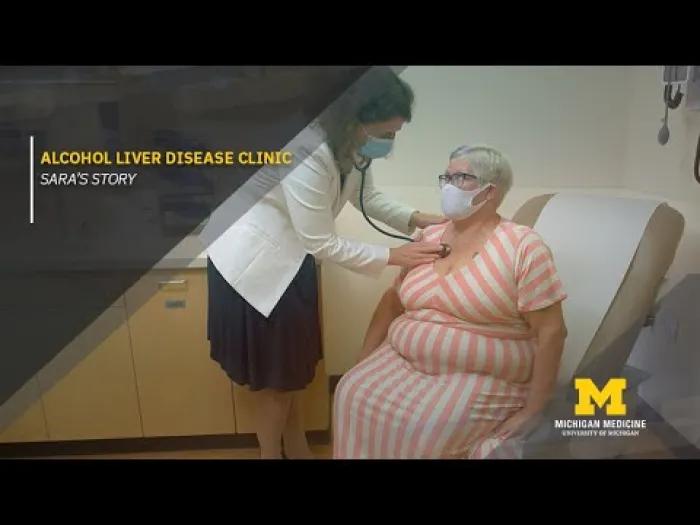
Overcoming alcohol-related liver disease

Many Patients Diagnosed with ALD Struggle to Quit Drinking

A second chance at life

Exceptional response to immunotherapy gives patient with liver cancer more milestones to celebrate

Liver cancer can be preventable. Do you know the treatable risk factors?