Breakthrough in using CRISPR-Cas9 to target fat cells
The method could help speed genetic discovery in the study of obesity.
5:00 AM
Author |
Fat—it is vital for life but too much can lead to a host of health problems. Studying how fat, or adipose, tissue functions in the body is critical for understanding obesity and other issues, yet structural differences in fat cells and their distribution throughout the body make doing so challenging.
"Fat cells are different from other cells in that they lack unique cell surface receptors and only account for a minority of the cells within fat tissue," said Steven Romanelli, Ph.D., a former member in the laboratory of Ormand MacDougald, Ph.D., in the Department of Molecular & Integrative Physiology.
In a new paper published in the Journal of Biological Chemistry, Romanelli, MacDougald and their colleagues describe a breakthrough using CRISPR-Cas9, a tool that has transformed molecular biological research, but whose use in the study of adipose tissue had been elusive.
"The biggest challenge in terms of adipose research to date has been that if you want to study a gene's function, you have to commit a considerable amount of time, resources and money into developing a transgenic mouse," said Romanelli.
The traditional way of developing mouse models involves breeding mice with a desired mutation to delete or introduce certain genes of interest, which Romanelli says can take more than a year and tens of thousands of dollars.
MORE FROM THE LAB: Subscribe to our weekly newsletter
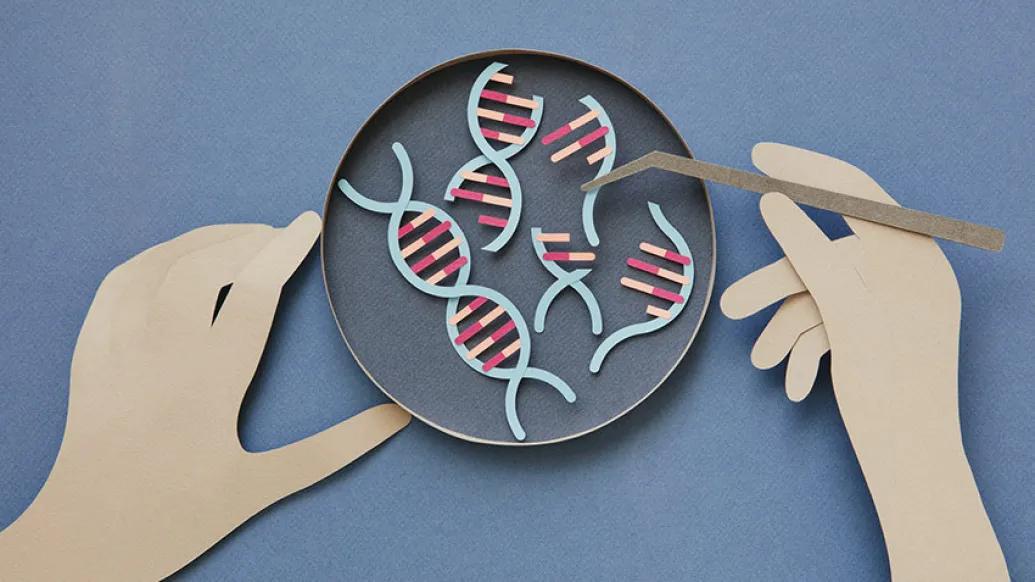
CRISPR-Cas9 has revolutionized this process. It's a gene editing technique comprised of an enzyme called Cas9 which can break strands of DNA and a piece of RNA that guides the Cas9 enzyme to a specific site in the genome for editing. This tool is packaged into a non-harmful virus for delivery to the cells being studied. The tool has been successfully used to study heart, liver, neurons, and skin cells to name a few, but never a certain type of adipose cells known as brown fat.
Using the technique, the team was able to successfully target brown fat, a specialized adipose tissue used to generate heat and protect core body temperature.
"What we've been able to do is take that whole process and distill it into anywhere from two weeks to a month to generate a transgenic mouse, reducing the cost to less than $2,000. Not only does it reduce time and cost, it democratizes the research so that any lab that is familiar with molecular biology techniques can adopt this method and do it themselves," said Romanelli.
Like Podcasts? Add the Michigan Medicine News Break on iTunes, Google Podcasts or anywhere you listen to podcasts.
They were also able to use this method to delete multiple genes simultaneously, a fact that could help researchers better understand important molecular pathways.
Using their adeno-associated virus CRISPR-Cas9 components, they were able to knockout the UCP1 gene that defines brown adipose and enables it to generate heat, in adult mice. They observed that the knockout mice were able to adapt to the loss of the gene and maintain their body temperature in cold conditions, hinting at other pathways involved in temperature homeostasis.
Romanelli says these early results are exploratory, but the technique represents an important step forward in studying fat.
Paper cited: "BAd-CRISPR: inducible gene knockout in interscapular brown adipose tissue of adult mice," Journal of Biological Chemistry. DOI: 10.1016/j.jbc.2021.10140

Health Lab
Explore thousands of health news & research stories by visiting the Health Lab homepage for more.
Media Contact

Public Relations
Department of Communication at Michigan Medicine
Stay Informed
Want top health & research news weekly? Sign up for Health Lab’s newsletters today!
Featured News & Stories
Identifying avoidant, restrictive food intake disorder in gastroenterology patients
Uncovering cellular stress signal triggered by Salmonella

Psychedelics and anesthetics create mirror image patterns in the brain

As probiotic use surges, microbiome-supportive food consumption stagnates
Why tendons heal so poorly and how researchers hope to fix them