Brain cancer digital twin predicts treatment outcomes
A simulation of an individual patient’s brain tumors, kept up to date with readily available data, can identify whether dietary treatments and drugs are likely to work
5:00 AM
Author |
This story was originally published by Michigan News.
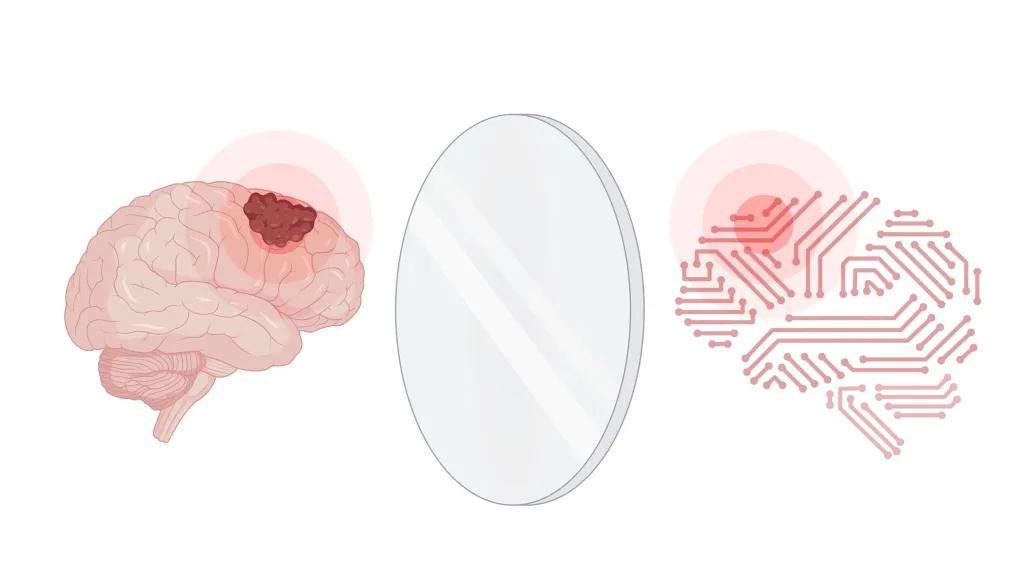
A machine-learning-based approach to mapping real-time tumor metabolism in brain cancer patients, developed at the University of Michigan, could help doctors discover which treatment strategies are most likely to be effective against individual cases of glioma.
The team verified the accuracy of the model by comparing it against human patient data and running mouse experiments.
The study, published in Cell Metabolism, builds on previous research showing that some gliomas can be slowed down through the patient’s diet.
If a patient isn’t consuming certain protein building blocks, called amino acids, then some tumors are unable to grow. However, other tumors can produce these amino acids for themselves, and can continue growing anyway.
Until now, there was no easy way to tell which patients would benefit from dietary restrictions.
The digital twin’s ability to map metabolic activity in tumors also helped determine whether a drug that prevents tumors from producing a building block for replicating and repairing DNA would work, as some cells can obtain that molecule from their environments.
To overcome challenges in mapping tumor metabolism inside the brain, the Michigan team developed a computer-based “digital twin” that can predict how an individual patient’s brain tumor will react to each treatment.
They were primarily funded by the National Institutes of Health, particularly the National Cancer Institute.
“Typically, metabolic measurements during surgeries to remove tumors can’t provide a clear picture of tumor metabolism—surgeons can’t observe how metabolism varies with time, and labs are limited to studying tissues after surgery. By integrating limited patient data into a model based on fundamental biology, chemistry and physics, we overcame these obstacles,” said Deepak Nagrath, U-M professor of biomedical engineering and co-corresponding author of the study.
The digital twin uses patient data obtained through blood draws, metabolic measurements of the tumor tissue and the tumor’s genetic profile.
The digital twin then calculates the speed at which the cancer cells consume and process nutrients, known as metabolic flux.
“This is the first time a machine learning and AI-based approach has been used to measure metabolic flux directly in patient tumors,” said Baharan Meghdadi, a doctoral student in chemical engineering and co-first author of the study.
The researchers built a type of deep learning model called a convolutional neural network and trained it on synthetic patient data, generated based on known biology and chemistry and constrained by measurements from eight patients with glioma who were infused with labeled glucose during surgery.
By comparing their computer models with different data from six of those patients, they found the digital twins could predict metabolic activity with high accuracy.
In experiments conducted on mice, the team confirmed that the diet only slowed tumor growth in mice that the digital twin had identified as good candidates for the treatment.
“These results are exciting. The ability to measure metabolic activity in patient tumors could allow us to predict which metabolic therapies might work best for each patient,” said Daniel Wahl, the Achtenberg Family Professor of Radiation Oncology and a co-corresponding author of the study.
The digital twin also predicted how tumors would respond to the drug mycophenolate mofetil, which targets how cancer cells build DNA.
The digital twins correctly identified that some tumors could bypass the drug’s effects by using a “salvage pathway” to grab nutrients from their surroundings.
Again, the team confirmed the predictions with mouse experiments.
“This amazing tool could help doctors avoid prescribing treatments that a specific tumor is already equipped to resist, and is a way for us to move towards more targeted and personalized treatments for our patients,” said Wajd N. Al-Holou, Assistant Professor of Neurosurgery and co-first author of the study.
A doctor could use a patient’s digital twin to test whether a specific diet or drug would actually starve the cancer before the patient changes their meal plan or starts a new medication.
“This work moves us closer to truly personalized cancer care—not just for brain cancer, but eventually for a variety of tumors. By simulating different therapies virtually, we hope to spare patients from unnecessary treatments and focus on those likely to help,” said Costas Lyssiotis, the Maizel Research Professor of Oncology and co-corresponding author of the study.
Additional support for the research was provided by the Damon Runyon Cancer Foundation, Forbes Scholar Award, Rogel Scholar Award, Sontag Foundation, Ivy Glioblastoma Foundation, Alex’s Lemonade Stand Foundation, Chad Tough Defeat DIPG Foundation, National Institute of Neurological Disorders and Stroke, American Cancer Society and the B*Cured Foundation.
Researchers from the University of Alabama, Birmingham, and the Mayo Clinic also contributed to the study.
The team has applied for patent protection with the assistance of U-M Innovation Partnerships and is seeking partners to bring the technology to market.
Nagrath is also a professor of chemical engineering. Wahl is also an associate professor of neurosurgery. Lyssiotis is also a professor of molecular and integrative physiology, and internal medicine, and is co-director of the Rogel and Blondy Center for Pancreatic Cancer.
Study: "Digital twins for in vivo metabolic flux estimations in patients with brain cancer," DOI: 10.1016/j.cmet.2025.10.022

Health Lab
Explore thousands of health news & research stories by visiting the Health Lab homepage for more.
Media Contact

Public Relations
Department of Communication at Michigan Medicine
In This Story
Costas A Lyssiotis, PhD
Professor
Stay Informed
Want top health & research news weekly? Sign up for Health Lab’s newsletters today!
Featured News & Stories
Comprehensive DNA sequencing reveals hidden drivers of cancer

Exceptional response to immunotherapy gives patient with liver cancer more milestones to celebrate
A pediatric epilepsy fundraiser that changes lives
Michigan Alzheimer's Disease Research Center receives $22M to advance efforts statewide
FDA-approved drug offers hope for patients with polycythemia vera, a rare bone marrow disorder