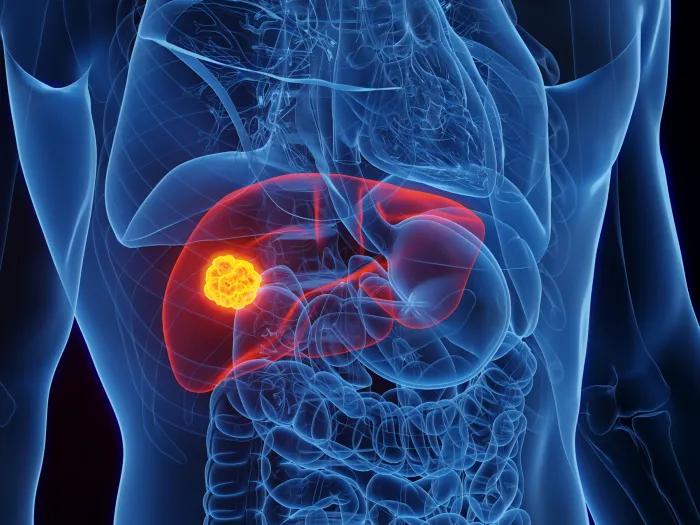
Are You at Risk for Fatty Liver Disease?
A condition linked to the death of pop star George Michael affects nearly one-third of Americans. But most of them are unaware they have it.
7:00 AM
Author |
Excess fat accumulating in the liver can set the stage for a host of problems.
The condition found a wider audience when it was revealed this month that the December 2016 death of British pop star George Michael was due in part to fatty liver disease (the coroner's report also confirmed dilated cardiomyopathy with myocarditis — an enlarged heart and heart muscle inflammation, respectively).
Fatty liver disease affects more than 25 percent of the U.S. population. Too much fat in the liver may cause inflammation and scarring that can predispose to cirrhosis, preventing this hardworking organ from doing its job.
Even though it is one of the leading forms of liver disease in adults and adolescents, fatty liver disease isn't on everyone's radar. That's because it's usually asymptomatic — and not always an immediate threat.
Still, there is reason to pay attention.
"Fatty liver was incorrectly thought to be benign," says Elizabeth K. Speliotes, M.D., Ph.D., MPH, assistant professor of internal medicine, computational medicine and bioinformatics at the University of Michigan, "but more recent data suggest that it is a metabolic abnormality that can lead to damage of the liver as well as correlate with other non-liver diseases such as obesity, diabetes, high blood pressure and heart disease."
Frequently Asked Questions
What causes fatty liver disease?
Speliotes: The basic pathology is that you start to deposit more fat than you should in the liver. This can happen in various ways. Some of it is due to obesity and excess calories from eating and drinking. You can also get excess deposits of fat from drinking alcohol.
Some people are more sensitive to accumulation of fat than others in their liver due to genetics, which can account for about 30 percent of the differences in fat deposition in liver that we see. Some medications can also cause accumulation of fat in liver.
What's happening in the body as a result?
Speliotes: Your liver has a great capacity to detoxify and buffer a lot of things that come into your body. It also makes a lot of things that help you digest food, clot properly, maintain a healthy blood pressure and carry out many other functions.
However, as cells start to get hurt from the accumulation of fat, inflammation in the tissue increases and this can lead to death of cells and scar formation in the liver, which can then progress to advanced liver disease. In these cases, the liver is not able to fully carry out its regular functions and many other organ systems in the body can be affected.
Who is most susceptible?
Speliotes: Studies have shown that fatty liver disease prevalence is about 25 to 30 percent in the overall U.S. population. Nonalcoholic fatty liver disease is higher in individuals of Hispanic, Asian, Indian and Native American ancestry than those of European and African ancestry. Some of these differences are genetically based.
Nonalcoholic fatty liver disease has also been shown to peak in men at middle age and in postmenopausal women, but people of all ages can get it. People taking medications such as corticosteroids, antidepressants, antipsychotics and tamoxifen can also deposit excess fat in their liver.
Finally, individuals with particular genetic variations can accumulate more fat in their liver; this predisposes them to both nonalcoholic and alcoholic liver disease.
How might someone know they have it?
Speliotes: Unfortunately, most people with fatty liver disease do not have overt symptoms from the disease until late stages. It is also not part of any routine screening guidelines presently, which again makes it unlikely that it will be detected.
Most often, people are being tested for some other unrelated complaint such as belly pain and, as part of that workup, someone checks liver enzymes or gets liver imaging and the condition is picked up on those tests.
What are the risks if left untreated?
Speliotes: Most people that have nonalcoholic fatty liver disease die of cardiovascular disease as opposed to liver disease. We think that the reason for this is that nonalcoholic fatty liver is associated with diabetes, high cholesterol, high blood pressure — all of which predisposes to cardiovascular disease — but we cannot rule out more direct effects from excess fat in the liver.
But these correlations are far from perfect. Some individuals will develop advanced liver disease, cirrhosis and a wide variety of problems. In some cases, they can also develop liver cancer from the disease. Folks with alcoholic liver disease, however, don't necessarily have the diabetes or hypertension or hyperlipidemia you see in nonalcoholic patients — but they, like their nonalcoholic counterparts, can develop advanced liver disease, cirrhosis, liver cancers and associated symptoms. Further, alcohol can directly damage the heart muscle.
Can the effects be reversed?
Speliotes: Fat accumulation, inflammation and even early fibrosis is reversible by decreasing the metabolic load to the liver. We generally counsel people to avoid high fructose corn syrup, to make sure they exercise multiple times a week — at least walking for 30 minutes three or four times a week.
Avoid alcohol. Exchange medications that cause fat accumulation in the liver with similar ones that do not if you can. If one has concomitant metabolic diseases, such as obesity, diabetes, high cholesterol, high blood pressure or cardiovascular disease, we recommend that these be treated.
To make an appointment with Michigan Medicine's hepatology clinic, call 844-233-0433.

Health Lab
Explore thousands of health news & research stories by visiting the Health Lab homepage for more.
Media Contact

Public Relations
Department of Communication at Michigan Medicine
Stay Informed
Want top health & research news weekly? Sign up for Health Lab’s newsletters today!
Featured News & Stories

How gastroenterology nutrition therapy has evolved
Evolving causes, diagnosis of drug-induced liver injury

5 things to know about ALS
Alcohol-Related Liver Disease clinic gives patient new hope
IBS treatment response predicted by gut microbiome in new study