An adjuvanted intranasal vaccine for COVID-19 protects both young and old mice
The vaccine could stop the spread of SARS-CoV-2 at the point of entry in the upper respiratory tract
5:00 AM
Author |
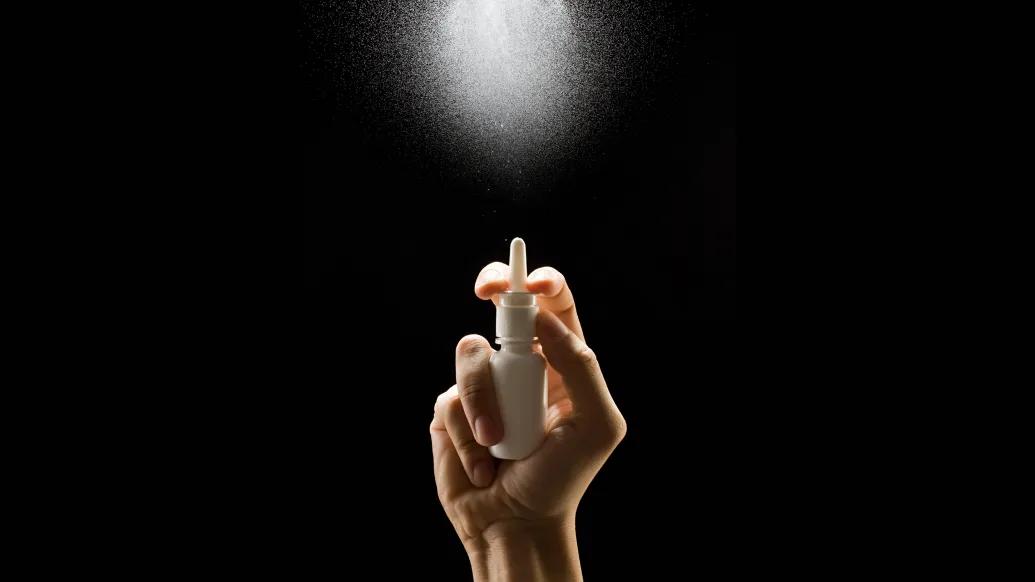
While much of the global concern has subsided, COVID-19 is still a very real threat, especially to people with compromised immune systems or who are over 65.
Vaccination offers excellent protection against serious illness and death, but the current vaccines have room for improvement in their ability to stop the spread of SARS-CoV-2 at the point of entry in the upper respiratory tract.
A collaborative research effort led by the University of Michigan and the Icahn School of Medicine at Mount Sinai has resulted in a nasal vaccine adjuvant that stops infection in both young and old mice.
An adjuvant is a substance added to some vaccines to trigger a stronger immune response, boosting their effectiveness. Several current vaccines contain adjuvants and they are often recommended for people over 65.
The new vaccine protocol, developed by Pamela Wong, Ph.D., and Michael Schotsaert, Ph.D., and their teams, combines a nanoemulsion—think of a tiny droplet of oil and water –and an RNA-based molecule that is recognized by the immune system similar to how viral infection is sensed as an intranasal adjuvant to help trigger immune responses in the upper respiratory system.
“There is considerable interest in intranasal vaccines for respiratory viruses because inducing mucosal immunity can help prevent viral transmission, whereas injectable vaccines don’t effectively elicit mucosal immune responses,” said Wong, a research assistant professor in the U-M Medical School Department of Internal Medicine.
Wong and Schotsaert, an assistant professor of microbiology at Icahn Mount Sinai, both recognized the value of—and challenges posed by—an adjuvanted intranasal vaccine delivery system and their teams have been working together for almost a decade to create one that results in a good immune response.
Their protocol combines the best of both components: the RNA adjuvant triggers antiviral pathways inside the cell while the nanoemulsion carries it into the cell and helps prevent it from being cleared too quickly from inside the nasal passages, while also activating immune pathways complementary to the one triggered by the RNA adjuvant.
Testing their adjuvant with the SARS-CoV-2 receptor binding domain protein—which the virus uses to enter a host’s cells—the combined vaccine led to the enhancement of antibody and memory T cell responses in both young and old mice, including in the mucosa of the upper airway where the virus starts to proliferate.
“It’s very hard to induce a strong immune response with intranasal vaccines containing just the protein or inactivated virus alone because your mucosal sites will see many things during the day or over a lifetime and are to some extent ‘trained’ not to overreact. So, you want to overcome that barrier through the use of adjuvants while balancing safety,” said Schotsaert.
Furthermore, the intranasal vaccine outperformed the intramuscular adjuvant Addavax in old mice, which is similar to the adjuvant currently used in the flu vaccine for the elderly, in its ability to generate viral neutralizing antibodies and T cell responses.
Despite its promise, the road to an adjuvant for nasal delivery has been a rocky one. There is only one commonly used, FDA- approved nasal vaccine in the United States, FluMist, and it does not contain an adjuvant nor is it recommended for people over 49.
An adjuvanted nasal flu vaccine was licensed in Switzerland, only to be pulled from the market in 2000 after reports of Bell’s palsy, a form of facial paralysis, in some people who received the vaccine.
Spurred by the COVID pandemic, several other intranasal vaccines have been explored but have either resulted in short-lived protection or a poor immune response.
On the contrary, the team’s combined adjuvanted intranasal vaccine appears to result in highly effective and long-lasting immunity against SARS-CoV2 in a preclinical model. What’s more, the nanoemulsion has an additional feature: it can inactivate viruses on its own.
“This means you could mix live virus with the nanoemulsion and it would inactivate it without having to use harsher chemical methods, better preserving the conformation of the viral proteins that the immune system sees, potentially leading to better quality immune responses,” said Wong.
Next, the team plans to pursue additional studies necessary for bringing the adjuvant to Phase 1 safety trials as well as exploring its applications for a universal flu vaccine.
Paper cited: “Multicomponent intranasal adjuvant for mucosal and durable systemic SARS-CoV-2 immunity in young and aged mice,” NPJ Vaccines. DOI: 10.1038/s41541-023-00691-1

Health Lab
Explore thousands of health news & research stories by visiting the Health Lab homepage for more.
Media Contact

Public Relations
Department of Communication at Michigan Medicine
Stay Informed
Want top health & research news weekly? Sign up for Health Lab’s newsletters today!
Featured News & Stories

The AI is listening: Implications of machine generated clinical notes on health care

Comprehensive DNA sequencing reveals hidden drivers of cancer

Many older adults make Medicare decisions quickly and most don’t change plans, poll finds

‘Molecular glue’ stabilizes protein that inhibits development of non-small cell lung cancer and uterine cancer
What’s the latest on 7-OH and kratom availability and addiction care?