5 Ways Smoking Hurts Your Heart
The harms of cigarettes go beyond your lungs: Your ticker suffers, too. But quitting has fast-acting health benefits.
7:00 AM
Author |
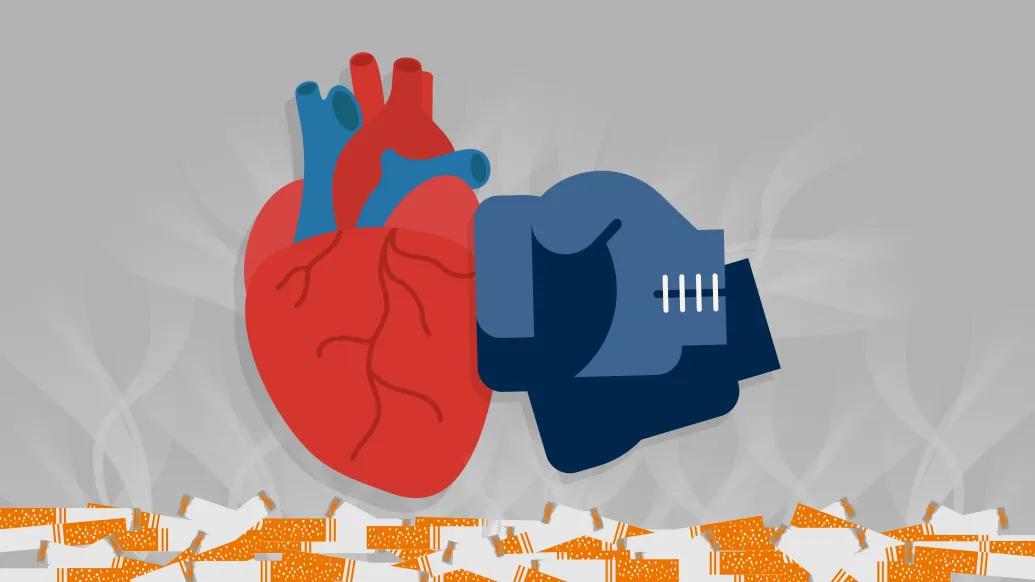
University of Michigan cardiovascular surgeon G. Michael Deeb, M.D., wants his patients to know something: Nicotine is toxic not only to the lungs, but also to the heart.
"When most patients think of the dangers of smoking, they think about the lungs," Deeb says. "But cardiovascular disease is the No. 1 killer in the world, and smoking is accelerating the problem."
As many as 30 percent of coronary heart disease deaths in the United States each year are attributable to cigarette smoking, and the more you smoke, the greater your risk, according to the American Heart Association. Even teenage smokers can have early signs of cardiovascular disease, including atherosclerosis, a buildup of plaque in the artery walls that can restrict blood flow.
What smoking does to your heart
Cigarette smoke contains nicotine and carbon monoxide, both of which affect your heart and blood vessels. Here's how:
- Smoking increases blood clotting, which can result in blocked arteries that can lead to heart attack and stroke.
- Smoking increases the risk of abnormal heart rhythms, which may cause sudden death.
- Smoking damages blood vessels and can make them thicken and grow narrower, resulting in a faster heartbeat and increased blood pressure.
- Smoking can lead to arteriosclerosis, a hardening of the arterial walls.
- Smoking harms the body by raising cholesterol levels.
When combined with other major risk factors, cigarette smoking increases your risk for such heart issues as:
- Angina: chest pain associated with a blockage in the arteries
- Heart attack: damage to your heart muscle because of a lack of blood flow to your heart
- Stroke: blockage in the blood flow to the brain because of a clot or a burst blood vessel in or around the brain
- Aneurysm: a widening and leaking of the aorta
- Peripheral arterial disease of the legs: narrowing or blockage of the peripheral arteries
- Sudden death
What you gain when you quit
Even if you've smoked for a long time, quitting has immediate health benefits.
SEE ALSO: 5 Ways to Measure Your Heart Disease Risk
According to the American Cancer Society, when you stop:
- Within 12 hours, the level of poisonous carbon monoxide in the body from cigarettes returns to normal.
- After one year, your risk of heart attack is half that of a continuing smoker's risk.
- After 15 years, your risk of coronary heart disease is that of a nonsmoker's risk.
For help with smoking cessation, check out the American Heart Association resources and the MHealthy Tobacco Consultation Service (TCS), which has developed a "virtual quit kit" full of tools and resources. TCS also provides free one-on-one counseling to give you the support and skills to quit for good.

Health Lab
Explore thousands of health news & research stories by visiting the Health Lab homepage for more.
Media Contact

Public Relations
Department of Communication at Michigan Medicine
Stay Informed
Want top health & research news weekly? Sign up for Health Lab’s newsletters today!
Featured News & Stories
Weighing TAVR vs. SAVR for aortic stenosis treatment
The Kidney Warning Signs You’re Missing— And Why Waiting is Dangerous

Lung health expert weighs in on Zyn and other nicotine pouches
A link between e-cigarettes and oral cancer

Specialized local care gives baby with severe heart condition a stronger start before surgery