5 Tips for Better Sleep (Counting Sheep Not Required)
Improving your sleep quality isn’t just a dream. Consider these easy suggestions from a Michigan Medicine sleep specialist — and her cuddly friend.
1:00 PM
Author |

When it comes to getting enough sleep, we could all use some help — or at least an attitude adjustment.
MORE FROM MICHIGAN: Sign up for our weekly newsletter
"We definitely take sleep as a luxury; it's not," says Cathy Goldstein, M.D., a sleep physician and neurologist at Michigan Medicine's Sleep Disorders Center.
Success, though, involves more than counting sheep.
Simple lifestyle tweaks, both in and outside of the bedroom, can make it easier for most people to improve the quality and quantity of nightly shut-eye.
Need a nudge? Try incorporating these minor modifications (as demonstrated below) into your routine.
In honor of World Sleep Day on March 17, Goldstein this week is challenging others to put the tips into action. Share your success by commenting on Michigan Medicine's Facebook page or by using the hashtag #GoBlueSleep on Instagram or Twitter.
Set a consistent sleep schedule
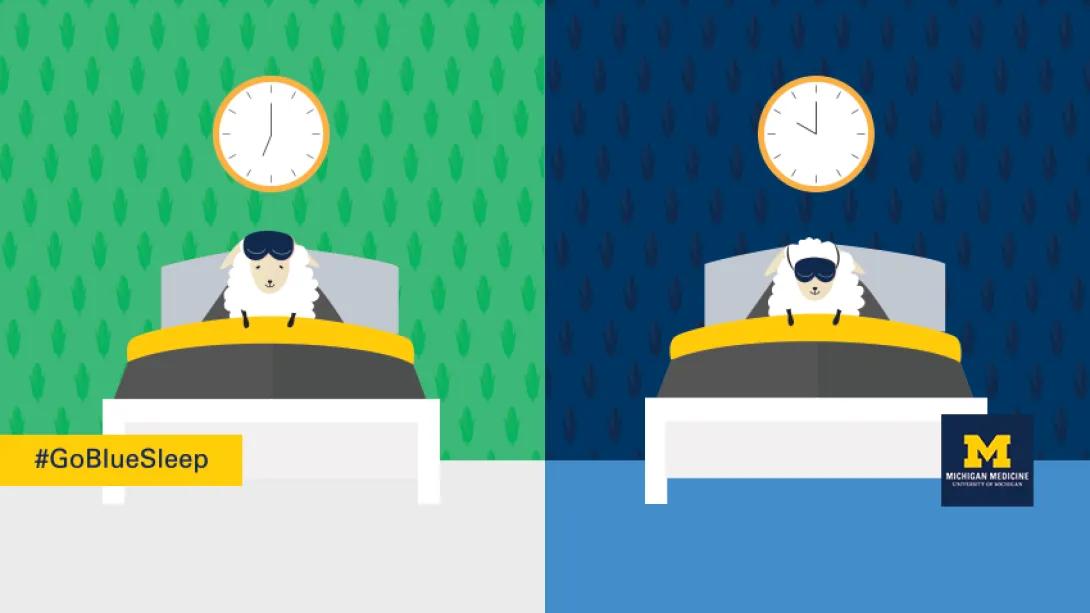
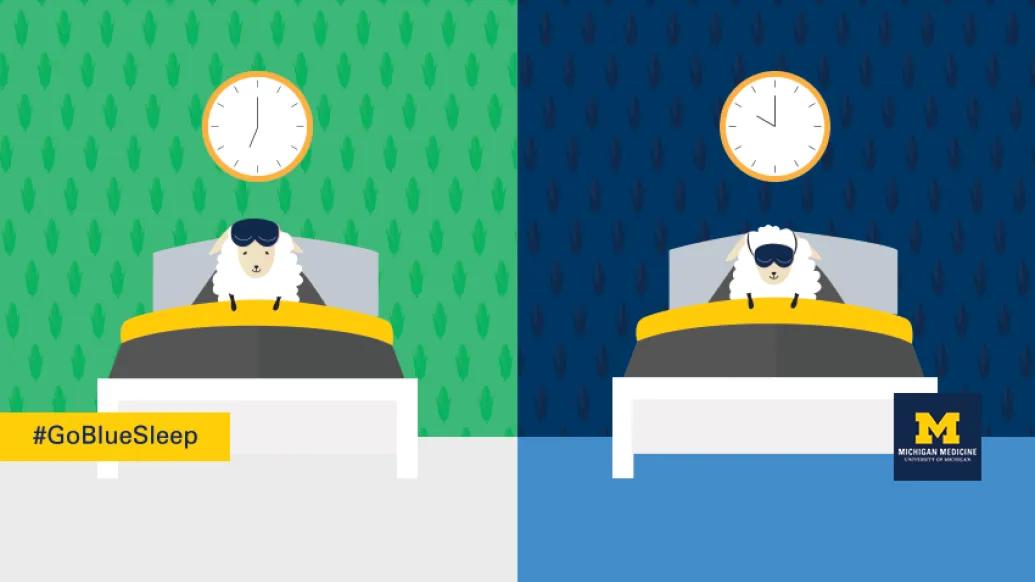
Make it a habit to turn in and wake up at the same time each day, even on weekends. The reason: Your body's circadian rhythm (aka its internal clock) will be thrown off by an erratic schedule — a shift Goldstein compares to jet lag.
Cut the coffee after midday
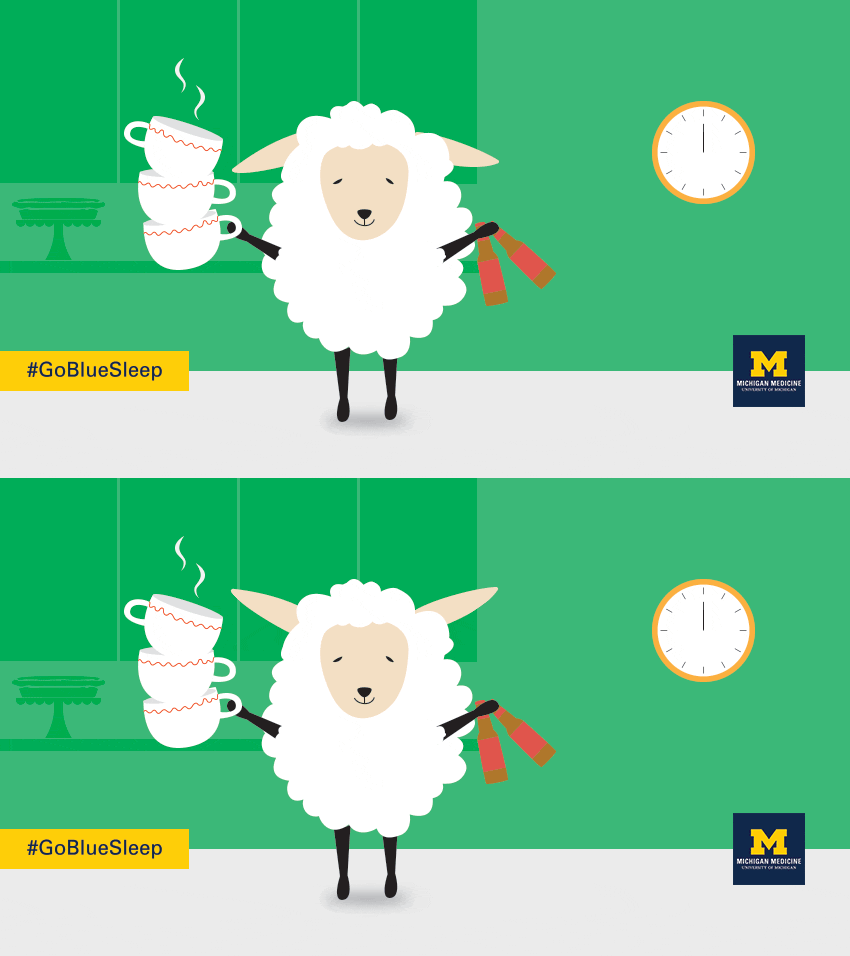
Caffeine from an afternoon cup of java can remain in your system for hours and affect your sleep. Also worth limiting: alcohol, which can facilitate sleep but at a much poorer quality. As a result, you're also more likely to snore and, no surprise, wake up to empty a full bladder.
Ban electronics from the bedroom
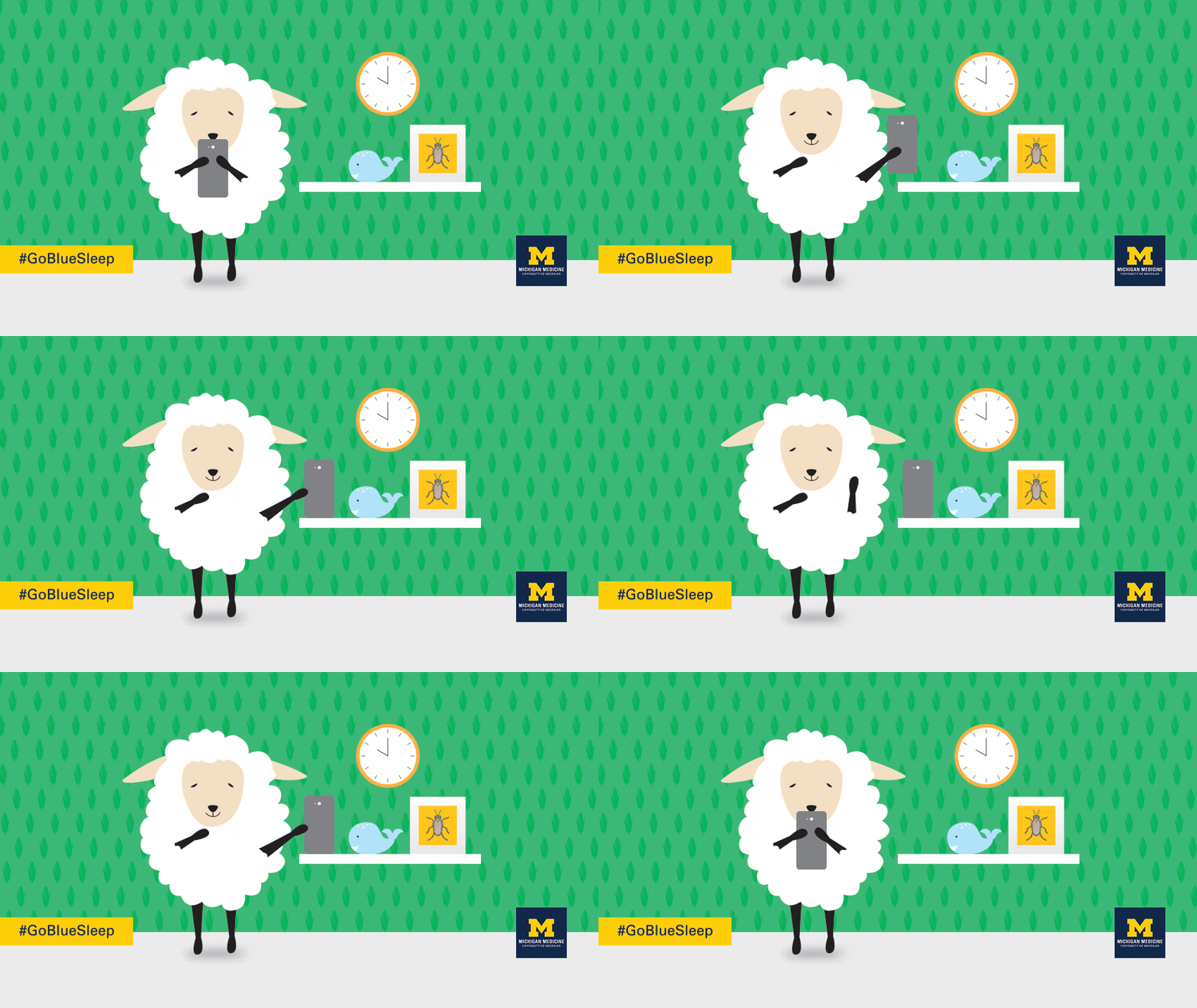
Sure, you want to check email or refresh social media one more time (Goldstein says she's guilty, too). But the light from handheld devices and TV screens suppresses melatonin, the hormone that tells your body when to fall asleep. Being "wired" can also keep you worked up.
Avoid exercise before sleep
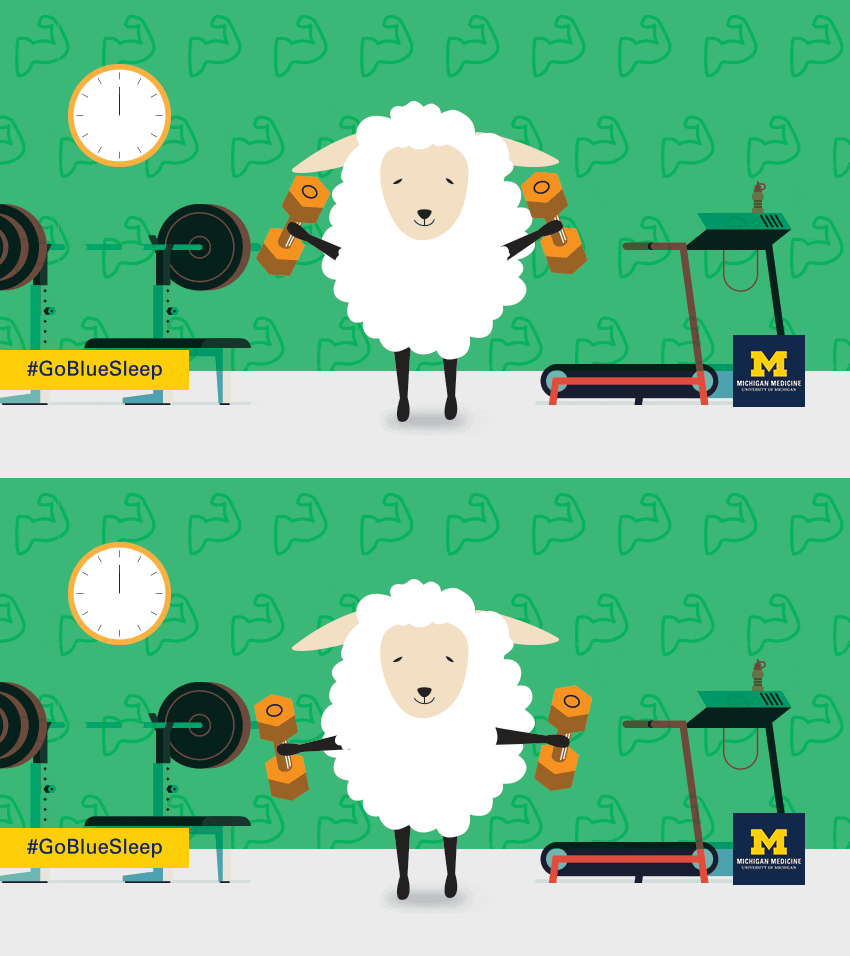
Exercise is key to good health and a decent night's rest. Just don't work up a sweat before bed. Aerobic activity, after all, boosts adrenaline, body temperature and heart rate — factors that needn't be amplified when you're trying to doze off. Working out a few hours prior is OK.
Use your bed only for sleep and sex
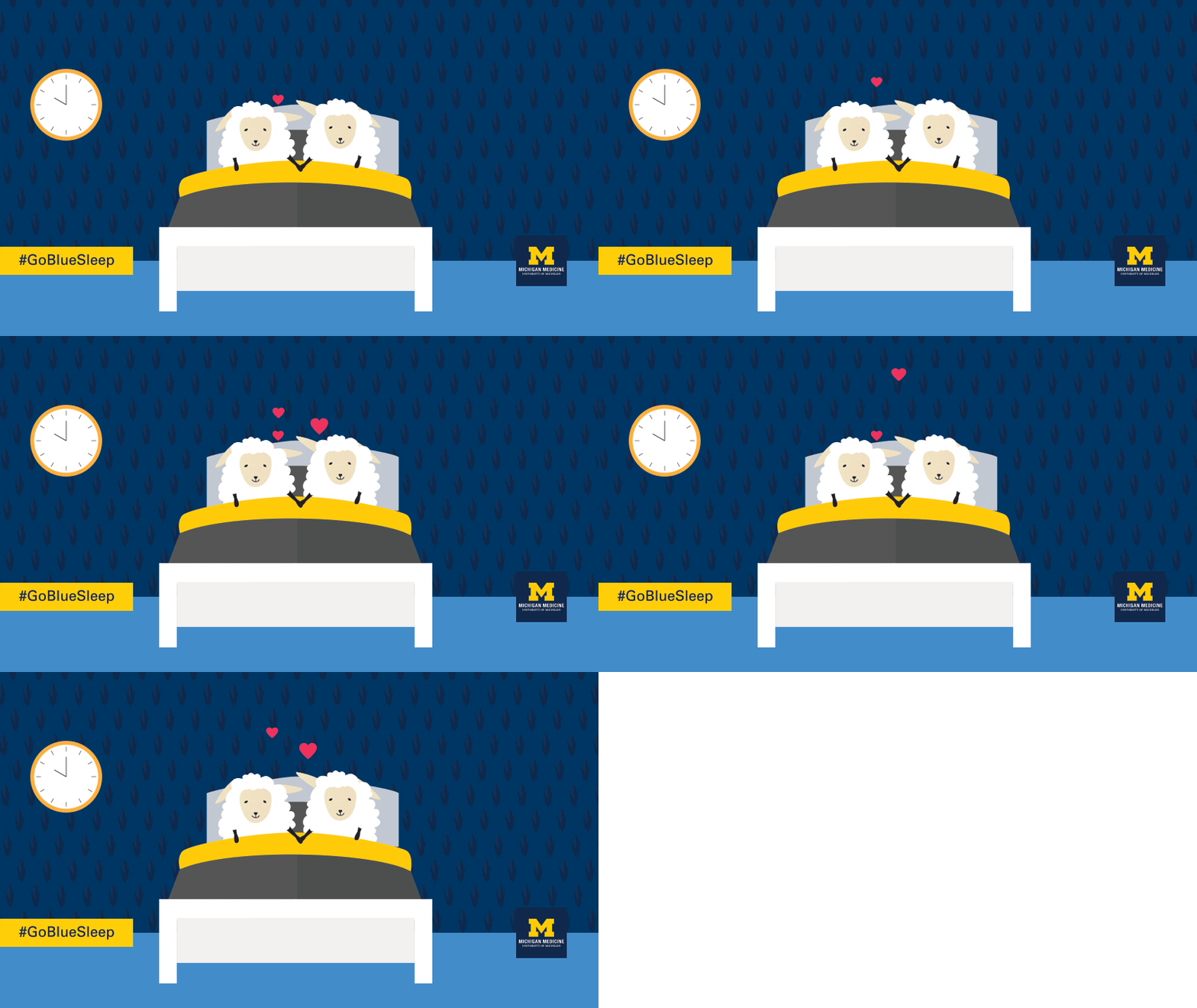
Help your body associate winding down only with these activities. That way, you won't tie agitations such as working on your laptop or text message alerts with peaceful slumber. Helpful, too, are soft bedding and pillows to accentuate the sleeping space.
To learn more about Dr. Goldstein's sleep challenge, click here.

Health Lab
Explore thousands of health news & research stories by visiting the Health Lab homepage for more.
Media Contact

Public Relations
Department of Communication at Michigan Medicine
Stay Informed
Want top health & research news weekly? Sign up for Health Lab’s newsletters today!
Featured News & Stories

The Real-Life ‘Walking Dead’: Binge-Watching Can Make You a Zombie, Study Finds

4 in 5 parents say having a baby is too expensive

E-Bikes are everywhere, but most parents say they don’t know enough about them
School night bedtime tips every parent should know

Treating obstructive sleep apnea in children with Down syndrome