
What’s Causing the Latest Measles Outbreak?
A disease the federal government declared “eliminated” nearly two decades ago is surfacing again. Here’s why — and what to do.
4:00 PM
Author |
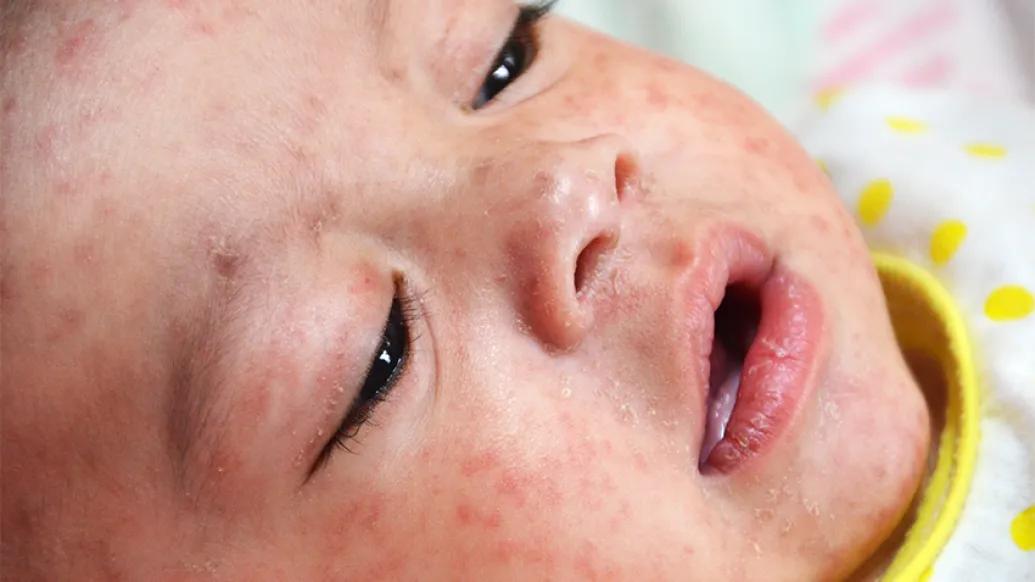
Many people believe measles poses no public health threat. The highly contagious infectious disease seems relegated to another era or parts of the developing world.
But recent outbreaks prove that the illness isn't gone for good.
LISTEN UP: Add the new Michigan Medicine News Break to your Alexa-enabled device, or subscribe to our daily audio updates on iTunes, Google Play and Stitcher.
But taking action is simple: Unvaccinated residents and those who are unsure if they've been vaccinated, should get vaccinated. The preventative measles vaccine, which is administered over two doses at age 1 and 4, respectively, provides lifelong protection.
The recent outbreak is travel-related, but there's increased harm to the community when families shun vaccination.
"More than 99 percent of the time in these cases, they're refusing the vaccine."
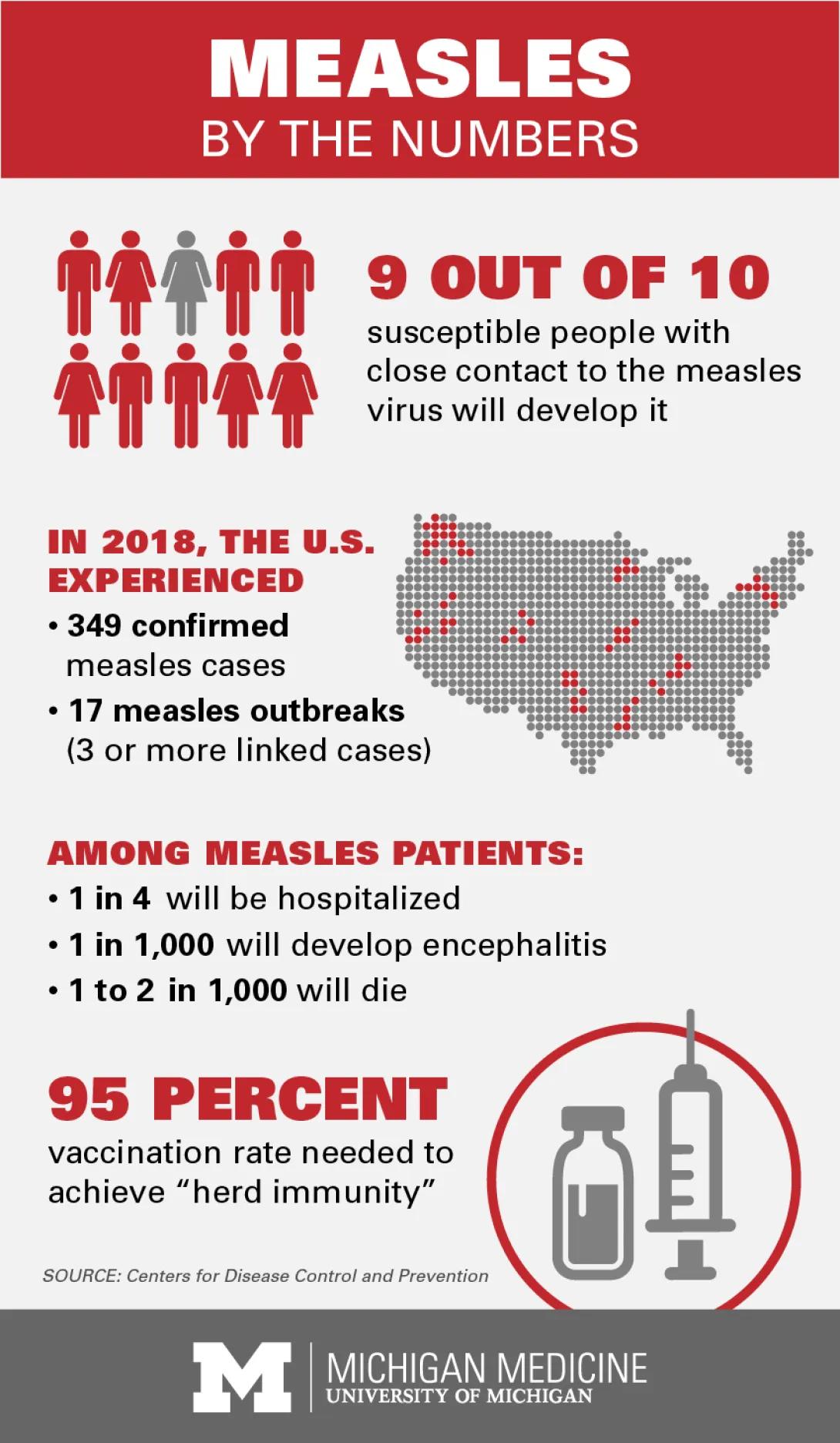
In 2018, Michigan had 19 cases of measles, the most reported in the state since 1994; the majority of people who got measles were not vaccinated.
The measles vaccine has a small risk of minor side effects, such as fever or rash, and no link to autism.
Parents should instead focus on making sure their kids are immune to the virus, says John LiPuma, M.D., director of pediatric infectious diseases at Michigan Medicine, who recalls treating a measles outbreak among Philadelphia youths in the late 1980s.
"I cared for lots of children with measles and I can tell people, very sincerely, these are some of the sickest kids I've ever seen," he says.
How measles spreads
A viral infection of the respiratory system, measles has no treatment.
And its initial danger lies in the ease of transmission.
MORE FROM MICHIGAN: Sign up for our weekly newsletter
Measles can spread via coughs and sneezes, and the infected droplets may survive for hours or days on surfaces. Traces of the virus, once expelled, also can live for several hours in a confined airspace, such as an airplane or bus.
Once exposed, the unvaccinated have little defense.
Ninety percent of them will contract measles following exposure to an infected person, according to the Centers for Disease Control and Prevention. A person cannot get measles more than once.
Why measles is dangerous
Still, the disease isn't something children should experience at all.
The illness may take 7 to 10 days to shed via respiratory secretions or stools. Worse, it can often lead to severe complications that include pneumonia, conjunctivitis and encephalitis (swelling of the brain).
SEE ALSO: Make Sure Your Teen Has Had These 4 Lifesaving Vaccines
"Some of these young patients with encephalitis never fully recover," says LiPuma. "This is a very, very serious disease."
One or two of every 1,000 affected children will die from complications related to measles, the CDC reports.
When we prevent diseases like measles, they're not seen by the public. People tend to forget how dangerous they are.John LiPuma, M.D.
Signs and symptoms of measles
An infected person won't initially show signs of measles in the first one to two weeks.
He or she may then experience a fever and a telltale measles rash most commonly associated with the disease.
"It's a very impressive, red, bumpy rash," says Orringer. "It usually starts at the top — your face and scalp — and spreads down the body. Patients will also have some white spots in their mouth."
Other symptoms include a high fever, cough, runny nose and red, watery eyes. These patients, Orringer notes, are very sick and very uncomfortable.
Preventing measles in children
Widespread adherence since a preventive vaccine became available in 1963 has helped the CDC declare measles "eliminated" following "absence of continuous disease transmission for greater than 12 months."
Likewise, vaccination rates of 95 percent or greater create what doctors call "herd immunity" to decrease the risk of spreading measles.
SEE ALSO: 3 Times You Risk Catching the Flu
That's crucial for protecting children younger than 12 months who aren't yet eligible for the shot. Orringer urges parents to check that friends, relatives and caretakers are vaccinated.
Still, Orringer and LiPuma note, the recent Washington outbreak — where transmissions occurred in an airport and at an NBA basketball game, among other places — should prompt hesitant families to take action.
"When we prevent diseases like measles, they're not seen by the public. People tend to forget how dangerous they are," LiPuma says. "Second, we're up against a lot of misinformation widely available through social media and the internet.
"That's a problem in helping people understand the risks of this preventable disease and the safe options that we have."
Learn more about recommended vaccine schedules at MottChildren.org.

Health Lab
Explore thousands of health news & research stories by visiting the Health Lab homepage for more.
Media Contact

Public Relations
Department of Communication at Michigan Medicine
Stay Informed
Want top health & research news weekly? Sign up for Health Lab’s newsletters today!
Featured News & Stories

What to Do When Your Teen Asks for a Tattoo

High dose oxytocin protocol linked to lower postpartum hemorrhage rates

Human Rabies Exposures Growing Across the Country
4 ways to teach your teen safe driving habits

U-M-led consortium to receive up to $52 million in NIH funding to study why viral respiratory infections affect children differently

