Why Cardiac Rehab Patients Need Emotional Care
Helping cardiac rehab patients heal their hearts isn’t just about making physical changes in recovery. Treating their mental health matters, too.
7:00 AM
Author |
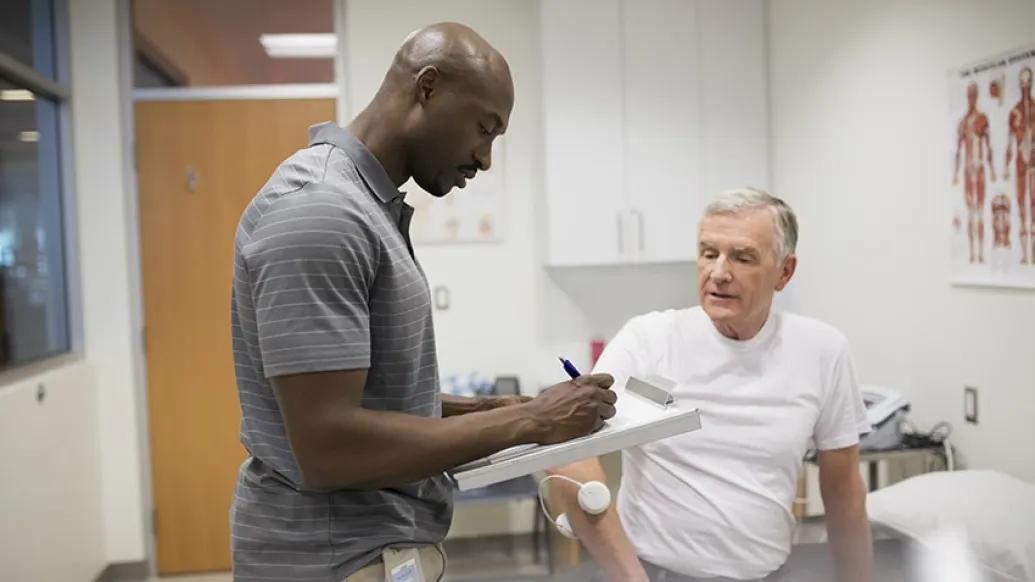
Cardiac rehabilitation facilities have long focused on the importance of diet and exercise for patients in recovery.
Many providers now address a third angle: emotional health.
MORE FROM MICHIGAN: Sign up for our weekly newsletter
The Cardiac Rehabilitation Center at the University of Michigan Frankel Cardiovascular Center recognizes this need when caring for individuals after a cardiac event.
"Through our Patient and Family Centered Care Program, we've been encouraged by patients to direct attention to the connection between the heart and mind — specifically the emotional aspects of having a cardiac event," says Carolyn Palka, a Frankel Cardiovascular Center exercise physiologist.
Addressing those issues is critical. Research shows that depression, anxiety, hostility and stress are strong predictors of health outcomes in patients with heart disease.
With that in mind, "a comprehensive cardiac rehab program should offer individual participants a plan of care that includes both physical and psychological issues," says Palka, who notes that the earlier such interventions can occur, the better.
"Screening patients during orientation helps us identify their emotional needs early in the process and allows our cardiac rehab team to provide the necessary resources."
Making a personal connection
During cardiac rehab orientation, U-M patients are encouraged to share their experiences verbally, rather than using that time to complete written questionnaires.
SEE ALSO: 7 Surprising Things That Can Hurt Your Heart [Infographic]
The reason? "Sharing fears and concerns helps health care providers understand a patient's needs and determine the best care for that individual," Palka says.
She also stresses the importance of family support during the process. Whether attending orientation or accompanying the patient to rehab, "the support of a loved one is invaluable to our patients."
To foster a shared connection among U-M cardiac rehab patients, the program features a support group led by a Frankel Cardiovascular Center social worker, a Facebook page for sharing information and progress, and monthly group birthday lunches.
A peer mentoring program, in which veteran patients can mentor patients who are new to rehabilitation, also plays a key role.
"This relationship can help ease the stress a fellow new patient might be feeling," Palka says.
While getting patients to commit to a rehab program is the first step, a successful recovery can't occur without maintenance and adherence — elements closely tied to good mental health.
A strong mind, after all, can have long-term physical benefits.
"Psychological and social function are strong predictors of rehab compliance," Palka says. "We also offer a formalized follow-up program upon graduation for our patients. Some of our more committed patients have been following up for 10 years."

Health Lab
Explore thousands of health news & research stories by visiting the Health Lab homepage for more.
Media Contact

Public Relations
Department of Communication at Michigan Medicine
Stay Informed
Want top health & research news weekly? Sign up for Health Lab’s newsletters today!
Featured News & Stories

From patient to artist: A project close to her heart

Michigan man undergoes complex heart repair after last minute surgery cancelation
Sports gambling on the rise among college students
More babies with hypoplastic left heart syndrome surviving critical period between surgeries
Distance, insurance, social factors may hinder access to lifesaving heart monitoring for children