U-M Pathologist: Why We Need You to Donate Blood Now
A nationwide blood shortage may be preventing health care centers from providing certain surgeries or optimal care for some critical patients.
7:00 AM
Author |

The act of giving blood is quick, relatively painless and can offer a crucial lifeline to a person in need.
MORE FROM MICHIGAN: Sign up for our weekly newsletter
A nationwide blood shortage, however, is leaving doctors and emergency room personnel without the resources for some surgeries and procedures that require blood transfusions — an issue that should compel any eligible person to donate, says Robertson D. Davenport, M.D., an associate professor in the department of pathology at Michigan Medicine.
"Donations are typically down after the holidays, but this year is much worse," says Davenport, who also directs the department's transfusion medicine division.
A person can give blood every 56 days; those who did so even a few months ago are qualified to roll up their sleeves again.
Donated blood, after all, is only good for so long before the contents expire. And, because blood types and transfusion needs vary, a diverse donor pool is essential. (Blood from black individuals is especially needed for people with sickle cell anemia.)
"Everyone in the community should be encouraged to donate if they can," Davenport says.
Here's a look at how your blood is collected and prepared — and how it can help.
Donation
Most people will give blood at a donation center (such as the American Red Cross or Michigan Blood). Others may do so via a blood drive at their school, office or house of worship. Trained nurses will draw blood while a client is seated. Although the initial prick "does hurt for one second," Davenport says, it usually takes just 15 minutes to collect a "unit" of blood, or about 500 milliliters. After getting bandaged, expect cookies and juice while you recuperate.
Screening
Donors are first screened via a mini-physical and confidential health survey. Davenport says the questions "are pretty personal, including sexual habits," but are designed to ensure the safety of donors and recipients. A sample from each unit is tested afterward at the blood center to identify the blood type and detect infectious diseases, including HIV/AIDS, hepatitis B and C, and the West Nile and Zika viruses. Donors are confidentially notified if anything is amiss; those blood units are discarded.
SEE ALSO: 8 Easy Ways to Lower Your Blood Pressure
Separation
Concurrent to the lab's screening process, the blood is spun rapidly in centrifuge machines to separate its contents into three parts for transfusions: red blood cells, platelets and plasma. Each component has a purpose. Red blood cells primarily help in cases of trauma, surgery, blood loss or anemia. Platelets are key to surgical, organ transplant and chemotherapy patients. And plasma, used to aid coagulation, is helpful for those with major hemorrhage and bleeding disorders.
Storage
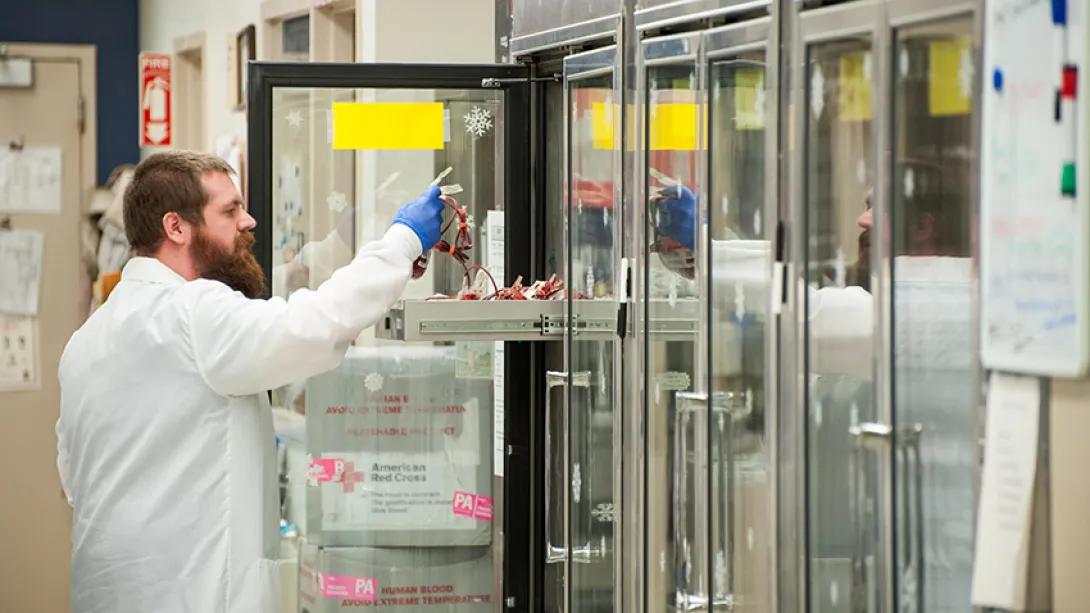
Michigan Medicine receives deliveries of donated blood twice daily on weekdays and once a day on weekends. But, notes Davenport, "blood has a limited shelf life — so when we have a shortage, that's a problem." Red blood cells can be stored at 1 to 6 degrees Celsius for 42 days. Platelets, by comparison, are only good for five days (and housed at room temperature). Good for up to one year, plasma has the longest duration; it's kept frozen until use.
Application
Blood donations are used in a host of ways and often needed without warning. "Automobile accidents, major trauma — obviously, these are unpredictable," Davenport says. "When they happen, they can require a great deal of blood." Other common recipients include those with medical conditions such as leukemia who require ongoing transfusions. It's also crucial for cardiac surgery patients; some people receiving joint replacement need blood, too.

Health Lab
Explore thousands of health news & research stories by visiting the Health Lab homepage for more.
Media Contact

Public Relations
Department of Communication at Michigan Medicine
Stay Informed
Want top health & research news weekly? Sign up for Health Lab’s newsletters today!
Featured News & Stories

The Pandemic Fight Over Plaquenil

Top 7 tips for choosing Medicare prescription drug coverage for 2027

4 in 5 parents say having a baby is too expensive

Many older adults make Medicare decisions quickly and most don’t change plans, poll finds

What’s the latest on 7-OH and kratom availability and addiction care?