Sick While Traveling? Here’s What to Do (and How to Prevent It)
It’s easy to get worn down this time of year. A Michigan Medicine expert offers tips to handle holiday travel with your health in mind.
7:00 AM
Author |
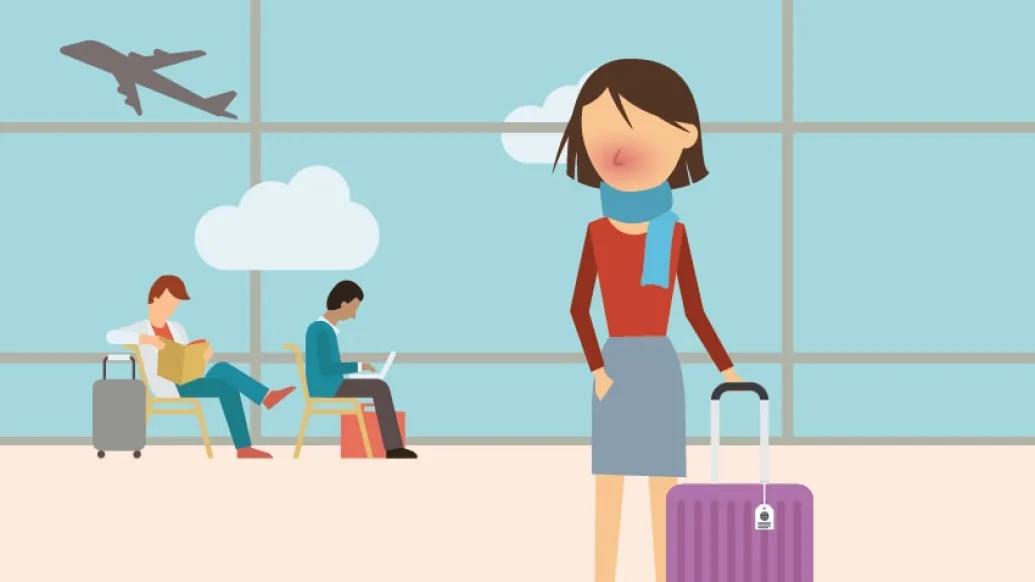
Stress and bustle before a big holiday trip can wear you down — and make you sick.
Whether it's a quick sleigh ride or a 747 across an ocean, the act of traveling can, too.
MORE FROM MICHIGAN: Sign up for our weekly newsletter
"In an enclosed space with recirculated air, where someone's coughing and aerosolizing viral particles, you're definitely going to be at higher risk," says James Riddell IV, M.D., a clinical professor of internal medicine in the Division of Infectious Diseases at the University of Michigan.
"We definitely see more people coming in this time of year with viral illnesses."
That's why taking easy precautions before hitting the road (and during a voyage itself) may help you stay healthy during a season meant for rest and relaxation.
If you do fall ill, though, there are ways to make the setback less likely to affect others — particularly infants and the elderly.
Riddell offered advice for both scenarios:
How to stay healthy before a trip
Practice good hygiene: The things we touch each day (elevator buttons, the office coffee maker) harbor loads of germs. As a result, "there's a risk for pathogens being spread," Riddell says. Avoid transmission by properly washing your hands and not touching your face. Traveling by train or bus this season? Switch seats, if possible, if a nearby passenger is visibly sick.
Reduce stress: Both at work and at home, you're probably busy wrapping things up before the holidays. It's important to acknowledge — and manage — anxiety. "When stress hormones are produced, that leads to a decrease in your immune system's ability to fight off various infections," Riddell says. "It also contributes to a pro-inflammatory state, which isn't healthy."
SEE ALSO: 3 Times You Risk Catching the Flu
Get enough sleep: Sleep affects a host of health functions, so getting enough shuteye (at least seven hours nightly) is crucial. Says Riddell: "Poor sleep hygiene can have an effect on immune function through increased stress hormones, which can increase susceptibility to contracting viruses." Make simple lifestyle changes to help set the stage for restful sleep.
Eat healthfully: A balanced diet is a strong defense — and more effective than vitamin intake or those fizzy, flavored tablets taken with water. "A multivitamin is probably a good idea, but I counsel against taking excessive vitamin regimens where you're taking 10 times the recommended daily amount," Riddell says. Play it smart at holiday party buffets, too.
How to travel when you're sick
Avoid close contact: It's natural, of course, to want to greet relatives and old friends. But keep your distance if you're sick. "To reduce your germ 'footprint,' avoid handshakes and hugging and kissing other people," Riddell says. Another strategy: Don't share items such as towels or drinking glasses. If you're an overnight guest in someone's home, try to get your own room.
SEE ALSO: How to Reduce the Risk of Deep Vein Thrombosis While Traveling
Carry medical documentation: Many patients, Riddell notes, should be able to access their medical records via a digital patient portal. Learn how to do this; it helps bring a new doctor up to speed when providing care. It's also crucial to pack a list of what medications you're taking so a clinician can determine any potential interactions with a new prescription.
See a doctor: It's OK to call your primary care physician for advice on minor symptoms. Others should prompt an urgent care or emergency room visit: "If you develop a significant fever over 100.5 degrees Fahrenheit, you should probably be evaluated," Riddell says. More warning signs include shortness of breath, phlegm-heavy coughs and chest pain.
Stay home (or in bed): Riddell's biggest advice: "Listen to what your body is telling you." That might mean taking a pass on Christmas dinner or a last-minute trip to the mall. It could require that you stay tucked in bed at a relative's house with hot tea and blankets. Or, if the illness occurs before the trip, consider delaying your departure — or skip it entirely.

Health Lab
Explore thousands of health news & research stories by visiting the Health Lab homepage for more.
Media Contact

Public Relations
Department of Communication at Michigan Medicine
Stay Informed
Want top health & research news weekly? Sign up for Health Lab’s newsletters today!
Featured News & Stories

Many hospitals still don’t do enough to prevent UTIs from catheters
15 years of data will help uncover how flu spreads—and how to reduce its impact

Rabies is on the rise: Experts offer advice

E-Bikes are everywhere, but most parents say they don’t know enough about them

Reducing infections after heart surgery could save Medicare $441 million per year