Program Aims to Help the Muslim Community Quit Smoking During Ramadan
The Yallah Quit program uses culturally specific, text message-based guidance to help Muslims kick the habit of cigarettes and hookah smoking.
2:55 PM
Author |
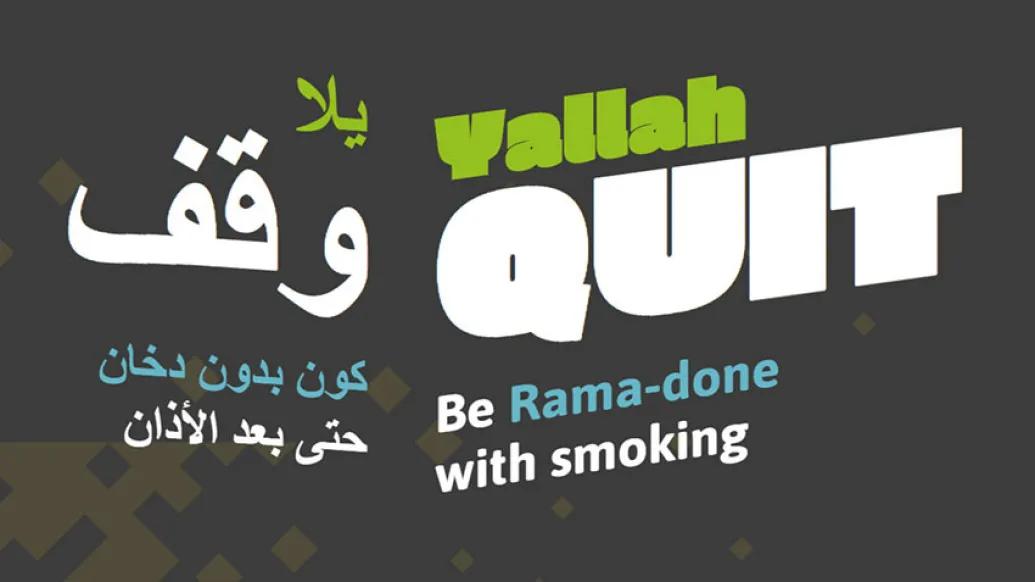
As Muslims around the world are celebrating the month of Ramadan with prayer, fasting and inward reflection, some public health experts think it may be an ideal time to help members of the community quit smoking.
During the holy month this year, public health experts from the University of Michigan Rogel Cancer Center are partnering with the Dearborn-based nonprofit ACCESS on a culturally tailored smoking cessation campaign called Yallah Quit. Yallah is Arabic for "Let's go!"
"Along with abstinence from eating and drinking during the day, Ramadan is a period when Muslims also refrain from smoking — so we'd like to help translate that energy and effort into a positive, long-term health benefit," says Ken Resnicow, Ph.D., professor of health behavior and health education at the U-M School of Public Health and associate director for Community Outreach, Engagement & Health Disparities at the Rogel Cancer Center.
Smoking is the leading cause of preventable death worldwide. And quitting smoking significantly reduces the risk of lung cancer and other types of cancer, as well as heart disease, stroke and other health problems, according to the Centers for Disease Control and Prevention. Smoking may also increase the severity of COVID-19, according to the American Lung Association.
MORE FROM MICHIGAN: Sign up for our weekly newsletter
Those who sign up for the free program receive text messages throughout the day with words of encouragement, as well as guidance through cravings and mood shifts. The messages, which were adapted from a broader National Cancer Institute initiative, say things like: "If you can fast and avoid smoking all day, you are strong enough to not smoke at night either." The program is available in both English and Arabic.
Cultural factors can have a large influence on health behaviors, says Resnicow, who notes the Rogel Cancer Center has increased its outreach in recent years to the large Middle East and North African populations living in Southeast Michigan. The communities are sometimes referred to with the acronym MENA.
Previous U-M research with the MENA community has examined ways to move beyond a one-size-fits all approach to improve public health outcomes through culturally tailored strategies. For example, a recently completed survey found higher levels of religiosity and religious modesty were associated with lower rates of cervical cancer screening; researchers hope to find culturally sensitive ways to raise those numbers, Resnicow notes.
"Our original plan was to work with our community partners at ACCESS and several mosques to bring this campaign directly to members of the Muslim community," Resnicow says. "However, because of the coronavirus pandemic, we've shifted gears and are focusing on recruiting through media outlets that serve the community — including newspaper, radio and social media."
Similar programs have been developed in other parts of the country, such as with the Somali Muslim population in Minnesota. The Yallah Quit program is intended as a pilot effort to lay the groundwork for a larger, smoking cessation campaign during Ramadan 2021 with more robust research components, Resnicow says.
Along with abstinence from eating and drinking during the day, Ramadan is a period when Muslims also refrain from smoking — so we'd like to help translate that energy and effort into a positive, long-term health benefit.Ken Resnicow, Ph.D.
Along with targeting cigarettes, the Yallah Quit program also helps users quit hookah smoking.
"Within the community, hookah smoking is seen more as a social activity, like getting coffee," says Corey Beckwith, quality assurance specialist at ACCESS Community Health and Research Center and a co-principal investigator of the Yallah Quit program.
"Unfortunately, people become addicted and there are few smoking cessation resources designed with hookah smokers in mind."
While many examinations of public health disparities in America focus on differences between African American and white populations, organizations like ACCESS — the largest Arab American community nonprofit in the US — want to make sure the large MENA community in Southeast Michigan isn't overlooked.
"In order to have a positive response from the hardest to reach in the community, it is imperative that the health intervention we provide is relatable and accounts for the unique needs and cultural perspectives of the MENA community," says Madiha Tariq, deputy director of ACCESS Community Health and Research Center and a co-principal investigator of the Yallah Quit program.
To be eligible to participate in the Yallah Quit program you must be:
-
18 years or older
-
Currently smoke cigarettes or hookah
-
Arab American
-
Have access to a smartphone
For those who don't meet those criteria, the Rogel Cancer Center offers a free, non-culturally specific text message-based smoking cessation program at www.tips4health.org.
Like Podcasts? Add the Michigan Medicine News Break to your Alexa-enabled device or subscribe for daily updates on iTunes, Google Play and Stitcher.

Health Lab
Explore thousands of health news & research stories by visiting the Health Lab homepage for more.
Media Contact

Public Relations
Department of Communication at Michigan Medicine
Stay Informed
Want top health & research news weekly? Sign up for Health Lab’s newsletters today!
Featured News & Stories
Online resources and coaching helped people seek genetic testing for cancer

4 in 5 parents say having a baby is too expensive

E-Bikes are everywhere, but most parents say they don’t know enough about them

School night bedtime tips every parent should know

Lung health expert weighs in on Zyn and other nicotine pouches