How to Close the Door on Stress
There are many techniques to help you manage stress and live a more balanced life. Find the one that works for you.
7:00 AM
Author |
It's not news that too much stress can be harmful to your health. It can lead to a weakened immune system, loss of sleep, increased heart rate, high blood pressure and an increased risk of heart disease, among other health risks.
When you can identify the situations that cause stress in your life, you can learn techniques to deal with those situations more effectively.
LISTEN UP: Add the new Michigan Medicine News Break to your Alexa-enabled device, or subscribe to our daily audio updates on iTunes, Google Play and Stitcher.
With the right stress-reducing techniques, you'll not only be able to manage the harmful effects of stress on your mind and body, but you'll also be saving your energy for things that are more positive and productive in your life.
Controlling stress is a lifelong process. Learning what triggers your stress is an important first step, along with recognizing that some stressors cannot be controlled or changed. The key is to incorporate relaxation techniques for managing stress and its effects on your body.
Here are some techniques to get you started:
Yoga and deep breathing
While yoga postures such as easy pose and cat-cow pose help strengthen your muscles, the deep breathing techniques that accompany these poses are great stress reducers. In fact, proper yoga breathing — inhaling and exhaling deeply through the nose — can help reduce stress levels and relax the mind and body.
These yoga postures and breathing techniques can be performed by just about anyone at any time:
-
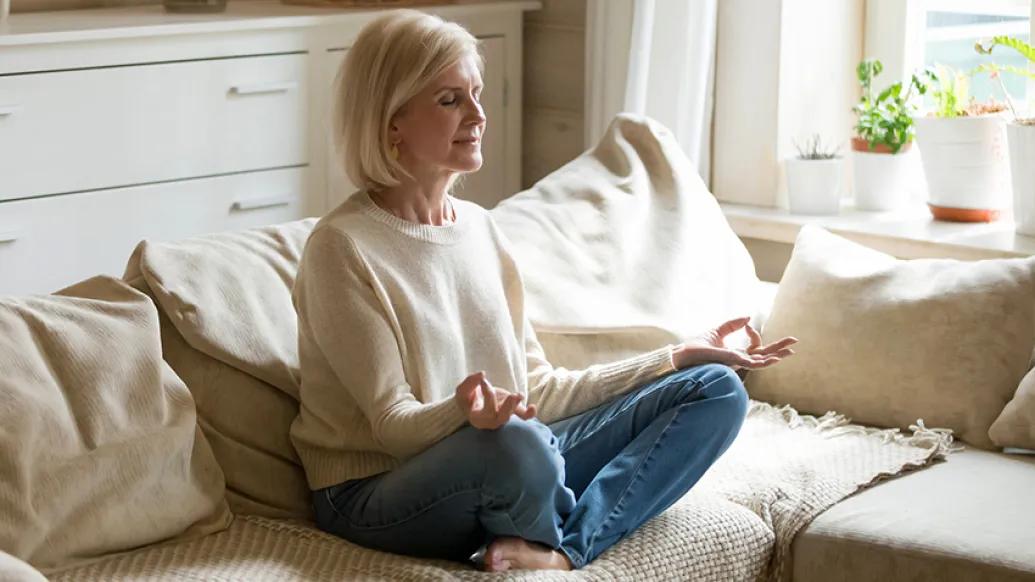
Easy pose is a resting seated posture that allows you to focus on your breath. Sit cross-legged on the floor with hands on the knees (or sit in a chair with feet on the floor) and close your eyes as you focus on your breathing. Inhale deeply through the nose and exhale through slightly parted lips. Feel the gentle rise and fall of the belly, using your diaphragm to fully inflate the lungs. Spend a few moments bringing awareness to your breath, and allow your mind and body to relax.
-
Cat-cow pose helps relieve stress, reduce back pain and increase flexibility in the neck and spine. This pose helps warm up the muscles and connect the breath to the movement. Begin on your hands and knees and gently lift the midsection through the shoulders. As you inhale, let the belly fall toward the ground as you lift your head and gaze forward (cow pose). As you exhale, arch the back while tucking the chin to the chest (cat pose). Continue to move in conjunction with the breath, inhale into cow pose and exhale into cat pose.
-
Savasana is a restorative posture that is typically done at the end of a yoga practice or on its own. Savasana promotes relaxation and reflection. Lie flat with legs resting about shoulder width apart. With your arms resting along the sides of your body, begin to slow your breathing, clear your mind and relax your muscles. The physiological benefits of this type of deep relaxation include decreases in heart rate, blood pressure and muscle tension. After seven to 10 minutes of Savasana, roll to your side and bring yourself to a seated posture, placing your hands together at heart center.
Visualization and guided imagery
Visualization and guided imagery involves imagining pleasant thoughts, places or scenarios to ease tension and stress and put your mind and body in a relaxed, stress-free state.
Begin by closing your eyes and replacing negative thoughts with peaceful, relaxing images. These images can be of places you've experienced or someplace you've imagined going.
MORE FROM MICHIGAN: Sign up for our weekly newsletter
Whatever your pleasant image is, bring all your awareness and focus to that place, using all your senses to promote a soothing experience. For example, picture yourself on a beach, experiencing the warmth of the sun on your body, the smell of the salty air and the sound of waves hitting the shore.
Wherever you go in your mind, enjoy the experience and let go of negative thoughts. When you open your eyes, the stress you felt will be replaced with a sense of calm.
Meditation
Meditation connects the mind and body, producing a state of relaxation and tranquility. Meditation involves bringing your thoughts to the present moment, making yourself mindful of only what is happening in the here and now.
SEE ALSO: Good News: Exercise Doesn't Have to Be as Long (or as Painful) as You Think
It can be practiced sitting or lying on the floor, in a comfortable environment. Close your eyes and focus your attention on the present as you discard distracting thoughts that crowd your mind and cause anxiety and stress. The breath is easy, natural and relaxed. Allow your mind to be free. Give yourself permission to be present and relaxed.
Meditation brings about a sense of calm and balance, which leads to emotional and physical benefits. These benefits last longer than the time you spend meditating — they help you move through the day feeling calm, centered and at peace.

Health Lab
Explore thousands of health news & research stories by visiting the Health Lab homepage for more.
Media Contact

Public Relations
Department of Communication at Michigan Medicine
Stay Informed
Want top health & research news weekly? Sign up for Health Lab’s newsletters today!
Featured News & Stories

Walk Yourself to Better Health with These 6 Easy Steps

4 in 5 parents say having a baby is too expensive
E-Bikes are everywhere, but most parents say they don’t know enough about them
School night bedtime tips every parent should know

E-bikes are faster than ever. Are families prepared for the risks?