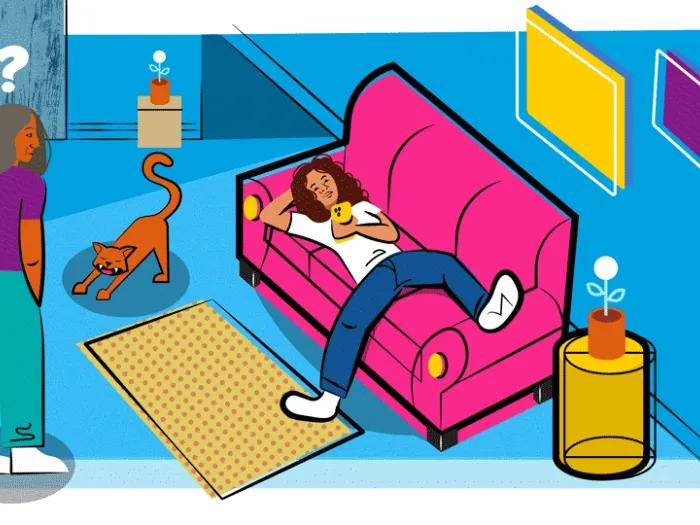
Are You at Risk for Dead Butt Syndrome?
A funny-sounding condition tied to a sluggish rear end is no joke. A Michigan Medicine specialist explains the disorder (and how to avoid it).
1:00 PM
Author |
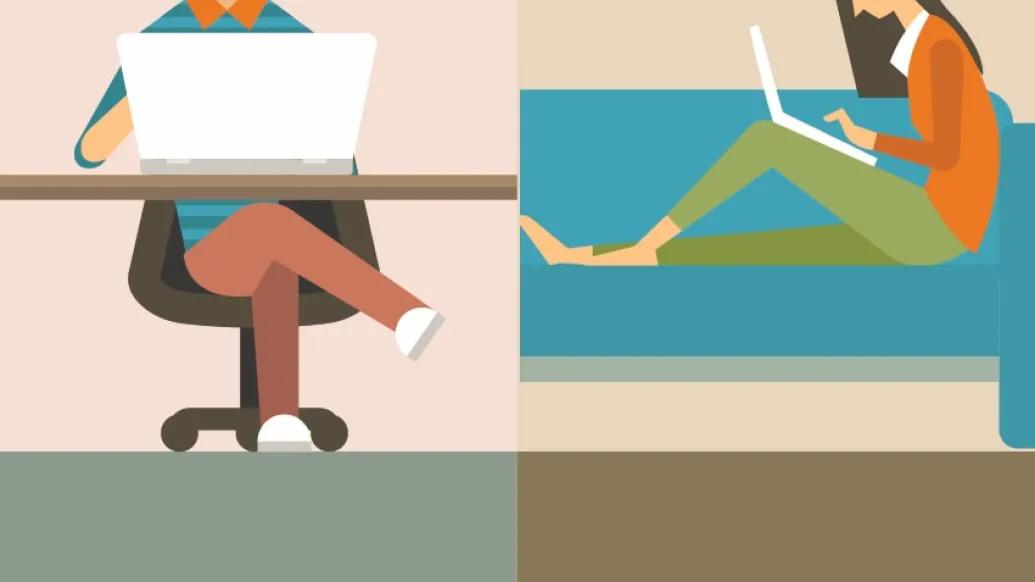
Sitting too long at work or at home lays the groundwork for many health risks — depression, poor dietary habits and cardiovascular disease among them.
Another related issue, despite its silly name, can be serious: dead butt syndrome.
Technically known as "gluteal amnesia," the condition means that the muscles of a person's rear end forget how to do their job — namely stabilizing the pelvis and affecting the body's alignment — because of inactivity.
"Our bodies aren't designed to be seated for long periods of time," says Kristen Schuyten, D.P.T., a physical therapy clinical specialist at Michigan Medicine. "So if you're on your butt for hours a day, it's going to lead to issues."
She spoke more about what can happen.
5 things to know about dead butt syndrome
It marks a tug of war in your body: Over time, a sedentary lifestyle can cause your hip flexors to tighten — and the gluteal muscles to lengthen, which leads to inefficient muscle activation. Both muscles need to shorten and lengthen in an opposing fashion. But that interconnected function is compromised when range of motion is restricted, Schuyten says. It also makes other muscles work harder to compensate.
It doesn't mean your butt is "dead": The term is symbolic. "Your muscles are still there," Schuyten says. "It's more that they're not activating efficiently." Such "death" or deconditioning occurs far more quickly than the time required to reverse the effects. It takes nearly twice as long to revive a dying butt with exercise and movement than it does to develop the condition.
It may cause symptoms elsewhere: Some people with dead butt syndrome feel discomfort in places far from the namesake spot. That's because, physically speaking, "everything is connected," Schuyten says. Tight hip flexors can trigger back pain. Weak glutes can cause balance issues as well as knee and foot pain.
It can affect the physically fit: Schuyten says that even people who exercise regularly could be at risk. She works as the performing arts rehabilitation coordinator, treating active people such as ballet dancers. "They're not always activating the right muscles to do these very high-level activities," she says. Incorporating squats and leg lifts into your workout can help, but performing with proper body mechanics is key as well.
It can be prevented: A simple way to get your buns moving? Set a timer on your phone. "Every hour, get up and walk around or go up and down a flight of stairs," Schuyten says. People who are desk- or car-bound during the day should do regular glute squeezes and hamstring stretches while seated. Those simple steps help to lengthen tight areas, stimulate blood flow to warm up the tissues, and wake up a "dead butt."

Health Lab
Explore thousands of health news & research stories by visiting the Health Lab homepage for more.
Media Contact

Public Relations
Department of Communication at Michigan Medicine
Stay Informed
Want top health & research news weekly? Sign up for Health Lab’s newsletters today!
Featured News & Stories
E-bikes are faster than ever. Are families prepared for the risks?

Michigan’s aging brains need more protection, poll shows
5 hot weather tips that could save an older adult’s life
Doctors urge caution regarding elective MRI scans
To reduce chronic pain, a new digital program could help