7 Facts Everyone Should Know About Becoming an Organ Donor
It’s one of the most significant gifts you can give. In honor of Donate Life Month, learn more about the importance of registering as an organ donor.
1:00 PM
Author |
This article was updated on April 2, 2021.
If you've thought about registering as an organ donor but have hesitated, consider this: About 120,000 people in the United States are awaiting a transplant.
And transplants save lives.
MORE FROM MICHIGAN: Sign up for our weekly newsletter
"These transplants are lifesaving and life-enhancing," says Randall S. Sung, M.D., an associate professor of surgery at the University of Michigan Medical School. "It's easier than ever to be a donor, but there's just not enough of them to go around."
That message is emphasized each April during National Donate Life Month, which encourages organ donor registration — and celebrates those who have thrived after transplant surgery.
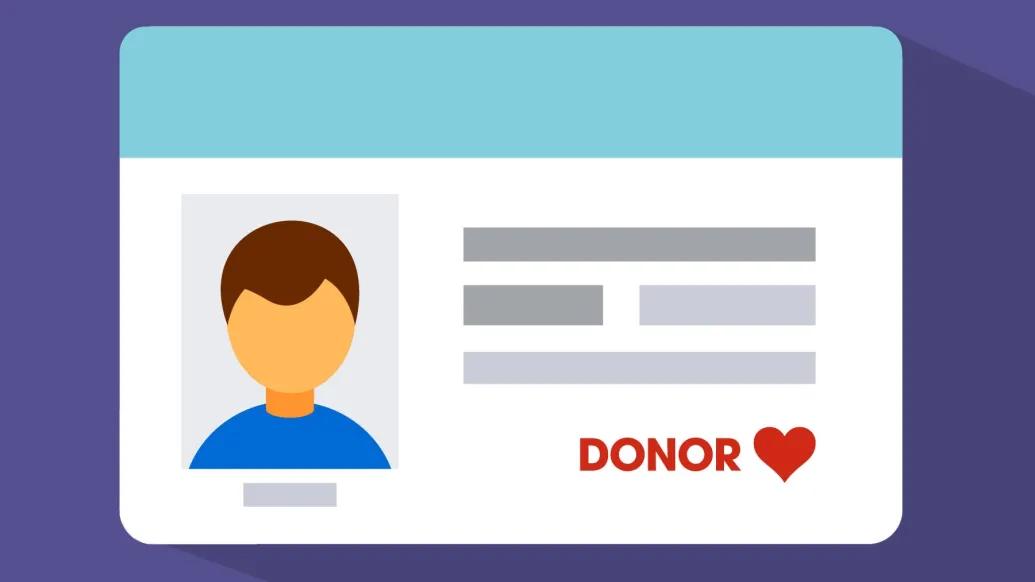
Registration is free and simple. It can be completed online or when you obtain or renew a driver's license.
Still, many potential donors might have questions or fears.
Sung, a transplant surgeon for two decades, addresses the continued need as well as some important details (and misconceptions) about the process:
It doesn't affect your medical care: For deceased donors, transplant doctors and organ recovery teams only come into the picture after a patient dies or is declared brain-dead, so there's no reason to fear subpar treatment or a conflict of interest while alive. People can also donate certain organs, including a kidney as well as portions of their lungs, liver, intestine, and pancreas, while they're still living, but their rights and privacy are carefully protected.
It should be discussed in advance: Organ donors should tell their loved ones about their choice — even though it can be confirmed via a driver's license or a state registry. That way, the transaction won't come as a shock. "It can be a very awkward or even contentious situation when a family is caught unaware," Sung says. A patient's relatives may otherwise offer consent on behalf of the deceased, but having tangible proof ahead of time can ease the process.
SEE ALSO: Singing the Praises of Organ Donation: A Vocalist's Story
It involves complex review: When a donor dies, diagnostic tests and a full review of his or her medical history are performed to determine transplant eligibility. Using the United Network for Organ Sharing database, potential recipients are identified using criteria such as blood type, severity of illness, body size and distance from donor. Age, race, gender, health and income do not play a role. Organ donors, likewise, can be of any age, national origin or state of health.
It moves quickly: Once a match is secured, there's little time to spare. A heart typically has the shortest window from removal to transplantation — "in the neighborhood of four hours," Sung says. Livers, he adds, ideally would be transplanted within 12 hours but could go as long as 24; a typical kidney transplant goal would be 24 hours but could hold up to 72. Each organ is typically packed in ice and preserved with special solution before it is transported.
It respects the donor's dignity: The donor is treated with utmost care throughout. Those who allow their organs to help others may still have an open-casket funeral if desired, as clothing would cover any signs of donation. There's no additional cost to the donors or their families beyond those tied to medical care before death and funeral arrangements as planned. Although it remains an individual's choice, many religions approve of organ donation.
It can help many people: Assuming all of his or her organs (heart, kidney, liver, lungs, pancreas and intestines) are used, a single donor can help eight recipients. With tissue donation, that number jumps to 50. And the results speak volumes: "People can go from literally being at death's door to walking out of the hospital in two weeks," Sung says of transplant recipients. "It has a profound impact not only for the individuals, but also their families."
It is a safe, common procedure: Transplant surgery is one of medicine's modern-day marvels. But it's far from experimental. "It has been mainstream for a long time — the knowledge has exploded, and the success rates are very high," Sung says. Furthermore, a recipient can live longer than ever after a transplant, he adds. In many cases, that means the remainder of one's natural life.
For more information or to register as an organ donor in Michigan, visit the secretary of state's office online.
Visit the U-M Transplant Center to learn more about transplantation.

Health Lab
Explore thousands of health news & research stories by visiting the Health Lab homepage for more.
Media Contact

Public Relations
Department of Communication at Michigan Medicine
Stay Informed
Want top health & research news weekly? Sign up for Health Lab’s newsletters today!
Featured News & Stories

Court appointed medical guardian study reveals role in care of highly vulnerable older adults

What’s changing in Medicaid and what can you do?
Are you at risk of a genetic disease? Guidelines for testing should be updated, experts say
Small Pauses, Bigger Impact: Mindfulness in Action

From transplant to skydiving, a young liver recipient finds new strength