Potential New Blood Test in Alzheimer’s Disease Could Advance Treatment
Experts describe a method that could be used to spot the complex brain disease.
10:24 AM
Author |

Since its discovery, Alzheimer's disease has been a challenge to test for and predict in patients. Currently, testing is primarily done through brain imaging and behavioral tests, which are costly and often fail to detect the disease in its earliest stages.
However, research presented at the last Alzheimer's Association International Conference show a promising blood test that may detect Alzheimer's before symptoms appear, in an affordable and accessible manner.
Henry Paulson, M.D., Ph.D, professor of neurology and director of the Michigan Alzheimer's Disease Center and Nicholas M. Kanaan, Ph.D., associate professor of translational neuroscience at Michigan State University, joined forces to share their opinions on what this development could mean for the future of Alzheimer's testing. Paulson directs the statewide Michigan Alzheimer's Disease Research Center, while Kanaan leads the center's biomarker core.
How is Alzheimer's disease usually detected?
Paulson: Doctors usually make a clinical diagnosis of Alzheimer's disease based on the history of the illness, cognitive assessment, a neurologic examination and often standard brain imaging. It is an imperfect science and we are not always right in concluding that the diagnosis is Alzheimer's rather than some other form of dementia.
Testing the cerebrospinal fluid for biomarkers of Alzheimer's can lead to a more precise diagnosis, but many patients are not eager to undergo the spinal tap (lumbar puncture) needed to get this answer, and sometimes insurance companies won't pay for the test.
SEE ALSO: Middle-Aged Americans & Dementia Risk: Lots of Worry, Not Enough Proven Prevention
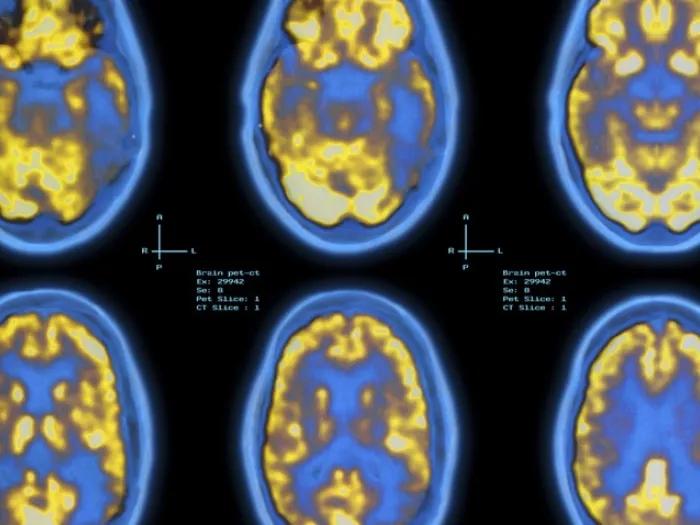
New imaging methods allow is to visualize the key Alzheimer's proteins in the brain, namely beta-amyloid and tau, but these imaging procedures are expensive and not yet covered by insurance.
What have previous tests and treatments looked like and why have they been unsuccessful?
Paulson: The cerebrospinal fluid measurements are actually quite good at helping doctors make (or rule out) the diagnosis of Alzheimer's versus another dementia, but the ordeal of undergoing a procedure that many patients are not eager to undergo means that cerebrospinal fluid measurements are not routinely used in clinical practice.
PET imaging of amyloid and tau is remarkably powerful, but, in the current absence of insurance coverage, most patients simply cannot afford it. Thus, for now, it remains a research test.
MORE FROM THE LAB: Subscribe to our weekly newsletter
Treatments are another matter altogether. While anti-amyloid therapies continue to be tested, they have not been robustly positive in clinical trials. We don't yet know if that lack of effectiveness is due, perhaps, to giving the treatments too late (that is, at the time of treatment there may already be too much amyloid in the brain and downstream cascades have already begun) or due to anti-amyloid treatments simply being insufficient as a therapy for Alzheimer's.
A simple and sensitive blood test that could pinpoint the Alzheimer's disease process well before any cognitive symptoms would allow us to give any potential disease-slowing therapy— anti-amyloid, anti-tau, anti-inflammatory— at a very early point in the disease process. Doing so likely will increase our chances of finding an effective therapy.
What makes this new blood test different than previous attempts?
Paulson: Our ability to detect signals in blood of specific proteins linked to disease has gotten better over time. This success is due to the fact that the technology is now much better and the specific biomarker being detected is closely linked to the underlying pathology of Alzheimer's disease. That is why it seems so promising.
Could this potential blood test help with accessibility to testing and treatment?
Kanaan: Yes, the emerging blood tests are highly accessible in a clinical research setting, like the Michigan Alzheimer's Disease Research Center, today. Whether blood tests such as these become a component of standard clinical practice for dementia management will require additional development and testing, but this is certainly one of the main directions in which we and others are moving.
A simple and sensitive blood test that could pinpint the Alzheimer's disease process well before any cognitive symptoms would allow us to give any potential disease-slowing therapy at a very early point in the disoease process.Henry Paulson, M.D., Ph.D.
The continuing enrichment of the biomarker toolkit for clinicians and scientists will ultimately provide several useful advantages to clinical care for dementia. Among these advantages: it will facilitate better clinical trials, monitoring of therapeutic efficacy and may even identify important biological processes involved in brain diseases.
How could an earlier diagnosis of Alzheimer's affect the treatment and care of patients?
Kanaan: Early detection of Alzheimer's disease and other dementias is a critical factor in furthering our understanding of disease etiology and progression. Indeed, identifying a disease like Alzheimer's accurately and early, before significant cognitive decline occurs, could provide a therapeutic window in which administration of future therapeutics could slow or stop the disease.
SEE ALSO: Addressing Preclinical Alzheimer's: Researchers Caution Against Overtreatment
It is important to note that currently treatments do not slow or stop the disease. But as part of a powerful and comprehensive management strategy we want to pursue early disease detection and novel therapeutics in parallel.
What should the public take away from these recent findings?
Kanaan: One of the most exciting takeaways from the recent development in blood tests is that we're getting ever closer to a highly accurate and reliable approach (blood biomarkers) to aid in diagnosing Alzheimer's and excluding other dementias. Prior blood tests were not as robust as the newly identified tests.
Another exciting aspect of these tests is that they provide a route to assess biomarker and disease status in a highly accessible, less invasive and relatively inexpensive fashion. Any progress is exciting in the context of devastating diseases like Alzheimer's and other dementias. At this point, the testing and validation of these new tests will expand dramatically as groups like ours work vigilantly to make progress towards the clinical implementation of these and other novel blood tests for Alzheimer's disease

Health Lab
Explore thousands of health news & research stories by visiting the Health Lab homepage for more.
Media Contact

Public Relations
Department of Communication at Michigan Medicine
Stay Informed
Want top health & research news weekly? Sign up for Health Lab’s newsletters today!
Featured News & Stories
‘Game-Changing’ Alzheimer’s Drug Just a First Step

Antipsychotic Use in Nursing Homes: Balancing Medication Safety, Policy, and Dementia Care

Can Your Voice Reveal Early Signs of Alzheimer’s?

A pediatric epilepsy fundraiser that changes lives

Michigan Alzheimer's Disease Research Center receives $22M to advance efforts statewide