Cerebral palsy doesn't cause death in adults, so why is it still listed as an underlying cause?
Listing cerebral palsy as the main cause of death for adults with the disease can contribute to a lack of understanding about how the condition interacts with various secondary illnesses and complications.
9:11 AM
Author |
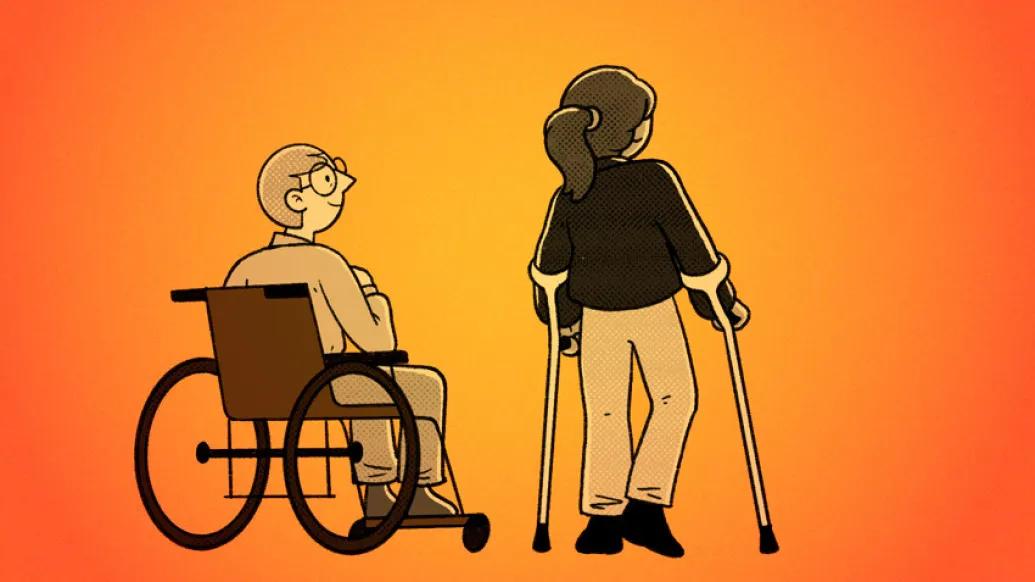
Adults living with cerebral palsy cannot die from cerebral palsy, yet the condition is commonly listed as an underlying cause of death on records for adults with cerebral palsy. Research from the University of Michigan Health System suggests that mislabeling the cause of death for patients with cerebral palsy can set back appropriate care for individuals with cerebral palsy.
When there is no primary cause and no autopsy performed, cerebral palsy is commonly written as the underlying cause of death. Known as diagnostic overshadowing, the incorrect listing not only does a disservice to the population of individuals living with the condition, but it continues a false narrative that patients can die from the condition alone.
"For someone who is trying to help patients with cerebral palsy live long and healthy lives, listing their death as cerebral palsy is a problem because it doesn't uncover the actual cause of mortality," said Mark Peterson, Ph.D., M.S., FACSM, associate professor of physical medicine and rehabilitation at Michigan Medicine. "It actually reduces our understanding of the natural history of the condition."
In the research study "Underlying Causes of Death among Adults with Cerebral Palsy" published in the Journal of Clinical Medicine, Peterson and colleagues found that over 25,000 adult deaths in the United States between 1999 and 2019 had listed cerebral palsy as the underlying cause of death. Many of them listed respiratory illness as the secondary cause.
Respiratory illness is a common cause of death for patients with cerebral palsy since they are prone to pneumonia, respiratory failure, and aspiration. Other common causes can include cardiovascular issues and organ failures.
Ideally, the primary cause of death listed would be the illness or condition the individual had when they died if such information is available. Then, cerebral palsy would be listed as a secondary cause or noted in the record. This method would give researchers and health care providers a better base to start understanding how different conditions and illnesses interact with cerebral palsy across a patient's lifespan.
Like Podcasts? Add the Michigan Medicine News Break on Spotify, Apple Podcasts or anywhere you listen to podcasts.
This information can then be used in a preventative capacity or to treat patients living with cerebral palsy that may experience these illnesses and conditions in the future. Not properly listing the cause of death leads to a lack of understanding about the condition since it is unknown what the individual truly died of.
"A correct cause would inform public health and clinical coordination of care. This information could give insight to providers and create a better understanding of how to address these underlying causes in patients with cerebral palsy," Peterson said.
Cerebral palsy has historically been viewed as a pediatric condition since it arises in infancy. This means that most patients with cerebral palsy are limited to their pediatric care team and can struggle to receive appropriate care as an adult. Today, there are more adults in the United States living with cerebral palsy than children.
Peterson recommends that patients with cerebral palsy find primary care providers that can treat more than just symptoms of cerebral palsy.
"Many patients with cerebral palsy are more susceptible to preventable chronic conditions." Peterson said. "It is important to have a primary care provider that can understand your cerebral palsy and any other conditions that may arise with it."
Peterson stated that he hopes this research becomes an educational tool for those who study and care for patients with cerebral palsy, as well as clinicians and medical examiners that are responsible for listing underlying causes of death.
"The more education there is about how different conditions interact with cerebral palsy, the more work that can be done to prevent or address these conditions in patients."
The University of Michigan Health System currently houses a clinic to help adults with cerebral palsy transition from pediatric care into and throughout proper adult care. Clinic providers Edward Hurvitz, MD and Heidi Haapala, MD work to provide proper care and referrals for patients with cerebral palsy, including mental health referrals.
Live your healthiest life: Get tips from top experts weekly. Subscribe to the Michigan Health blog newsletter
Headlines from the frontlines: The power of scientific discovery harnessed and delivered to your inbox every week. Subscribe to the Michigan Health Lab blog newsletter
Additional authors include Allecia M. Wilson, M.D., Department of Pathology, Michigan Medicine, University of Michigan, Edward A. Hurvitz, M.D., Department of Physical Medicine and Rehabilitation, Michigan Medicine, University of Michigan.
Paper cited: "Underlying Causes of Death among Adults with Cerebral Palsy" Journal of Clinical Medicine. DOI: 10.3390/jcm11216333

Health Lab
Explore thousands of health news & research stories by visiting the Health Lab homepage for more.
Media Contact

Public Relations
Department of Communication at Michigan Medicine
Stay Informed
Want top health & research news weekly? Sign up for Health Lab’s newsletters today!
Featured News & Stories
Timing is of the essence for RNA during stress

New anti-cancer strategy shows promise in preclinical studies

More babies with hypoplastic left heart syndrome surviving critical period between surgeries

How U-M helped bring depression out of the darkness

Beyond the White Coat: Disability, Neurodiversity and Advocacy in Medical School