A gene discovery that changed cystic fibrosis care, and genetic research, forever
"Gene hunting" approach developed by a U-M team led by Francis Collins, Ph.D., and their Canadian counterparts led to a new way of identifying disease-related genes
11:00 AM
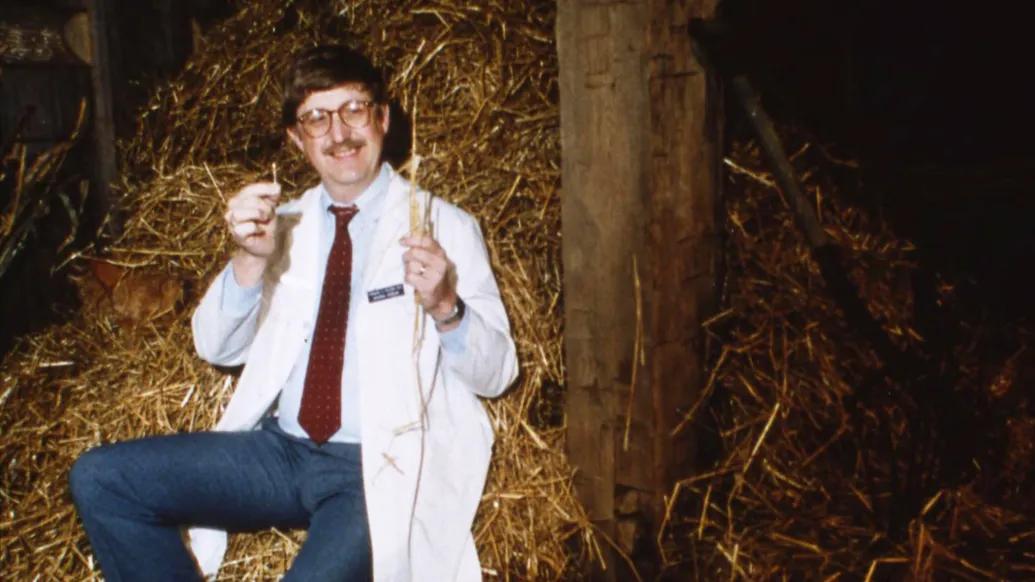
In 1989, nearly 30,000 children and young adults in the United Stated suffered from cystic fibrosis, a rare genetic disease that damages the lungs, digestive system and other organs.
At the time, only half of those with CF were expected to live past their mid-20s.
But that year, University of Michigan Medical School geneticist and physician Francis Collins, M.D., Ph.D., and his research team, along with Lap-Chee Tsui, Ph.D., and his team from the Hospital for Sick Children in Toronto, announced that they’d used their new "gene hunting" approach to isolate the genetic mutation responsible for 90% of cystic fibrosis cases.
They also identified the faulty protein that the bodies of people with the mutation, also called a variation, produced.
The breakthrough was so revolutionary, news of it leaked before the findings could be published in the academic journal Science.
As a result, Collins and Tsui announced at press conferences in August 1989 what they’d discovered; Collins' was held by the Howard Hughes Medical Institute, which had funded his work and his U-M laboratory.
Collins, Tsui and their colleagues suggested at the time that the discovery of the gene might enable more accurate prenatal or early diagnosis of cystic fibrosis, as well as help prospective parents learn if they carried a gene variation for the disease.
They also speculated that the breakthrough might lead to new and better ways to mitigate the effects of cystic fibrosis — or even cure it.
The discovery was part of Collins and Tsui’s broader project, known as “positional cloning,” which sought to identify disease genes without first knowing what specific molecule or cell function was at the root of the disease.
Identifying the gene, now known as the cystic fibrosis transmembrane conductance regulator, or CFTR, took Collins and his colleagues eight years. It was the project’s first major breakthrough.
The discovery paved the way for a tidal wave of genetic research on disease-related genes, for many conditions.
Impact of the CFTR gene discovery on CF care
For CF patients specifically, that first discovery opened the doors to further research that has found more than 2,000 different variations of the CFTR gene.
The way U-M and the Hospital for Sick Children handled the patenting of the gene and permissions for use paved the way for broad genetic testing so patients could know exactly which variation they carried.
While there is still no cure for cystic fibrosis, the findings have helped develop new treatments and medications for those born with CFTR variations, improving their quality of life and greatly extending their life expectancy.
The CF Foundation, which tracks all types of CF treatments and treatments still in development, now has an entire page devoted to CFTR modulator therapies that have been developed by a company that worked with the foundation using its license of the gene patent. After clinical trials showed success, multiple drugs have been approved by the U.S. Food and Drug Administration.
These drugs require that a patient know exactly which variation they have based on genetic testing, and work to fix specific flaws in the CFTR protein so it can act normally. But the drugs do come with side effects.
The potential to use gene therapy to replace the mutated CFTR gene in people with CF has been explored through clinical trials for decades, but without success. More gene therapy trials are under way, but the approach is not yet clinically available; read more via the CF Foundation.
In addition to CFTR modification drugs, many other advances in CF research since the 1980s have permanently changed the course of CF care.
By reducing lung infections, improving nutrition, and even making patients eligible for lung transplants, teams at CF centers have directly contributed to advances in quality of life and life expectancy for people with CF.
Today, Michigan Medicine is home to the largest CF center in Michigan, treating both children and adults. The U-M Health Specialty Pharmacy Service helps people with CF manage the many medications, including CFTR modulators, that they may be on. It also has an internationally renowned research program that includes work on genetic therapies, lung infections and more, and international outreach programs to improve CF care in developing nations.
Members of the U-M research and treatment teams, and the learners training for their careers in those clinics and laboratories, are working together to fulfill the promise of that 1989 gene discovery: better, safer, more effective treatments for cystic fibrosis, and longer lives for those born with CF gene mutations.
A baby born with CF today can expect to live at least into their 60s, based on current therapy.
In a 2021 interview, Collins described the moment in 1989, when he and Tsui realized what they’d discovered. It was, he said, “like a glimpse of God’s mind, that we have understood something that God already knew.”
From U-M to the Genome Project
After the CFTR discovery, Collins and his colleagues made multiple other disease gene discoveries, including ones for Huntington's disease, neurofibromatosis and progeria.
He left U-M in 1993 to oversee the Human Genome Project, an international effort that sought to map and sequence the entire span of human DNA. In that role, he also served as the director of the National Human Genome Research Institute at the National Institutes of Health.
The project took 15 years, and its findings were combined in 2001 with a separate, privately funded project led by J. Craig Venter of Celera Genomics.
In April 2003, the international consortium announced the ahead-of-schedule, under-budget completion of the Human Genome Project map, and set a course for what would come next.
Their collective work paved the way for a new approach to understanding the origins and complexities of human disease, and accelerated the development and availability of genetic tests that have become routine in clinical medicine today.
Today's genetic-based treatments, from CAR-T cell therapy for cancer and autoimmune disorders to gene therapy for sickle cell disease, owe their existence to genetic research done decades ago, including the development of the positional cloning approach.
Collins was appointed to lead the entire NIH in 2009 and served through 2021, leading the nation's biomedical research funding agency under three U.S. presidents. He retired from the NIH in early 2025.
He returned to U-M to give the Medical School commencement address in 2017, and in his remarks noted U-M's longstanding leadership role in genetics. He cited the 1949 discovery of the sickle cell disease trait by U-M geneticist James Neel, Ph.D., as the first molecular genetic disease discovery -- and envisioned a day when that knowledge could finally be used to cure the painful disease.
The first gene therapy for sickle cell disease was approved in late 2023 -- nearly 74 years after Neel's paper was published. Bone marrow (stem cell) transplants, which replace the blood cell-generating machinery of patients, had been used in some patients for a few decades before that, but are very costly and arduous.
Some patients' bodies reject their initial transplanted stem cells, but a newly approved treatment for this condition, called graft versus host disease, is now available using a different kind of stem cell. A sickle cell disease patient recently became the first to receive it at C.S. Mott Children's Hospital.
The wait for effective genetic-based treatments was a bit shorter for CF patients than for sickle cell disease patients.
But it still took three decades.
Writing in 2019 in the New England Journal of Medicine, in response to the publication of the first successful clinical trials of CFTR modulator medications, Collins reflected on the 30-year journey to that milestone:
Shortly after our identification of CFTR, I wrote a song entitled “Dare to Dream.” The lyrics expressed hope that the gene discovery would lead to effective treatments for cystic fibrosis — that someday we would see “all our brothers and sisters breathing free.” It is profoundly gratifying to see that this dream is coming true.
This video from 2009 shows him singing that song, accompanying himself on the guitar:
By Kara Gavin, building on a story written by Genevieve Monsma in 2025 for the University Record
Media Contact

Public Relations
Department of Communication at Michigan Medicine
Related
U-M researchers awarded $500K grant to develop a Cystic Fibrosis Research Center

A Mission to Improve Cystic Fibrosis Treatment Across the Globe
Featured News & Stories
Uncovering cellular stress signal triggered by Salmonella
New drug combination may help treat advanced prostate cancer

How a common virus's hijack of cell repair processes may promote cancer
Advancements and trends in lung transplantation

Study overturns 100-year-old assumption about common bacteria in the lungs