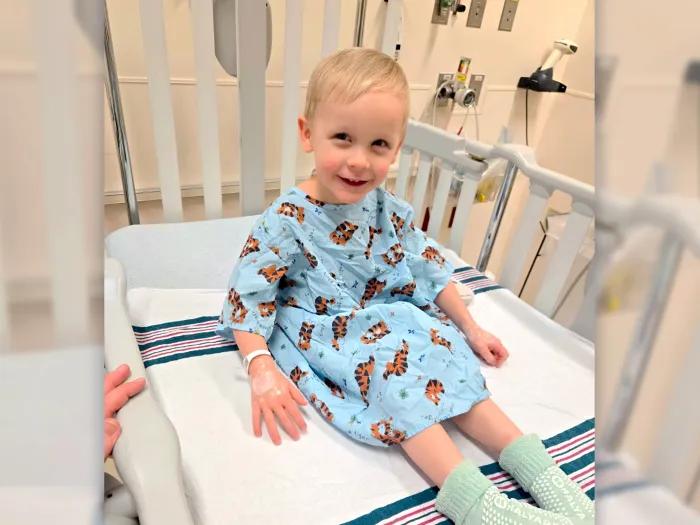
A Mission to Improve Cystic Fibrosis Treatment Across the Globe
To reach patients in need, one doctor develops a training program to improve testing and care available for those with the genetic disease, starting in the Middle East.
2:48 PM
Author |
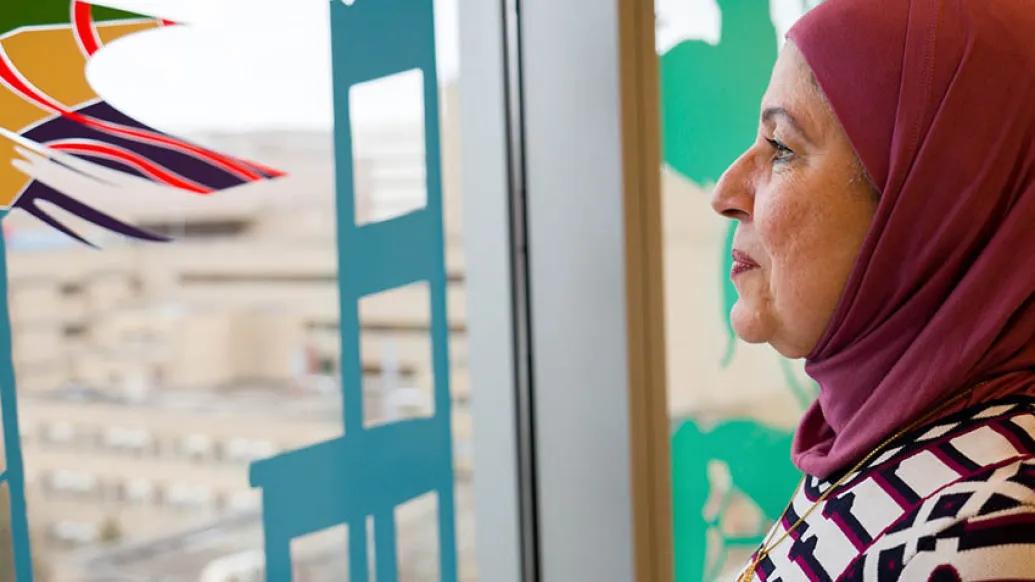
Global outreach occurs in many different pockets of Michigan Medicine, like the work being led by Samya Nasr, M.D., the director of the Cystic Fibrosis Center.
Nasr, also a professor of pediatrics at U-M, and a small team of volunteer staff and physicians, have become dedicated to improving cystic fibrosis care around the world, one country at a time.
Their first stop on that mission? Turkey.
Touching lives
Cystic fibrosis is a genetic condition which causes the lungs to produce a mucus build up that can clog airways. Many poorer countries, in particular in the Middle East, are either not testing for CF and/or need training in proper treatment.
"Most Middle Eastern countries do not have all the medication we have here to treat CF, and they don't know the best methods for nutrition and infection control. As a result, their patients die at a very young age," Nasr said. "In the U.S., the median life expectancy for a CF patient is 47. Life expectancy in the countries we are targeting is approximately 10 years of age."
Nasr's global mission began when she was invited to speak to the Middle East CF Association two years ago. Being of Egyptian background, she was already familiar with the tremendous need for CF resources in her home country and neighboring nations.
When the association asked her to lead a grant funded program to help improve care, she immediately stepped into action. In November 2018, she visited Marmara University CF Center in Istanbul, Turkey to begin their first project. She brought her team to the university's clinic in March 2019 and later, in November 2019, Marmara team members came to U-M for further training.
"We are teaching them to improve the lung function for their 340 patients," she said. "Once they are well trained, they will be a resource for 10 other clinics across Turkey, which cares for more than 3,000 patients. Some of these people are refugees, so we are helping Syrians and others who struggle with CF under difficult conditions. Over time, we will have a global reach that will touch more lives than we will ever be able to count."
A continuous process
With the first project underway, Nasr — now named an international CF advisor for the Middle East CF Association — has developed a continuous process for expanding the mission.
She takes a two year approach to the in-person training, with an additional three years of consulting before moving on to support other nations. In the first two years, the United States teams visit the clinics in the spring and visiting teams come to U-M to observe best practices in the fall. For the following three years, Nasr and her team will meet virtually with the clinic to serve as mentors. In addition, a fellow and other faculty members will visit U-M in the summer for training.
The U-M CF center, accredited by the CF Foundation as a high quality care center, is well suited for this mentor style program. The C.S. Mott Children's Hospital houses Michigan's largest CF center, caring for more than 600 of the state's 1,150 CF patients. Many patients bypass closer clinics to visit Mott, while the center also serves patients from different parts of Michigan and northern parts of Indiana and Ohio.
"We have become well known through our research, our quality improvement work and our stable team of physicians and staff. There has been little need to advertise. It's all word of mouth," Nasr said. "When our first team from Turkey arrived here, they were like sponges soaking up the information."
'Changing the world'
The next country on their list? Although Nasr is hoping to have an impact on Egypt and Ethiopia in the future, these countries are still learning how to identify and test for CF and are not yet ready for a visit from U-M. In the meantime, she has her sights on other countries in the region which have CF clinics interested in the project.
"Language, culture and politics can be barriers, but I've already seen global progress. Through our connections, the next Middle East CF association conference will have quality improvement as a new theme. Observing us has had that impact and it is changing the world of CF care," says Nasr.

Health Lab
Explore thousands of health news & research stories by visiting the Health Lab homepage for more.
Media Contact

Public Relations
Department of Communication at Michigan Medicine
Stay Informed
Want top health & research news weekly? Sign up for Health Lab’s newsletters today!
Featured News & Stories
Many young adults may not be ready to manage their own health care

What should you know before starting a GLP-1?

E-bikes are faster than ever. Are families prepared for the risks?
Beyond the White Coat: Global & Local Health Experiences

The hidden life of parasites like Cyclospora