$3.9 million NIH grant to fuel U-M effort to develop first targeted therapy for fatal childhood brain disorder
Author |
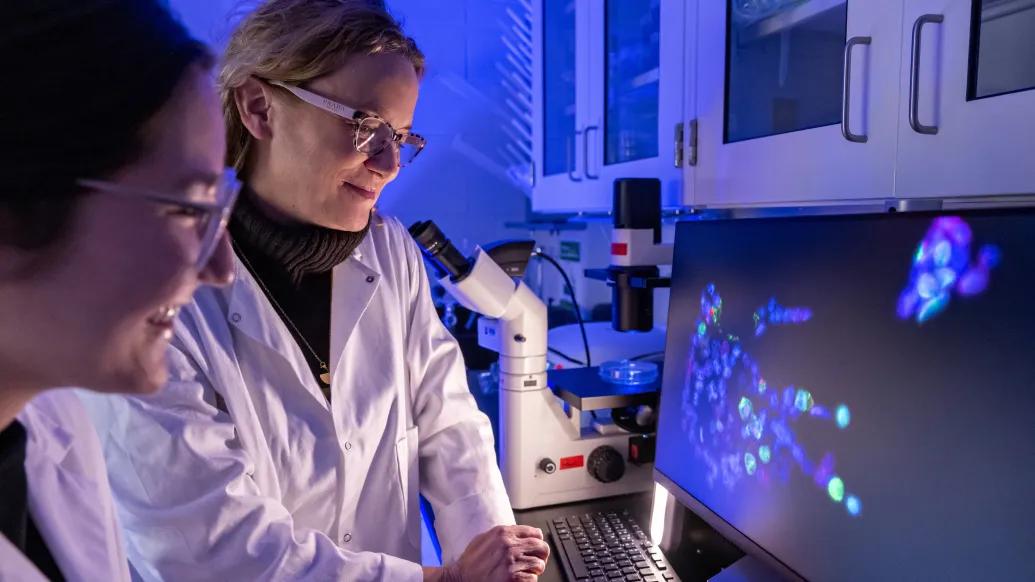
For children with CLN3 Batten disease, the first symptom is often vision loss. What follows is relentless neurological decline and currently there is no effective treatment. Now, University of Michigan researchers are working to change that.
The University of Michigan has received a $3.9 million award from the National Institutes of Health's Ultra-rare Gene-based Therapy (URGenT) Program to develop a novel antisense oligonucleotide (ASO) medicine for CLN3 Batten disease, a rare, fatal genetic disorder. The funding will move the therapy into clinical development, targeting the most common genetic variant behind the disease.
The project is led by Michelle Hastings, Ph.D., the Pfizer Upjohn Research Professor of Pharmacology at the U-M Medical School, Professor of Medicinal Chemistry at the College of Pharmacy, and Director of the Nucleic Acid Therapeutics (NATx) Core at the Life Sciences Institute.
"Our goal is to treat a small group of children first, evaluating safety, biomarkers and initial effectiveness," Hastings said. "Given the severity of the disease and the lack of other treatments, we want to move quickly to adapt and expand treatment to additional children, with the ultimate goal of making a disease-modifying drug widely available."
A partnership driven by families
The work builds on a productive collaboration between the Hastings laboratory and numerous partners including groups at Vanguard Clinical, University of North Carolina, Rosalind Franklin University of Medicine and Science, Sanford Research and coordinated by the ForeBatten Foundation, a patient advocacy nonprofit founded by David and Karen Kahn, whose twin daughters live with CLN3 Batten disease.
Together, the partnership previously produced a personalized therapy for a different genetic cause of the disease. The new funding aims to deliver a broader drug for the most common variant. “We have been working towards this day since our girls were diagnosed. We are so proud of this team, and the incredible work of Dr. Hastings.” says Karen Kahn.
A leader in RNA medicine
Hastings is a leader in the development of antisense oligonucleotides, short synthetic RNA molecules designed to bind precise genetic targets and adjust gene expression, with the aim of reversing or halting disease progression.
To power this work, she established the NATx Core at U-M's Life Sciences Institute together with Michigan Medicine. The core offers end-to-end RNA synthesis, molecular design and testing, and translational guidance to researchers at Michigan and institutions around the world.
"This core supports the effort not only by producing the test molecules, but by enabling translational studies like this one, helping with sequence design, synthesizing oligonucleotides and guiding preclinical testing," Hastings said.
In This Story

Michelle L Hastings
Professor
Related

A personalized RNA therapeutic treats twins with ultra-rare form of Batten disease
Featured News & Stories

15 years of data will help uncover how flu spreads—and how to reduce its impact
Engineered nanoparticles sensitize gliomas to radiotherapy

A gene discovery that changed cystic fibrosis care, and genetic research, forever
A night of two national titles for U-M, as scientists and basketball players both triumph

A protein tape-recorder enables scientists to measure and decode cellular processes at scale and over time