
More articles about: Radiation Oncology

Health Lab
Doctors treat lung cancer patient after cancer metastasized to her brain
Linda Rossi was initially diagnosed with lung cancer and moved to Michigan for treatment from U-M. She received surgery, but four years later the tumor spread to her brain, and she was treated with surgery and radiation.

Health Lab
Radiation therapy for non-cancer diseases
An expert discusses the long time usage of radiation therapy for non-cancer diseases in other countries that are now available in the United States.

Philanthropy News
Gift expands lifeline of support for Rogel Cancer Center patients and families
With support from David and Danielle Risk, the U-M Health Patient and Family Support Services Program can provide even more hours of specialized care to people who are living with cancer.

Health Lab
Dietary changes could provide a therapeutic avenue for brain cancer
A team of researchers from Michigan Medicine tracked how glucose is used in glioblastoma tumor cells. They showed that dietary interventions can slow brain cancer growth in mice.

Cancer Aware
University of Michigan’s Impact on the Future of Cancer Care
Four University of Michigan faculty members have served as president of the American Society of Clinical Oncology, a rare distinction that only two other institutions can claim. ASCO is the world's leading professional organization for physicians and oncology professionals caring for people with cancer.
In this episode, Nicole Fawcett, director of communications for the Rogel Cancer Center, sat down with four past ASCO Presidents and talked about the importance of the society, the impact it has had on cancer care and research as a whole and the impact here at U-M.
Participants:
Allen Lichter, MD, FASTRO
Doug Blayney, MD
Dan Hayes, MD
Lori Pierce, MD

UMich Med Mosaic
Path to Medicine: Stories from the Med School Finish Line
In this episode of the UMich Med Mosaic podcast, M1 host Mackenzie Kay chats with a trio of incredible M4 students, Julian Neshewat, Charlotte Jackson and Gabriela Ashenafi, just days before their medical school commencement ceremony. The conversation explores their paths and experiences at the University of Michigan Medical School with a particular focus on choosing a specialty. Gabriela talks about her journey to OBGYN, driven by her personal and family background. Julian shares the story of his late switch from a focus on Surgery to Radiology, sparked by his year off pursuing an MBA. Charlotte explains how she started out wary of Surgery, only to realize her passion for it after some reflection and experience. The group also shares advice for staying grounded and finding good mentors, while emphasizing the importance of following your own path in the world of medicine.

Philanthropy News
Department of Radiation Oncology staff uplift pediatric patients through gifts of time and talent
Michigan Medicine radiation oncology staff help grant wishes and spread joy to pediatric cancer patients at C.S. Mott Children's Hospital.
Well-Being at Michigan Medicine
Supporting Patient Experience and Caregiver Well-Being
In this episode, Dr. Elizabeth Harry welcomes Keith Gran and Devin Lippert from the Office of Patient Experience (OPE). Gran is Michigan Medicine’s chief patient experience, with over 30 years in academic health care leadership. Lippert is OPE’s administrative director with over 25 years in the field.
Both bring deep professional and personal insights into improving care through empathy, data and collaboration. They share how their team supports patient and caregiver well-being, highlights impactful programs like peer mentorship and medical improv, and discusses strategies to create a consistent, compassionate experience across Michigan Medicine—emphasizing that every human interaction is an opportunity to improve health care.

Philanthropy News
Dedicated football fans create professorship for life-saving research after wife’s glioblastoma treatment
U-M football fans Jim and Connie Achtenberg are turning their experience with glioblastoma into hope by funding research at Rogel Cancer Center.

Health Lab
Less chemoradiation is possible for some cancer patients
Some oropharynx cancer patients may qualify for less radiation treatments, according to a new study from experts at the University of Michigan Health Rogel Cancer Center.

Health Lab
Pluvicto treatment gives patient another chance
New treatment for metastatic castration resistant prostate cancer helped patient get back to his hobbies

Health Lab
Is lung cancer treatment working? This chip can tell from a blood draw
Using a chip to process blood samples, doctors can monitor the amount of cancer cells in a patient’s blood to determine how well a treatment is working by the fourth week, according to a new study.
Health Lab
Treating prostate cancer without major side effects
Recently approved by the Food and Drug Administration, Pluvicto is a radionuclide-labelled drug administered to patients showing promising results.
Health Lab
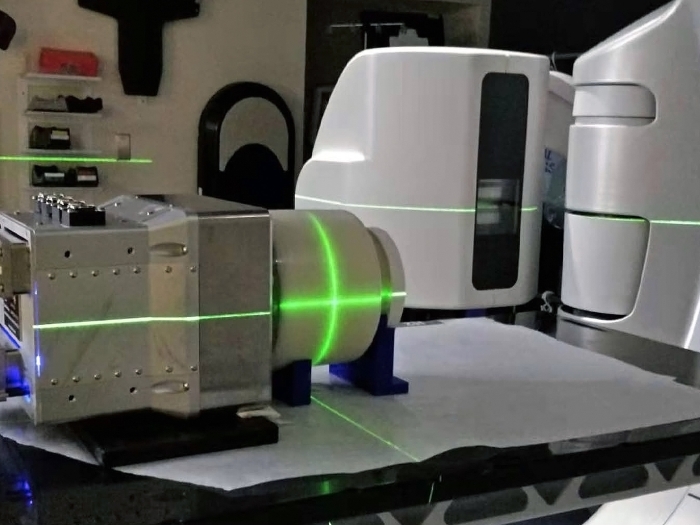
Tracking radiation treatment in real time promises safer, more effective cancer therapy
Radiation, used to treat half of all cancer patients, can be measured during treatment for the first time with precise 3D imaging developed at the University of Michigan.

Health Lab
What clinical trials can teach us
A clinical trial in head and neck cancer explored ways to improve clinical outcomes for patients. Although the trial failed, researchers found insight into new ways to address treatment resistance.
