
More articles about: Pain management
Medicine at Michigan
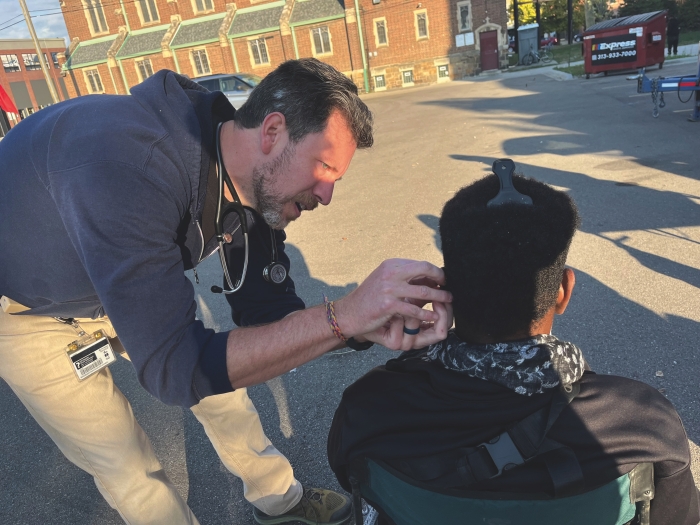
Managing pain one (super-thin) needle at a time
Neil Nixdorff, M.D. (Fellowship 2024), promotes and teaches auricular acupuncture as a way to manage pain.

Health Lab
To reduce chronic pain, a new digital program could help
A new study tested a program called Promoting Resilience with Innovative Self-Management, which combines traditional cognitive behavioral therapy skills for pain with additional activities intended to promote resilience and positive emotion.

Health Lab
What does cannabis 'rescheduling' mean for science and society?
Medical cannabis (marijuana) has been rescheduled on the federal level, which could open the door for much more research than was possible before. Four Michigan Medicine experts comment.
Health Lab
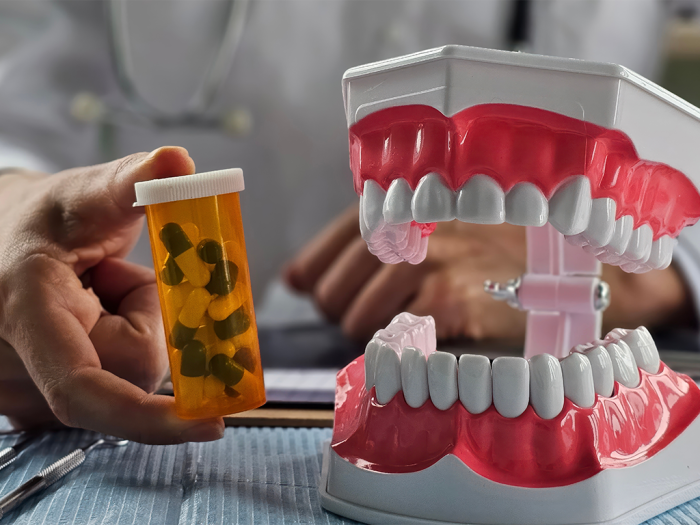
Opioids for dental pain still more common in U.S.
A Michigan Medicine study finds that the U.S. outside Puerto Rico still has a high rate of dental opioid pain medication prescription filling compared with other developed nations, despite steep drops in recent years because of guidelines spurred by the opioid crisis.
Health Lab
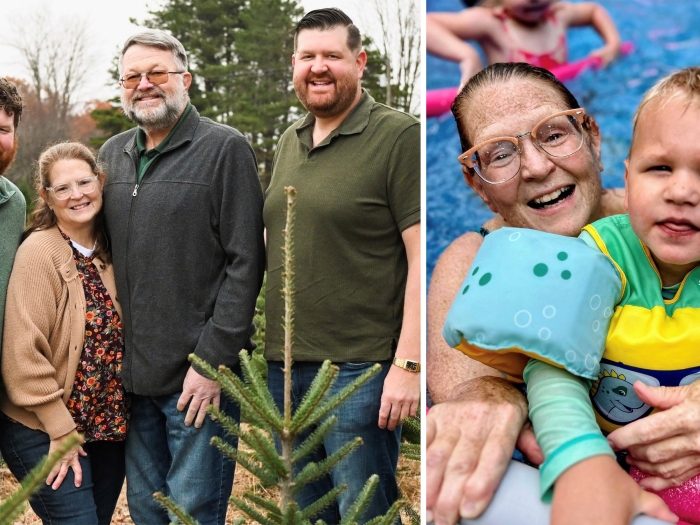
How a complex, 14-hour surgery saved a woman’s ‘hopeless’ spine
How a complex, 14-hour surgery by Michigan Medicine's Adult Spine Deformity Program saved a woman’s ‘hopeless’ spine that had been deteriorating for years from advanced arthritis and lupus.

Health Lab
Cannabis & older adults: Poll looks at use, beliefs and risk
Many older Americans use cannabis products containing THC for a range of reasons, but a sizable percentage may be taking risks or facing potential addiction.

Health Lab
Primary care physicians are hesitant to accept chronic pain patients using opioids or cannabis
Michigan Medicine research finds that patients with chronic pain who use either substance may find it harder to find primary care physician than those who don’t.
Health Lab
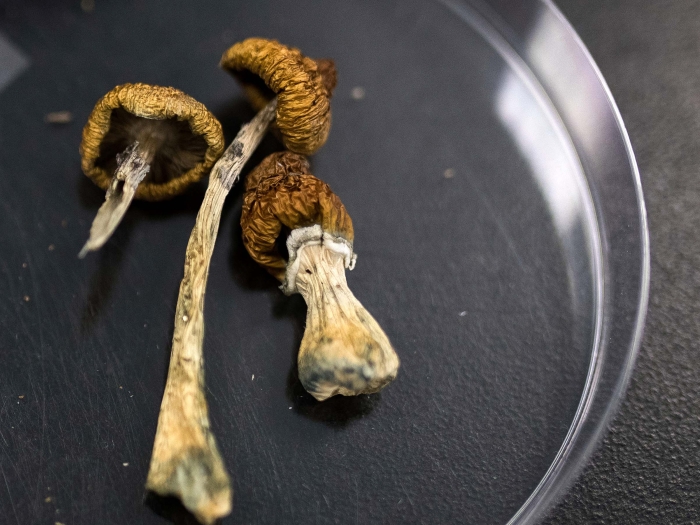
How cannabis and psilocybin might help some of the 50 million Americans experiencing chronic pain
Recent developments represent a dramatic change from long standing federal policy around these substances that has historically criminalized their use and blocked or delayed research efforts into their therapeutic potential.

The Fundamentals
Cannabis and psychedelics: stigmatized substances or powerful therapeutics?
Today on The Fundamentals is Dr. Kevin Boehnke, research assistant professor in the Department of Anesthesiology and the Chronic Pain and Fatigue Research Center. His current research focuses on therapeutic applications of cannabis and psychedelics. His goal is to rigorously assess appropriate use of these substances and to help address the public health harms caused by their criminalization.

Health Lab
Data shows medical marijuana use decreased in states where recreational use became legal
Data on medical cannabis use found that enrollment in medical cannabis programs increased overall between 2016 and 2022, but enrollment in states where nonmedical use of cannabis became legal saw a decrease in enrollment

Health Lab
Long COVID-19 is linked to chronic pain conditions
Therapies for pain conditions like fibromyalgia provide clues for helping those with long COVID-19
Health Lab
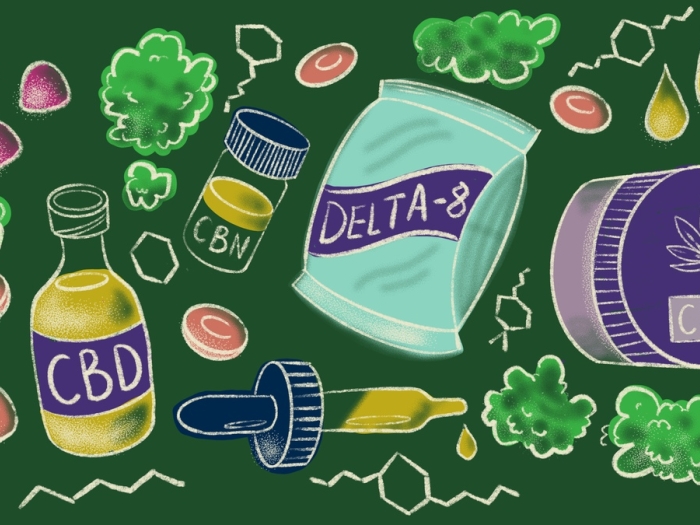
The growing use of hemp-derived alternative cannabis products containing CBD, Delta-8-THC, CBG, CBN
A Michigan Medicine study published in JAMA Network Open examines past-year use of some of these hemp-derived cannabinoids, including cannabidiol, Delta 8-THC, cannabigerol and cannabinol.
Health Lab
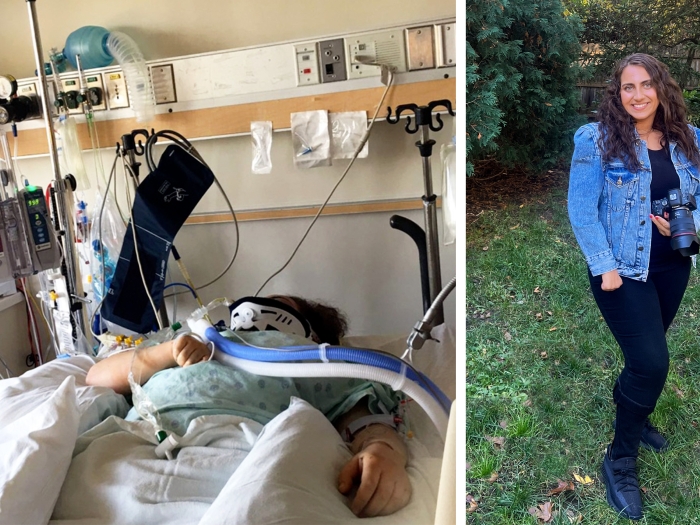
Brain tumor and car crash survivor aspires to be example for others living with disabilities
A car accident at age 20 left Sahar Mashhour in the intensive care unit for three months. Almost six years later, Mashhour is still pursuing her passions proving that her disability doesn’t limit her ability, but instead helps her see life through a different lens.
Health Lab
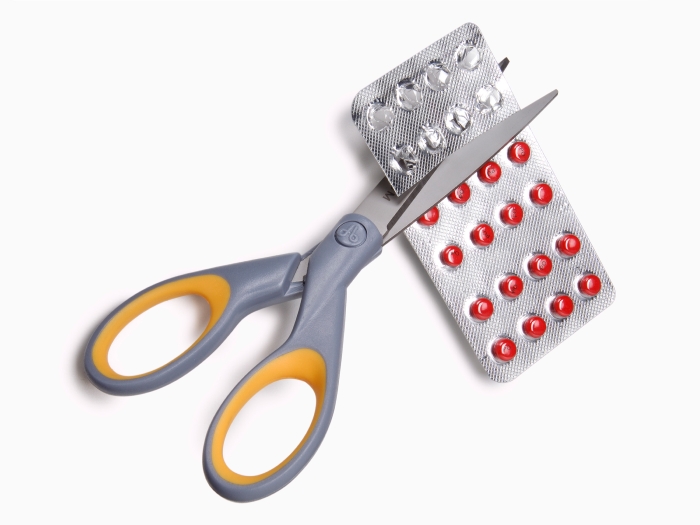
Surgery patients now less likely to get opioids – but decline has slowed
Opioid painkillers prescribed by surgeons have gone down in recent years but the decline has slowed since the pandemic
Health Lab
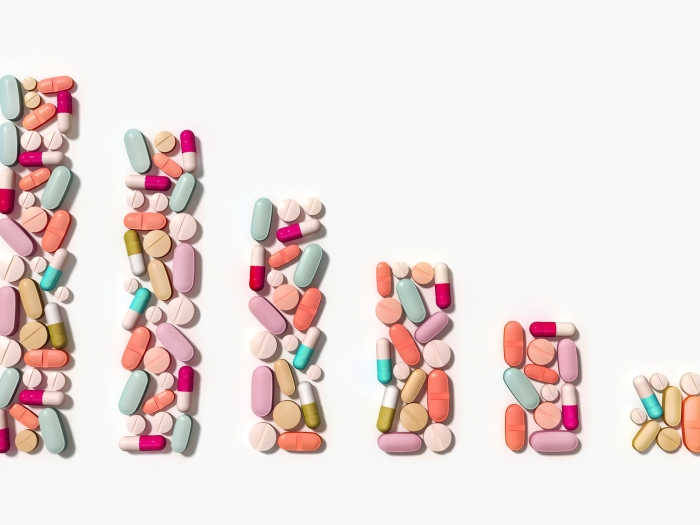
Dental opioid prescriptions still declining, but not as quickly as pre-pandemic
Dental pain treatment with opioid painkillers like Oxycontin and Oxycodone declined before and during the pandemic but the rate of decline slowed after 2020.
