
More articles about: Neurology

Health Lab
Revolutionizing head injury care
A simple blood test is changing how emergency medicine operates.

Health Lab
Training and instinct led nurse from quiet clue to critical catch
A Michigan Medicine nurse catches a critical situation for a patient.

Health Lab
Using ultrasound technology to quickly diagnose giant cell arteritis
Ultrasound technology at University of Michigan Health is helping diagnose giant cell arteritis in patients to begin potentially moving away from using invasive surgical biopsy methods.

Philanthropy News
Benjamin M. Hampstead Named Philip B. and Myrna R. Fischer Research Professor of Neurology
Benjamin Hampstead, Ph.D., the Philip B. and Myrna R. Fischer Research Professor of Neurology at U-M, advances Alzheimer's disease research.

Philanthropy News
Dedicated football fans create professorship for life-saving research after wife’s glioblastoma treatment
U-M football fans Jim and Connie Achtenberg are turning their experience with glioblastoma into hope by funding research at Rogel Cancer Center.
Breaking Down Mental Health
Psychotropic Management of Pediatric Anxiety
Review SSRIs and SNRIs for pediatric anxiety, benzodiazepines for acute relief, and non-benzo options like hydroxyzine for as-needed anxiety management.

Health Lab
Cognitive decline comes sooner for people with heart failure
There are over six million Americans with heart failure who are at greater risk of losing their cognitive abilities earlier in life, a study led by University of Michigan suggests.

Health Lab
Gene therapy for rare epilepsy shows promise in mice
Dravet syndrome and other developmental epileptic encephalopathies are rare but devastating conditions. Research from Michigan Medicine takes aim at variant in SCN1B, which causes an even more severe form of DEE.
Health Lab
ALS survival may be cut short by living in disadvantaged communities
Living in a disadvantaged community may decrease the length of time a person can survive with ALS by over 30%, a Michigan Medicine-led study finds.
Minding Memory
Understanding Dementia Risk Factors with Helen C. Kales, MD
In this episode, Matt & Lauren have the unique opportunity to talk with Dr. Helen C. Kales, a geriatric psychiatrist and health services researcher who has participated in the previous Lancet Commissions on Dementia Prevention, Intervention and Care – including the most recent one released in 2024. Dr. Kales discusses how the commission puts together all the evidence to make recommendations that can play a crucial role in dementia prevention. Dr. Kales is the Chair of the Department of Psychiatry and Behavioral Sciences and Joe P. Tupin Professor of Psychiatry at the University of California at Davis and has dedicated much of her career to improving the lives of patients living with dementia.

Philanthropy News
A Philosophy of Philanthropy
Philanthropist expands his support of Parkinson’s disease research, patient care, and training by establishing the Thomas C. Jones Movement Disorders Fellowship Fund.
Health Lab
The brain in balance
In a recent study, using network neuroscience, investigators found a way to objectively determine the balance of integration and segregation in fMRI-measured brain signals during wakefulness as well as during sleep and anesthesia.

Philanthropy News
New campaign aims to calm the storm children with epilepsy face
C.S. Mott Children’s Hospital launches Calming the Storm, a campaign to support children with epilepsy and their families during Epilepsy Awareness Month in November.
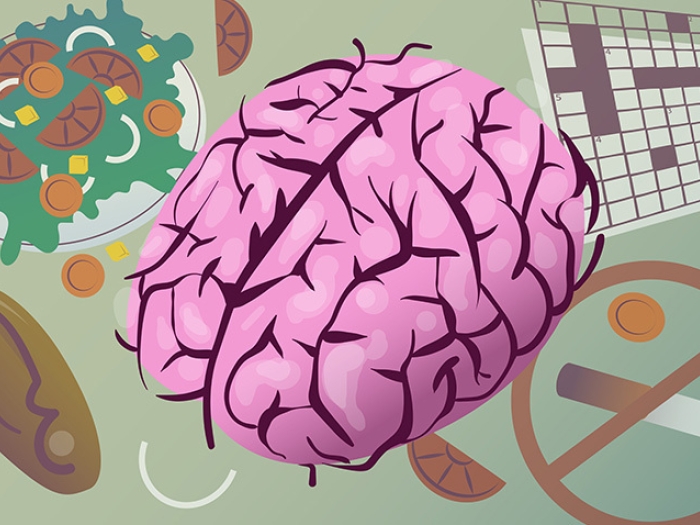
Health Lab
11 ways to reduce your risk of dementia
Learn how to take care of your brain health from several experts who share practical tips to maintain healthy brain habits throughout your lifespan.

News Release
U-M Health ranked among nation’s best in more specialties than any other Michigan hospital by U.S. News & World Report
University of Michigan Health ranks among the nation’s best hospitals in more specialties than any other Michigan hospital, according to U.S. News and World Report’s Best Hospitals Rankings for 2024-2025.
