Treating Veterans, Wherever They Live
In his role as director of the National Oncology Program, Michael Kelley is working to expand care to veterans in remote areas through teleoncology.
Author |
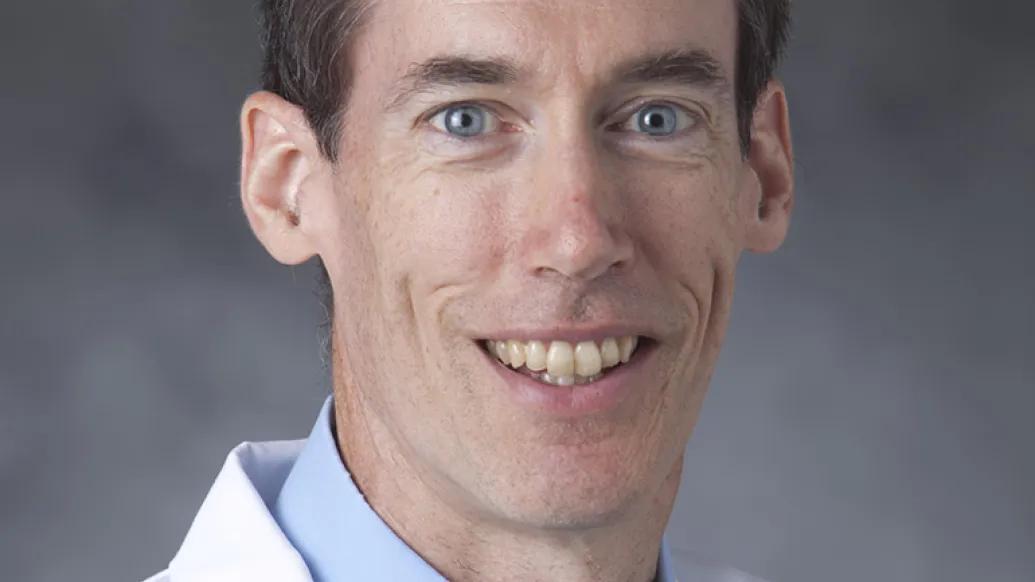
When Michael Kelley (M.D. 1985) was a third-year student at the U-M Medical School, he did an internal medicine rotation at the Ann Arbor VA Healthcare System. A World War I veteran was admitted to the hospital and was found to have fluid on his lungs. "We thought that it might be cancer, and we were all really concerned," Kelley recalls. "It turned out he had tuberculosis and was able to be treated effectively. To this day, I remember the satisfaction of being able to help him."
That glimpse of working with veterans was the initial step on a career path that has led him to become the national program director for oncology with the Department of Veterans Affairs. In this role, he has had the opportunity to meet countless veterans, each of whom has made an impact on him.
"It's really an honor to give back on behalf of the nation," says Kelley, also a professor of medicine at Duke University and chief of hematology and oncology at the Durham VA Medical Center. "The experience of working with veterans is very meaningful. You feel your small part adds up to have a large impact to the benefit of the nation."
The National Oncology Program is the largest integrated provider of oncology care for the nearly 50,000 veterans diagnosed with cancer every year. Many of those enrolled in the Veterans Health Administration live in rural areas, which often leads to problems with access to care. The lack of access has informed one of Kelley's main initiatives: an increase in the use of teleoncology to reach veterans who live in remote areas through partnerships between rural health centers and academic medical centers.
"The concept of using telehealth for oncology came from a rural VA hospital that was unable to recruit an oncologist. Initially, I was skeptical. After setting up practices at two sites, the feasibility and benefits were clear, and I became more of an advocate for the approach," he says. "Others remained skeptical at first, but then the pandemic came, and the use of telemedicine accelerated, because it had to. That led to greater acceptance by hospitals, oncologists, and the patients.
"Now, we can take care of almost all patients regardless of where they are in the country."
In addition to the treatment of patients, Kelley is expanding the use of teleoncology as a way of recruiting more patients to clinical trials. "This way, we can ensure cancer clinical trials are more inclusive and have more applicable results for the entire veteran population," he says.
Kelley is also a principal investigator for the Proof-of-Concept Decentralized Clinical Trial (also known as POTENTIAL), which explores the feasibility of monitoring the health of patients through wearable technology and telehealth visits.
He feels close to the patients he treats using telehealth, Kelley says. "They're tremendous. It's one of the most rewarding professional experiences I've had. There's a different type of relationship you develop when you see patients this way."
Featured News & Stories

New guide aims to tame the chaos of UTI care
10 key things to know about health insurance in 2026
Language barriers in health care have fallen – but not online, study shows

Small rewards lead to big wins for saving veterans' lives

Inappropriate prescriptions for antibiotics, glucocorticoids and opioids common at urgent cares