Meet the interventional radiologist who wants you to have his cell phone number
Author |
When his dad was considering surgery for an enlarged prostate, Shantanu Warhadpande, M.D., was a fellow, learning about a nonsurgical option for the same complaint.
“I tried not to bias him a ton,” says Warhadpande, an assistant professor of radiology. But when his dad asked for his opinion, Warhadpande told him about prostate artery embolization (PAE), a non-surgical procedure that decreases blood supply to the prostate so that it shrinks naturally.
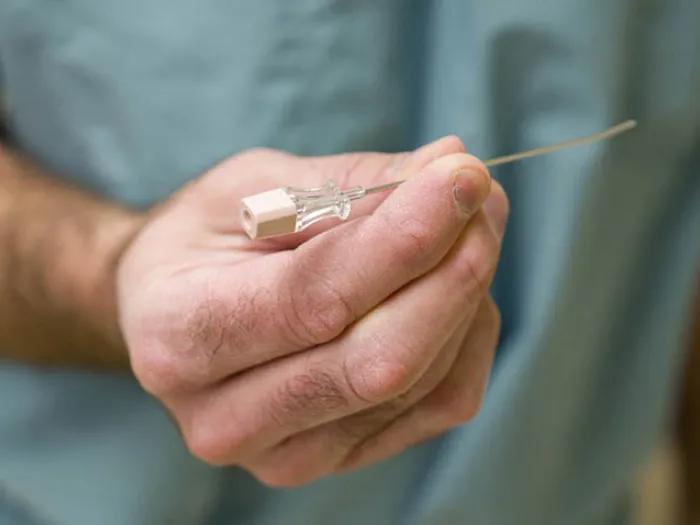
To do that, an interventional radiologist injects incredibly small beads directly into the prostate artery through a tiny catheter.
Warhadpande’s father ended up having a PAE, and his symptoms improved dramatically. At that point, Warhadpande says he was sold on the efficacy of the procedure — and on the field of interventional radiology, which is now his specialty. Interventional radiologists work directly with patients, using imaging equipment in minimally invasive procedures to alleviate their symptoms.
PAE is relatively new and is one of the growing number of minimally invasive treatments being developed by specialists in the field. All of them require high-end equipment, specialized training, and support staff, Warhadpande says.
“Part of why I’m so excited to be working at U-M is that we have all of those things. When I walk into the interventional radiology suite, I know I have a phenomenal group of techs working at their highest level, phenomenal nurses who are going to take really good care of the patient, and all the tools I need to be set up for success.”
In a PAE, getting to the right artery is the hardest part.
“The vasculature of the pelvis is complex, and the prostatic artery is one of the more difficult vessels to get a catheter into,” Warhadpande says. Advanced imaging equipment is needed throughout the entire procedure to make sure the microcatheter gets into the perfect position.
One of Warhadpande’s patients, Bill Schwartz, had an enlarged prostate that was causing him to wake up three or four times per night. After the procedure, Schwartz says, “It was like a weight was lifted off my shoulders. It’s wonderful. I feel like I’m 20 years younger.”
Warhadpande doesn’t just help patients with enlarged prostates. He’s also interested in palliative interventional radiology.
“Pain patients, especially cancer patients, are often at their wits’ end. Opioids are sometimes not enough to treat their pain, and they are out of options,” he says. Warhadpande is able to access individual nerves and use thermal ablation to reduce the sensation of pain for patients who cannot get relief any other way.
Warhadpande says being able to provide relief to his patients is incredibly humbling. He’s worked with colleagues in urology and oncology to help them understand how interventional radiology can benefit some of their patients by offering minimally invasive solutions.
He also believes it’s important to educate patients and establish a strong relationship before a procedure. For pain patients, he spends time discussing what makes their pain better or worse and what their goals are for the procedure. He also helps them set realistic expectations.
Regardless of their medical issues, his patients all get his cell phone number.
“I want them to reach out to me any time of the day or night,” he says.
“When you have gone on this journey together with a patient and come out on the other side ... that creates a bond that is unbreakable.”
In This Story
Shantanu Warhadpande, MD
Clinical Assistant Professor
Featured News & Stories

After 25 procedures and constant fainting, patient finds long term relief
5 things to know about prostate enlargement and treatment options
Treating prostate cancer without major side effects