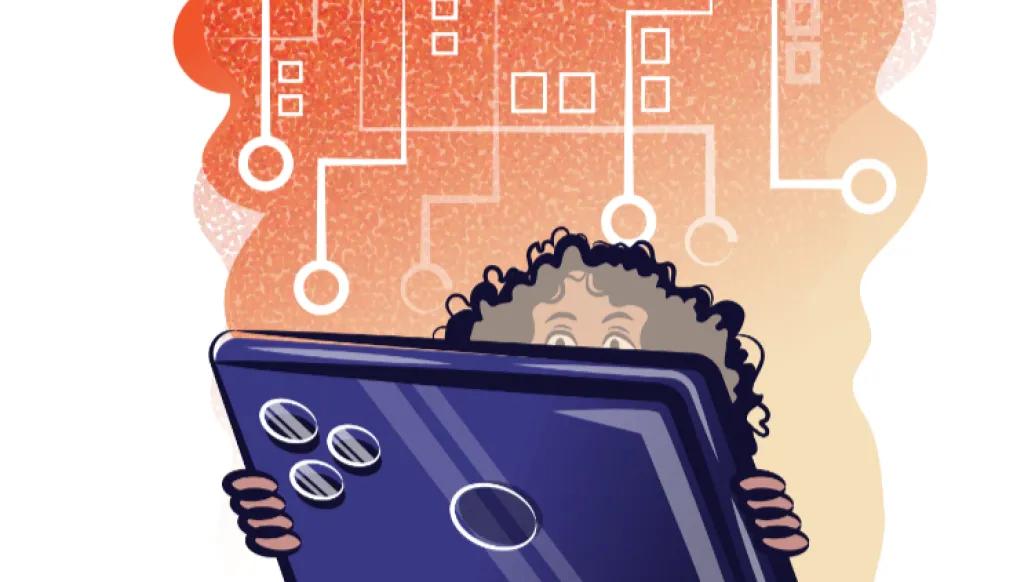
As a cognitive developmental psychologist, Susan Gelman, Ph.D., the Heinz Werner Distinguished University Professor of Psychology and Linguistics at U-M, studies how kids develop explanations about the world. She decided to delve into how kids reason about digital privacy after another experiment yielded unexpected results.
In studies published in 2018 and 2021, Gelman and her research team demonstrated a GPS tracking device to young test subjects, then asked them whether they would be OK with someone using it to track them or their belongings. To Gelman’s surprise, kids under 6 felt positive about tracking. Each age group trusted being tracked a little less, with a big shift to feeling negative around age 11 or 12.
Gelman followed her curiosity about this developmental difference to Jenny Radesky, M.D., at Michigan Medicine, and Florian Schaub, Ph.D., associate professor of information and of electrical engineering and computer science at U-M. The team collaborated on an interdisciplinary study in which they interviewed kids to gain deeper insights into their views on digital privacy.
Similar to the tracker study, they found younger children were not as concerned about how companies stored or used their data. “They also seem to personalize it, not understanding how a company can access information, or that companies can put together bits of information and make inferences about you,” Gelman said. This result could help advocates push for privacy protections. If kids don’t understand what or how digital platforms learn about them, Radesky said, companies could be violating federal law that prohibits deceptive marketing.
The team also found that kids tended to look to their literal screens to attempt to understand what was happening with their abstract data. “We’d use terms like, ‘How does YouTube remember things about you? Where does it store those memories or what it knows?’ and they would always point to the interface — the part of the YouTube home screen that says ‘history,’” Radesky said. “They were actively learning from the product itself, and sometimes not learning the right thing, because their data is actually stored on YouTube’s servers.”
Now, the faculty members are mentoring Ph.D. student Kaiwen Sun as she designs visual cues that could help kids understand what information an app is gathering and where it’s stored. “What’s great about Susan’s research is she is really good at helping find the surprising ways that kids think about things, and that’s a huge part of child-centered design,” Radesky said. “There’s a real opportunity for design that teaches.”
Featured News & Stories
A pediatric epilepsy fundraiser that changes lives

Block Out Cancer: From a crisis abroad to answers at Mott
Research may help better predict outcomes in kids with congenital cytomegalovirus
From simulation to practice for doctors

Rare infant triplet overcomes one-in-a-million type of liver cancer