In Her Own Right
Sarah Gertrude Banks, one of the earliest women to graduate from the U-M Medical School, cared for patients while championing women’s suffrage.
Author |
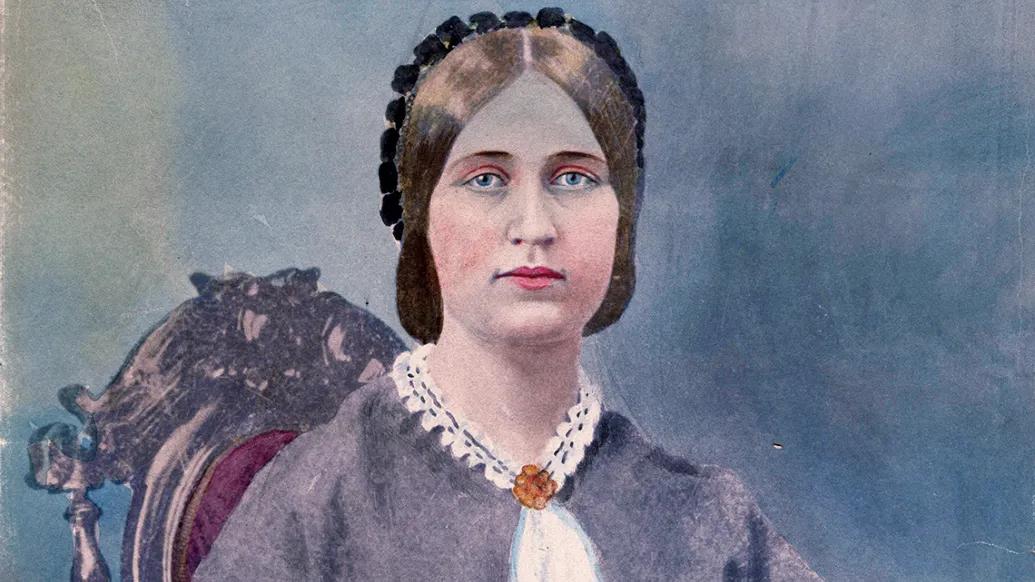
Sarah Gertrude "Gertie" Banks (M.D. 1873) was ahead of her time in every way, beginning with her education at the University of Michigan Medical School, where she was in the second group of women to earn a medical degree.
A book published 11 years after that said this of Banks and other early women physicians: "It is only a few years since the idea of a woman entering the profession of medicine and graduating as a doctor was something so quixotic, if not actually absurd, that any girl who alluded to such a vocation was reasoned with and talked to as if she had contemplated moral suicide." Banks and her counterparts were well aware that they were breaking new ground, though they did so in a spirit that was more pragmatic than "quixotic."
Banks was born in Walled Lake, Michigan, where her family had made their home a station on the Underground Railroad. She worked as a school teacher for several years, beginning at age 17, before entering medical school. She graduated in 1873, the same year as Emma Call, M.D., and two years after Amanda Sanford, M.D., the school's first woman graduate. Banks practiced in Ypsilanti for a short time, then became the resident physician at the Women's Hospital and Foundling's Home in Detroit.
A year later, Banks forged a new trail as she traveled to New Mexico, where she cared for the wife of an Army captain. "[I]n the performance of her duties, [she] exposed herself to the disabilities and dangers incident to a 1,500-mile journey by stage coach from Las Animas through an unsettled … and mountainous region, and fulfilled these duties to the entire satisfaction of those who imposed them," according to the 1891 book Detroit Illustrated.
Maybe so, but the experience was not to Banks' satisfaction. Her diaries from that time convey her disdain for her patient, who routinely insulted and demeaned the physician. "I am so hurt — I cannot get over it — I have cried until I am most dead. I was called a prevaricator," she wrote on April 29, 1875. "Am wishing I could go home."
She returned to Detroit a few months later, having secured other care for her patient, and once again was appointed resident physician of the Women's Hospital and Foundling's Home. A year later, she went into private practice and quickly established herself as one of the city's foremost physicians. Only the second female physician in Detroit, Banks cared for many prominent families and citizens, including Clara Ford, a businesswoman and the wife of Henry Ford. Her patients also included the poorest of Detroit's women and children.
Activist and Leader
Banks' work as a physician and her penchant for championing the rights of the underdog joined forces when she founded the Free Dispensary for Women and Children at the Women's Hospital and Foundling's Home. She later was a patron of Detroit's first free playground for children.
Banks also became involved in the early days of the Young Woman's Home of Detroit, which helped place and employ young women moving to Detroit. She was active in the leadership and administration of the Young Woman's Home Association and, in 1886, was the co-creator of the association's Nurse Directory, which aimed "to supply Detroit with competent and reliable nurses of the first and second class and also nurses for contagious diseases," according to a 1952 history of the association.
Her most intense and enduring work as an activist happened away from the medical world. Though she was a physician and esteemed member of the community — a member of the Society of Mayflower Descendants and the Daughters of the American Revolution — for most of her adult life, she could not vote.
This obvious disparity inspired Banks to fight for women's suffrage alongside her friend, Susan B. Anthony.
She wrote in a letter dated 1912: "Imbued with the spirit of her ancestors, that taxation without representation is tyranny." She called upon male voters to "confer the same upon all citizen[s] of our beloved state" in a ballot proposal that would have allowed women to vote. The 1912 proposal failed, and women would not win the right to vote in Michigan until 1918.
Throughout the crusade, Banks attended local and national meetings of suffrage organizations. At one, a celebration of Susan B. Anthony's 85th birthday in Detroit in 1905, Banks read a poem she wrote for Anthony, which included this stanza:
Thou has sacrificed for women
saintly, borne the taunts of man,
thus, to free thy sisters, Susan —
from tradition's bitter brand.
Anthony died the following year, at age 86, and did not live to see the 1920 passage of the 19th Amendment, which proclaimed that the right to vote could "not be denied or abridged by the United States or by any State on account of sex." Banks, however, was able to see the results of the suffrage movement's efforts before she died in 1926, also at age 86. And, like her friend and counterpart, Banks "sacrificed for women" and helped "free thy sisters … from tradition's bitter brand."
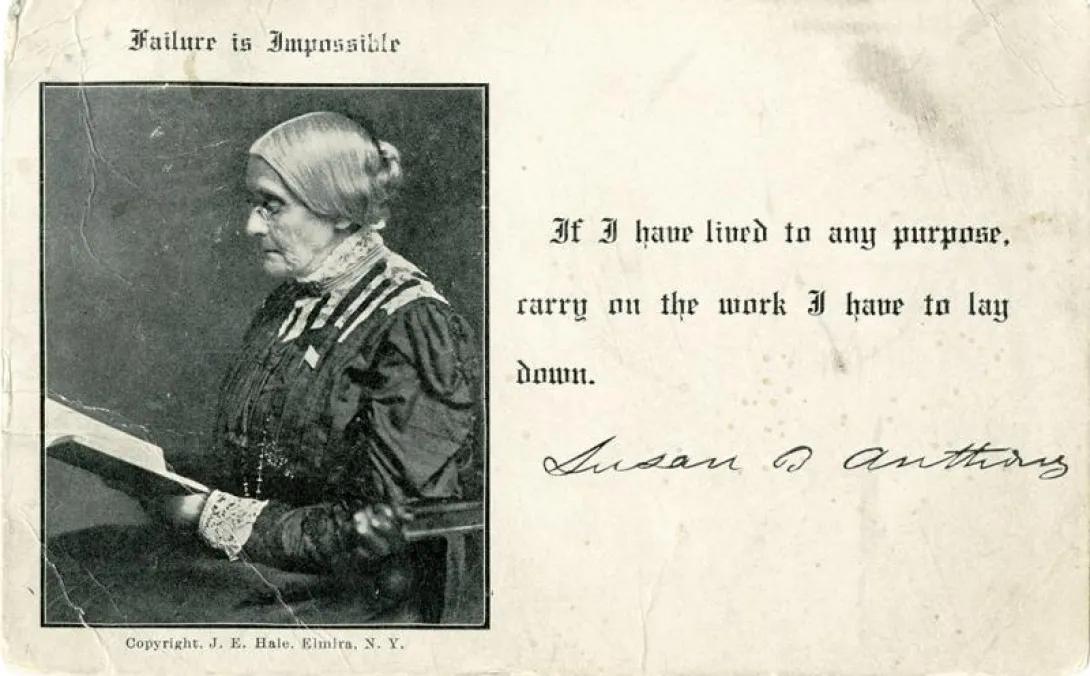
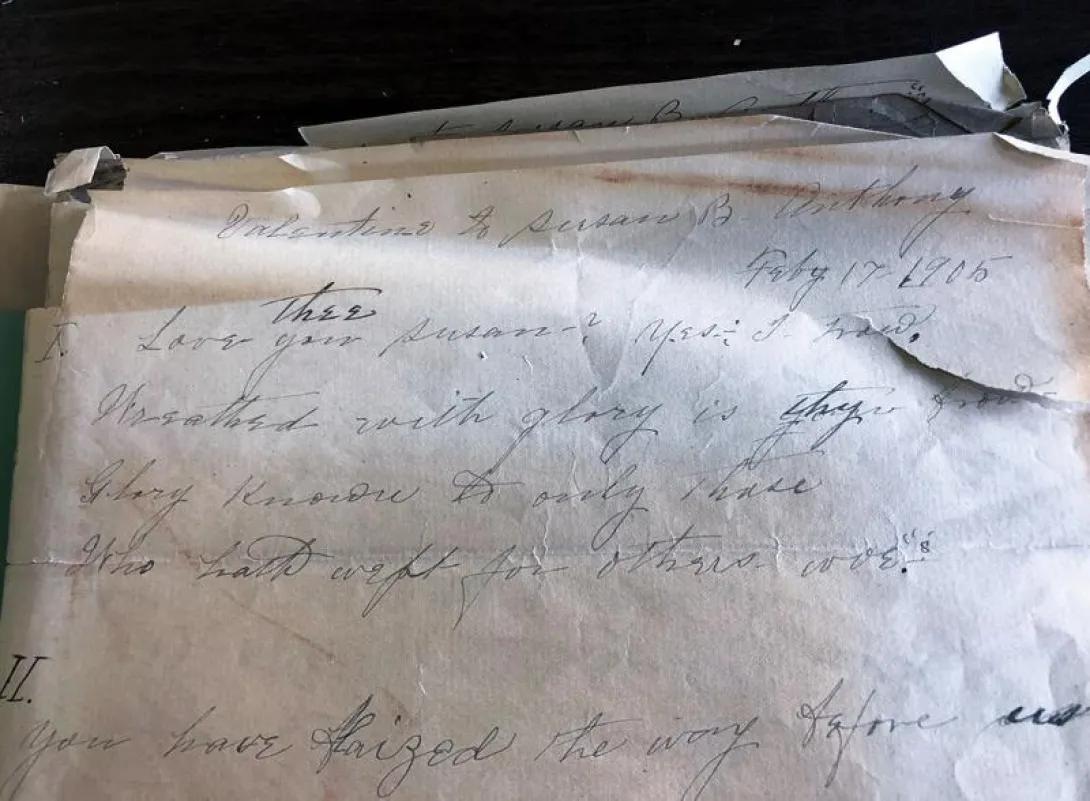
Jakob Dopp contributed to this story. Sources include original papers in the Sarah Gertrude Banks collections at the U-M Bentley Historical Library (source of the top photo); the Detroit Historical Society (source of the postcard); and the Detroit Public Library's Burton Historical Collection (source of the poem in the bottom photo).
Featured News & Stories

Beyond the White Coat: The Med Student Tradition Behind Michigan’s Smoker

College of Pharmacy alum advances U-M Medical School addiction research
Rethinking how clinicians learn to feel disease
Rethinking care: How ‘de-implementation’ can improve quality and reduce burnout

The Questions That Shape the Future of Medicine