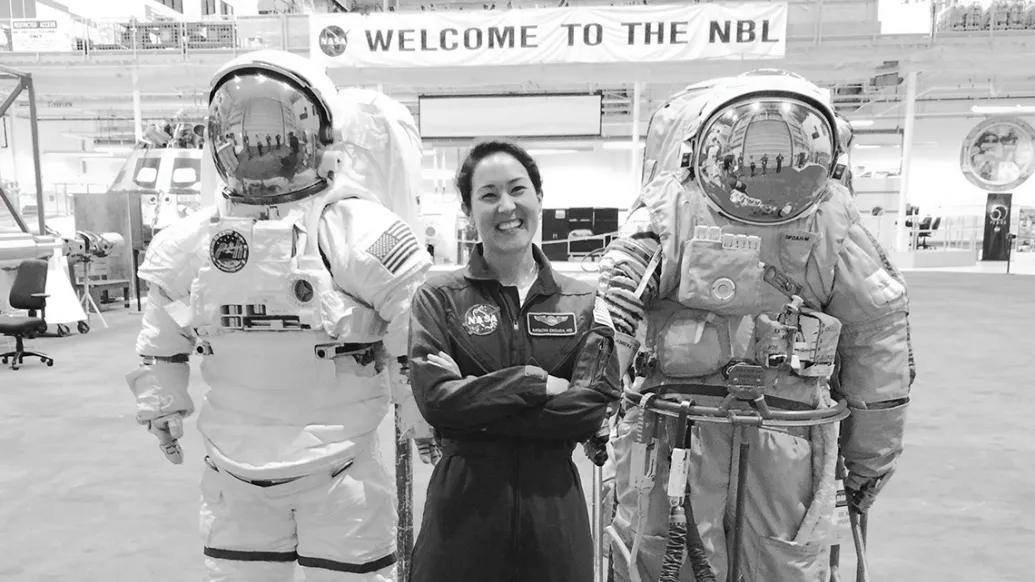
Natacha Chough (M.D. 2010) spent her childhood looking at the sky. There was something so inviting, so challenging about the immensity of space — and our place within it. She decided early on that she wanted to work at NASA.
But, Chough says, "I knew that meant having a successful career in something else first." Her love of science — particularly biology — nudged her to pursue medicine, and there she found a second calling.
Medicine, she discovered, was a means of navigating life on Earth. At U-M, Chough excelled in emergency medicine and helped "resurrect" the Wilderness Medicine Student Interest Group. She loved working in unpredictable environments; being forced to improvise made her approach her craft more creatively and confidently. "MacGyver medicine," she calls it.
During an undergraduate internship at NASA in 2000, Chough learned about aerospace medicine, a specialty developed for the unique needs of air and space travel. The field combines two of her greatest loves: space and life sciences. "It was like a dream come true," she says. As simple as that, her disparate ambitions fused into one career.
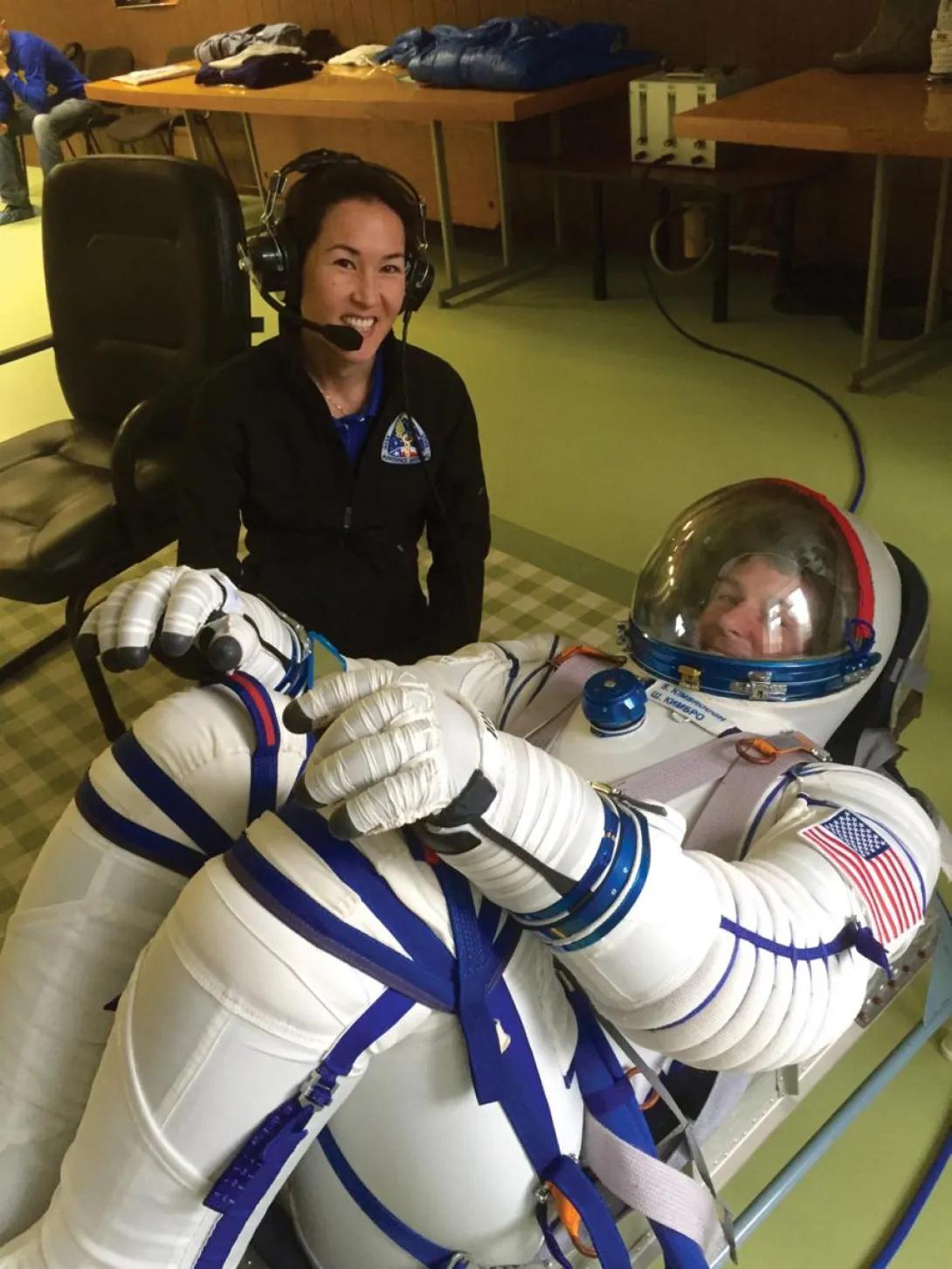
Now, as a Flight Surgeon at NASA, Chough is living that dream. Most recently, she provided ground medical support and telemedical care of Kate Rubins, Ph.D., the 60th woman to fly in space.
"It's like taking care of Lewis and Clark," Chough says, underscoring the unusual obstacles she and her colleagues encounter. "Every time we send astronauts 'out the door' on a spacewalk, it is a challenge for everyone involved. … It is hands down the most dangerous thing we do at NASA."
Chough wouldn't have it any other way. Despite those difficult moments, she's humbled to do exactly what she does. "We walk into Mission Control … knowing that our performance can have ultimate consequences," she says. "[And that] challenges me daily to keep my skills and knowledge polished."
See how else she's living the NASA dream: http://youtu.be/QWc5gq1taRM
Featured News & Stories

Beyond the White Coat: Disability, Neurodiversity and Advocacy in Medical School
4 ways to teach your teen safe driving habits

Emergency room intervention pairs smartphone, telehealth counseling to reduce risky firearm behavior

E-Bikes are everywhere, but most parents say they don’t know enough about them
Beyond the White Coat: The Med Student Tradition Behind Michigan’s Smoker