New Technique Identifies Important Mutations Behind Lynch Syndrome
Approach could improve predictive value of genetic screening.
10:07 AM
Author |
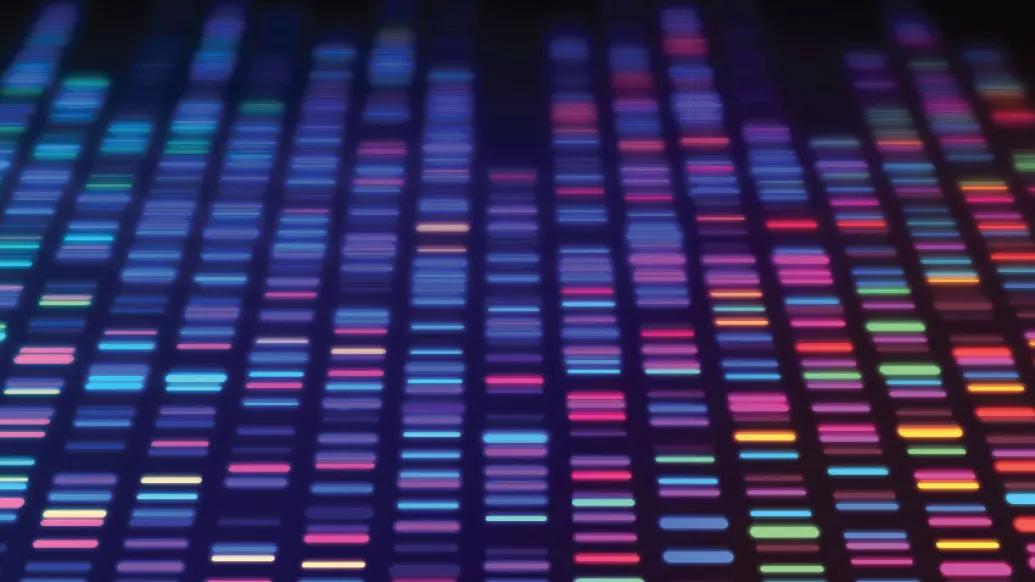
Colorectal cancer is the third most common form of cancer. While 90% of cases are in people older than 50, there is an as-yet unexplained rising incidence in younger people.
Family history ranks high among risk factors for developing colorectal cancer, and people with such a history are often advised to get more frequent screening tests or start screening sooner than the recommended age of 45 years old. Those with a family history of cancer often seek out genetic tests to look for mutations linked to cancer risk. However, those tests don't always provide helpful information.
In a new paper in the American Journal of Human Genetics, Jacob Kitzman, Ph.D., of the Department of Human Genetics at Michigan Medicine, and a team of collaborators describe a method for screening so-called genetic variants of uncertain significance in the hopes of identifying those mutations that could cause disease.
To do this, they used a genetic condition called Lynch syndrome, also known as hereditary non-polyposis colorectal cancer. Like BRCA1, a gene known to cause certain breast cancers, there are a handful of genes behind Lynch syndrome that have been well described. However, "there's a whole universe of possible genetic variants that can occur in genes associated with Lynch syndrome that we basically know nothing about," says Kitzman.
Because most mutations are rare in the human population, it can be difficult to tell if any particular one is problematic. And studying one variant in a lab at a time takes a lot of time—often too much to be useful for making clinical decisions.
Using a technique called deep mutational scanning, the research team set out to measure the impact of mutations in the gene MSH2, which when mutated, is one major cause of Lynch syndrome.
MORE FROM THE LAB: Subscribe to our weekly newsletter
"The key advance is rather than doing one mutation at a time, we did it in a pooled format which allowed us to test about 18,000 mutations in a single batch," says Kitzman.
Using CRISPR-Cas technology, they deleted the normal copy of MSH2 from human cells, and replaced it with library of every possible mutation in the MSH2 gene. This created a mix of cells where each cell carried a unique MSH2 mutation. This population of cells was treated with a drug known as 6-thioguanine, a chemotherapy that killed only the cells that had a functional variant of MSH2.
The counterintuitive idea, notes Kitzman, is that the surviving cells are the ones without functioning MSH2—which are the ones with mutations that are most likely to be disease-causing.
"We were basically trying to sit down and make the mutations we could so they could serve as a reference for ones that are newly seen or are amongst the thousands of variants of unknown significance identified in people from clinical testing," says Kitzman. "Until now, geneticists could not be sure whether these are benign or pathogenic."
The hope is that, with other patient-specific information, some of these variants may be able to be reclassified, and those people notified that they should undergo more intense screening.
Says Kitzman, "One of the next areas that will need some focus in the field of human genetics is to create these sorts of maps for many different genes where there is a clinical connection, so we can be more predictive when variants are found in an individual."
Other University of Michigan contributors to this paper include: First author Xiaoyan Jia, Bala Bharathi Burugula,Victor Chen, Rosemary M. Lemons, Sajini Jayakody, and Mariam Maksutova.
The work was supported in by the National Institute of General Medical Sciences and a Precision Health Fellowship from the University of Michigan.
Paper cited: "Massively parallel functional testing of MSH2 missense variants conferring Lynch syndrome risk," The American Journal of Human Genetics. DOI: 10.1016/j.ajhg.2020.12.003
Like Podcasts? Add the Michigan Medicine News Break on iTunes, Google Podcast or anywhere you listen to podcasts.

Health Lab
Explore thousands of health news & research stories by visiting the Health Lab homepage for more.
Media Contact

Public Relations
Department of Communication at Michigan Medicine
Stay Informed
Want top health & research news weekly? Sign up for Health Lab’s newsletters today!
Featured News & Stories
Timing is of the essence for RNA during stress
New anti-cancer strategy shows promise in preclinical studies
More babies with hypoplastic left heart syndrome surviving critical period between surgeries

Exploring the mind’s mysteries: 130 years of mental health care & innovation at U-M

How U-M helped bring depression out of the darkness