
The Link Between Obesity and Puberty
Mouse study identifies genes connecting the onset of puberty to the remodeling of specific brain sites.
3:06 PM
Author |
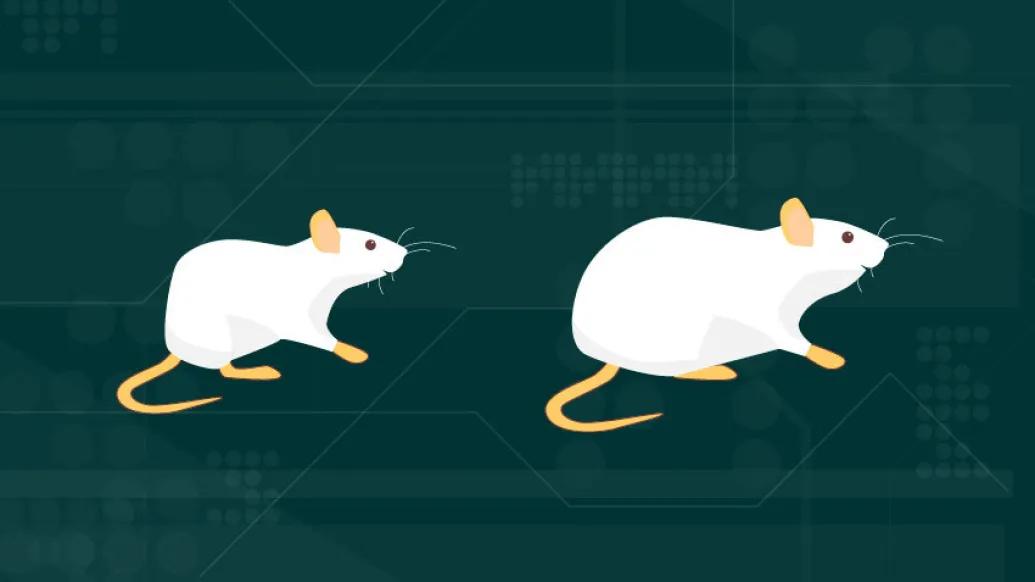
Puberty, the transformational period where a child reaches physical and sexual maturity, is a near universal human experience, yet the fundamental processes behind how and when it starts is still a mystery.
For girls, puberty can begin as early as eight years old, with most instances of early puberty linked to childhood obesity. And puberty may be starting earlier in boys as well. Evidence points to the hormone leptin, which is produced by fat cells, as one of the likely culprits, says Carol Elias, Ph.D., a professor of molecular & integrative physiology and obstetrics & gynecology at the U-M Medical School. Her lab has been studying the role of metabolism in reproduction, looking for clues within the brain to help explain the effects of metabolic signals in pubertal onset and fertility.
Elias and her team have published a new study in the journal iScience examining two important regions in the brain, called the ventral premammillary nucleus and the arcuate nucleus, to try to understand how leptin influences pubertal timing.
Both areas lie in the hypothalamus at the base of the brain where "the capillaries are relatively opened, allowing circulating molecules to flow easily, increasing the communication between the peripheral organs and the brain" explains Elias, who was recently elected as a 2020 fellow of the American Association for the Advancement of Science. Neurons that respond to leptin in this area have a fundamental role in pubertal development.
MORE FROM THE LAB: Subscribe to our weekly newsletter
Her team compared normal female mice to mice lacking leptin, who are obese and fail to enter puberty on their own. By giving leptin to mice lacking it, the researchers were able to control when puberty starts. Next, they compared brain samples from the ventral premammillary and arcuate nuclei in normal pre-pubescent and adult mice to the obese leptin-deficient mice. Data was analyzed and compared using three independent RNA sequencing methods.
"Our goal was to identify the genes that were differentially expressed in these two brain areas that could provide some clues about the molecular mechanisms associated with pubertal onset and obesity-induced early puberty," Elias says. What they found was a high percentage of genes related to the development of the structures outside of the neuronal soma, called the neuropil. The genes that were expressed during pubertal transition were, in part, related to growing axons and dendrites, i.e. the extensions that are important for neuron-to-neuron communication, to the extracellular space and blood vessels.
"What we think this means is that brain development is not completed and that puberty starts only when the entire neuropil, including blood vessels and components of the extracellular space, is ready," says Elias. "It's possible that leptin is speeding up the development of these structures in the base of the brain."
Like Podcasts? Add the Michigan Medicine News Break on iTunes or anywhere you listen to podcasts.
Some of the genes identified, such as MKRN3 and TAC3, have been previously linked to health conditions like precocious puberty, a genetic disorder that causes signs of puberty to appear before the age of 8, and infertility in humans.
Elias hopes the work will be used as a database for other researchers who are interested in the genes underpinning leptin, puberty and fertility. Her next goal is to further analyze the blood brain barrier and its connection to neuronal plasticity.
Says Elias, "When you have new data, you also have a lot of new questions."
Paper cited: "Hypothalamic and Cell-Specific Transcriptomes Unravel a Dynamic Neuropil Remodeling in Leptin-Induced and Typical Pubertal Transition in Female Mice," iScience. DOI: 10.1016/j.isci.2020.101563

Health Lab
Explore thousands of health news & research stories by visiting the Health Lab homepage for more.
Media Contact

Public Relations
Department of Communication at Michigan Medicine
Stay Informed
Want top health & research news weekly? Sign up for Health Lab’s newsletters today!
Featured News & Stories
Immune system protein is a cancer killer on its own, new study shows

The AI is listening: Implications of machine generated clinical notes on health care
Comprehensive DNA sequencing reveals hidden drivers of cancer

Many older adults make Medicare decisions quickly and most don’t change plans, poll finds
‘Molecular glue’ stabilizes protein that inhibits development of non-small cell lung cancer and uterine cancer

