How to Tell If a Brain Is Awake
EEG may not always be a reliable reflection of consciousness.
9:24 AM
Author |
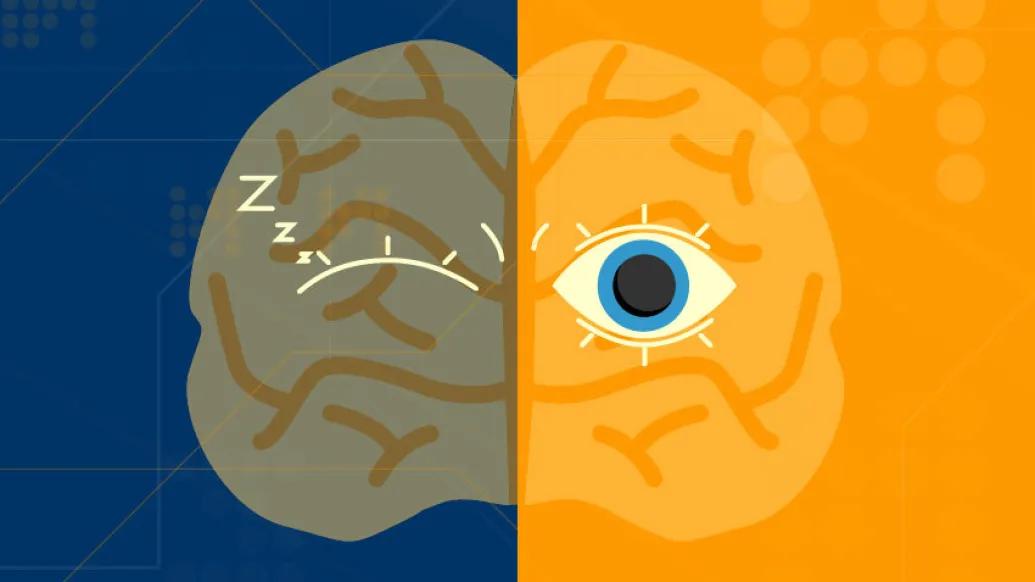
Remarkably, scientists are still debating just how to reliably determine whether someone is conscious. This question is of great practical importance when making medical decisions about anesthesia or treating patients in vegetative state or coma.
Currently, researchers rely on various measurements from an electroencephalogram, or EEG, to assess level of consciousness in the brain. A Michigan Medicine team was able to demonstrate, using rats, that the EEG doesn't always track with being awake.
"EEG doesn't necessarily correlate with behavior," says Dinesh Pal, Ph.D., assistant professor of anesthesiology at the U-M Medical School. "We are raising more questions and asking that people are more cautious when interpreting EEG data."
Under anesthesia, an EEG will display a sort of signature of unconsciousness: reduced brain connectivity; increased slow waves, which are also associated with deep sleep, vegetative state and coma; and less complexity or less change in brain activity over time.
Building on data from a 2018 study, Pal and his team wanted to see what happened to these measures when a brain was awakened under anesthesia. To do so, they targeted an area of the brain called the medial prefrontal cortex, which has been shown to play a role in attention, self-processing and coordinating consciousness.
MORE FROM MICHIGAN: Sign up for our weekly newsletter
Using a drug in that part of the brain that mimics the activity of neurotransmitter acetylcholine, the team was able to rouse some of the rats so that they were up and moving around despite the fact that they were receiving continuous anesthesia. Using the same drug in the back of the brain didn't awaken the rats. So, both groups of rats had anesthesia in the brain but only one group "woke up."
Then, "we took the EEG data and looked at those factors that have been considered correlates of wakefulness. We figured if the animals were waking up, even while still exposed to anesthesia, then these factors should also come back up. However, despite wakeful behavior, the EEGs were the same in the moving rats and the non-moving anesthetized rats," says Pal.
What does this mean for the EEG's ability to reflect consciousness?
"The study does support the possibility that certain EEG features might not always accurately capture the level of consciousness in surgical patients," says senior author George A. Mashour, M.D., Ph.D., chair of the U-M Department of Anesthesiology.
SEE ALSO: Waking Up Is Hard to Do: Reversing Deep Unconsciousness
However, "EEG likely does have value in helping us understand if patients are unconscious. For example, a suppressed EEG would suggest a very high probability of unconsciousness during general anesthesia. However, using high anesthetic doses to suppress the EEG might have other consequences, like low blood pressure, that we want to avoid. So, we will have to continue to be judicious in assessing the many indices available, including pharmacologic dosing guidelines, brain activity, and cardiovascular activity."
Pal notes that there's physiological precedent for an EEG mismatching behavior; for example, the brain of someone in REM sleep is almost identical to an awake brain. "No monitor is perfect, but the current monitors we use for the brain are good and do their job most of the time. However, our data suggest there are exceptions."
Their study raises intriguing questions about how consciousness is reflected in the brain, says Pal. "These measures do have value and we have to do more studies. Maybe they are associated with awareness and what we call the content of consciousness. With rats, we don't know–we can't ask them."
LISTEN UP: Add the Michigan Medicine News Break to your Alexa-enabled device, or subscribe to our daily updates on iTunes, Google Play and Stitcher.
Paper cited: "Level of consciousness is dissociable from electroencephalographic measures of cortical connectivity, slow oscillations, and complexity," Journal of Neuroscience. DOI: 10.1523/JNEUROSCI.1910-19.2019

Health Lab
Explore thousands of health news & research stories by visiting the Health Lab homepage for more.
Media Contact

Public Relations
Department of Communication at Michigan Medicine
In This Story

Dinesh Pal, PhD
Associate Professor
Stay Informed
Want top health & research news weekly? Sign up for Health Lab’s newsletters today!
Featured News & Stories
The AI is listening: Implications of machine generated clinical notes on health care

Comprehensive DNA sequencing reveals hidden drivers of cancer

Many older adults make Medicare decisions quickly and most don’t change plans, poll finds
‘Molecular glue’ stabilizes protein that inhibits development of non-small cell lung cancer and uterine cancer

What’s the latest on 7-OH and kratom availability and addiction care?